What a water treatment system consists of, why stage order matters more than stage selection, and the signs that a scheme was specified wrongly.
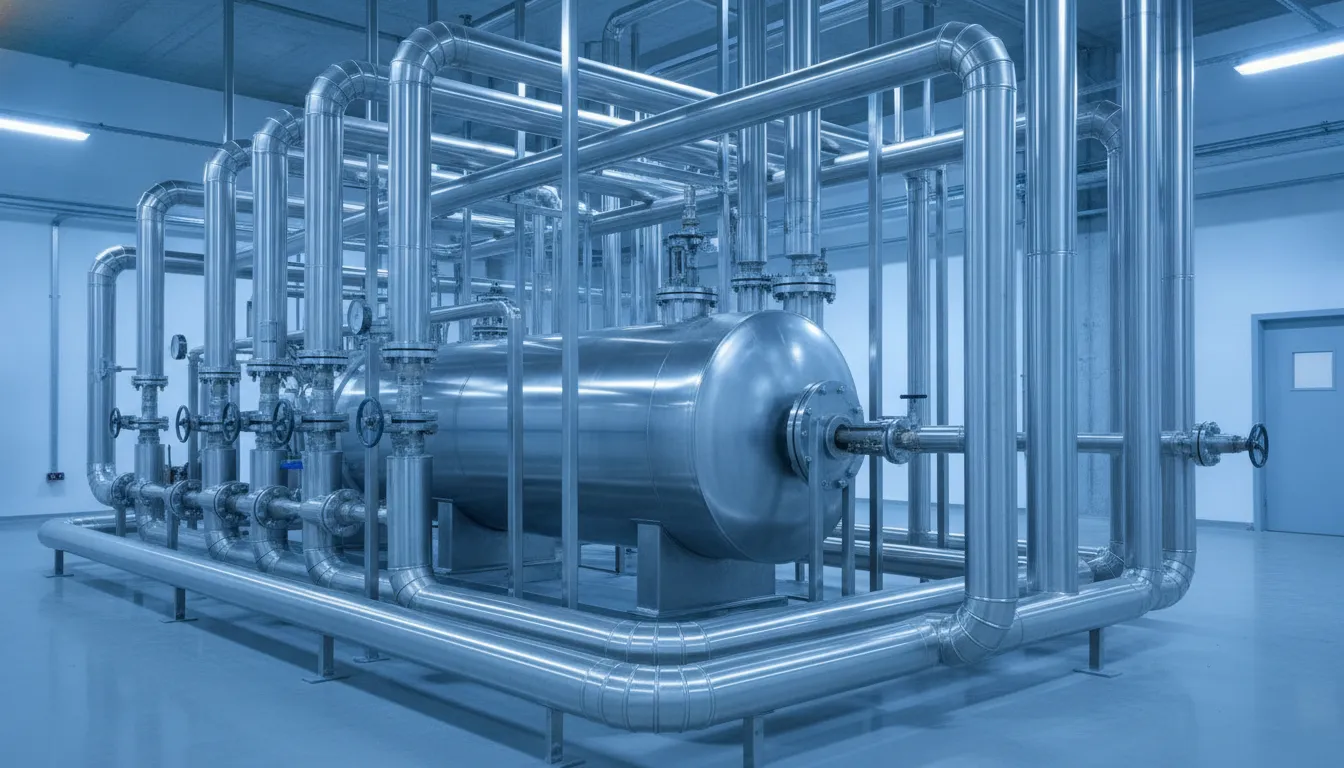
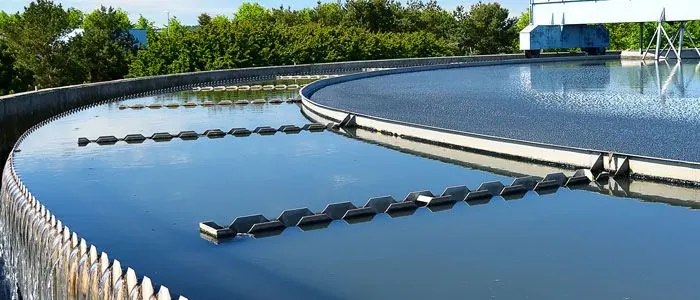
"Water treatment system" is too broad a name for what is really a set of stages assembled around a specific water and a specific requirement. Two units carrying the same datasheet name can be arranged completely differently, because the source differs. Here is what they consist of, in what order they are assembled, and how you can tell a scheme was specified wrongly.
The scheme is defined by a gap, not by equipment
Design starts not with selecting vessels but with two questions: what water arrives, and what water does the process need. The gap between those points is the brief. Equipment is only a way to close it, and there is usually more than one way, with different operating costs.
From which follows something important: "the most modern" system does not mean "the right one". The right one closes the gap at the lowest cost and stays manageable by the people on site.
The stages and what each is for
Mechanical filtration
Removes suspended solids, sand, scale and pipework corrosion products. Everything further down the train is designed for water that has already passed this stage. Underestimating it shows up later, as blinded media and damaged membranes.
Iron and manganese removal
A typical requirement on groundwater. Dissolved iron is invisible in a fresh sample but oxidises on contact with air, giving colour, deposits and fouling. It is solved by oxidation followed by filtration.
Softening
Removes hardness salts, the principal cause of scale on heat-exchange equipment. For boiler houses, steam generators and cooling systems the stage is effectively mandatory: scale eats heat transfer gradually and invisibly, until it shows up as fuel overconsumption.
Demineralisation
Where the water requirement exceeds what softening can deliver: membrane technology or ion exchange. The choice follows the process requirement and the feed composition, not which technology is newer.
Disinfection
Needed where water contacts product or people, or where the system can biofoul. The key question is whether a residual is required in the distribution network.
Reagent dosing
Ties the whole scheme together. A reagent injected at the wrong point or in the wrong regime works at half strength regardless of its own quality. The dosing package is designed with the scheme, not added after commissioning.
Why stage order matters more than stage selection
The same vessels arranged in a different order give a different result and a different operating cost. The logic is simple: each stage must receive the water it was designed for.
Solids are removed before membranes, not after — otherwise membranes act as a coarse filter and fail quickly. Oxidant is neutralised before polyamide membranes, because oxidisers destroy them irreversibly. pH correction sits where the next stage needs it, not "at the front just in case". An error in order usually costs more than an error in choosing a particular model.
Signs a scheme was specified wrongly
- Reagent consumption rises at unchanged load. Something in the water or the regime changed and the scheme did not.
- Equipment needs servicing more often than designed. Usually means an earlier stage is not coping and the load has moved downstream.
- The system cannot hold the peak shift. A sign it was sized on average flow rather than the real profile.
- Winter quality is worse than summer. Cold water changes reagent behaviour and process rates; if seasonality was not designed in, it recurs every year.
- Operators have switched the automation to manual. The most honest indicator: the system turned out to be more complex than the site can maintain.
What gets considered during selection
Beyond the water analysis, several things influence the scheme and often drop out of the conversation:
- Daily variability. The peak shift, not average flow, sets the margin.
- Source seasonality. Surface water changes at snowmelt; groundwater is steadier but not immune.
- Plans a few years out. Space for expansion is cheaper to allow now than to retrofit later.
- Who will operate it. The scheme has to stay manageable by the team that actually works there.
- Availability of reagents and spares. Especially on remote sites, where a supply gap stops production.
Frequently asked questions
Can pretreatment be skipped if the main equipment is good enough?
No. Pretreatment is not a saving on quality; it is the condition under which the main equipment works at all. Membranes and media are designed for water with certain characteristics, and without preparation their life shortens several times over.
How do we know whether we need an upgrade or just tuning?
Start with a survey. A significant share of problems is solved by revising the reagent scheme and dosing regime on existing equipment. A rebuild design is worth commissioning after that option has been tested.
Which matters more, capital cost or operating cost?
They have to be compared together over the service life. A system that is cheaper up front but heavy on reagents and servicing usually loses within a few years.
How detailed does the water analysis need to be to start?
A basic parameter set is enough for an initial assessment. A detailed analysis is needed at design stage, but the conversation can start without it — basic data often already indicates which direction to look.
Getting started
Start with an analysis of the raw water and an understanding of how the site runs across a day. More on how we approach selection in water treatment; the reagent and equipment range is in products. Questions can go through the contact form.