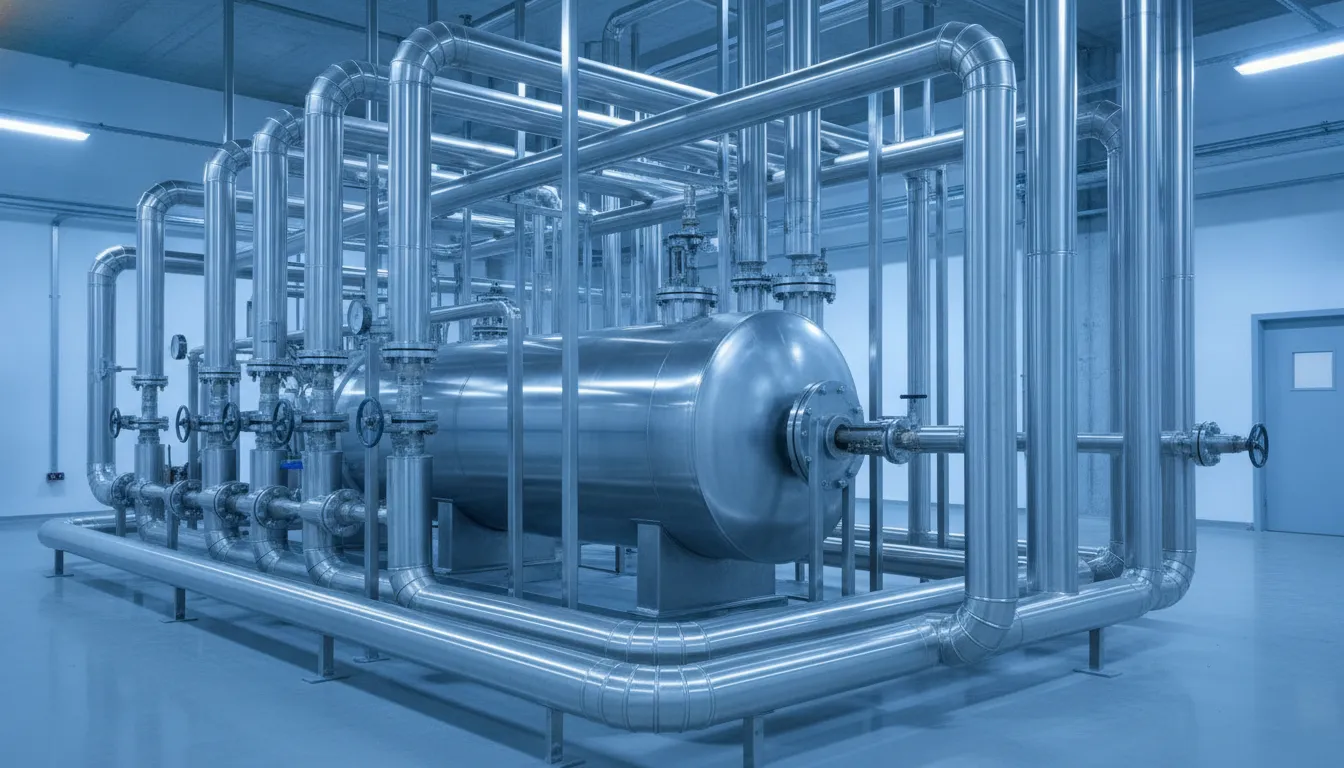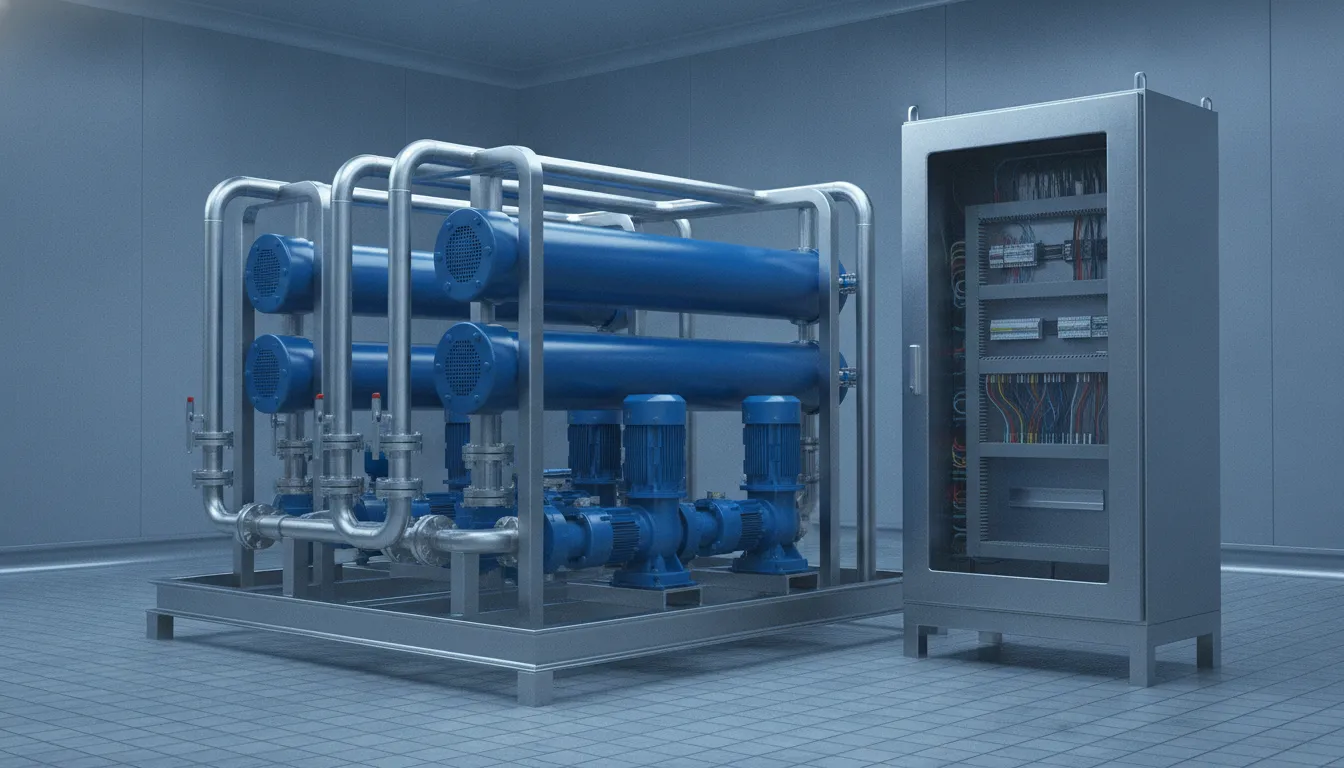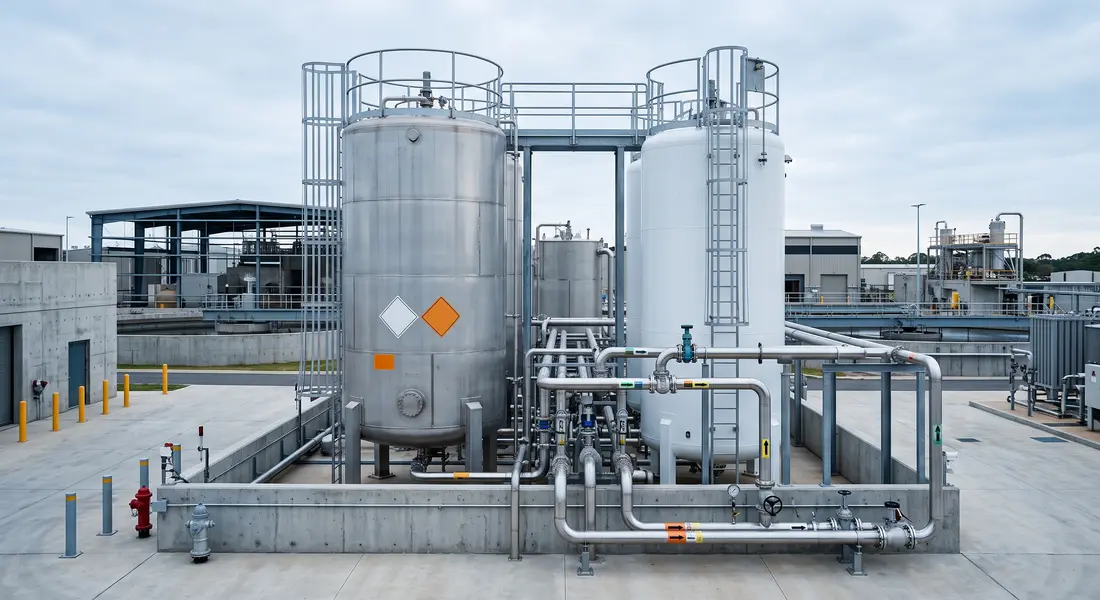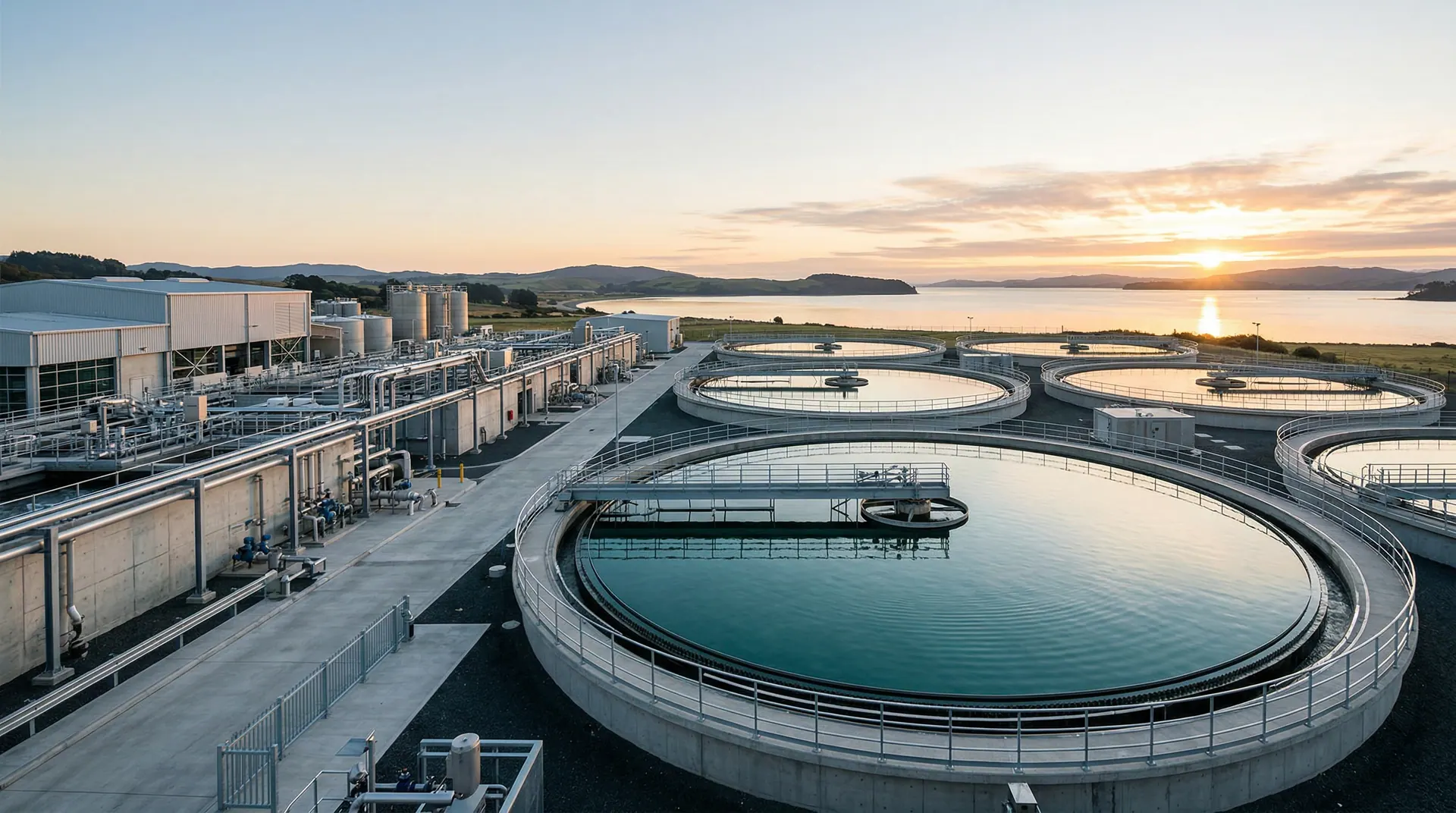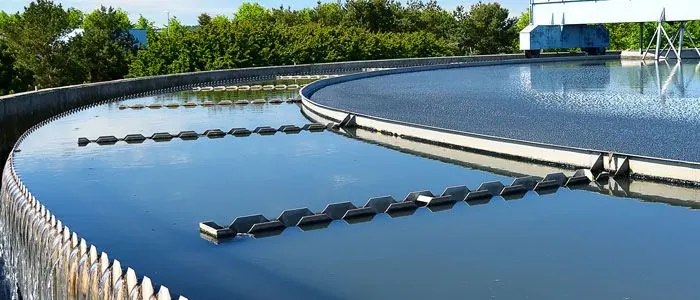
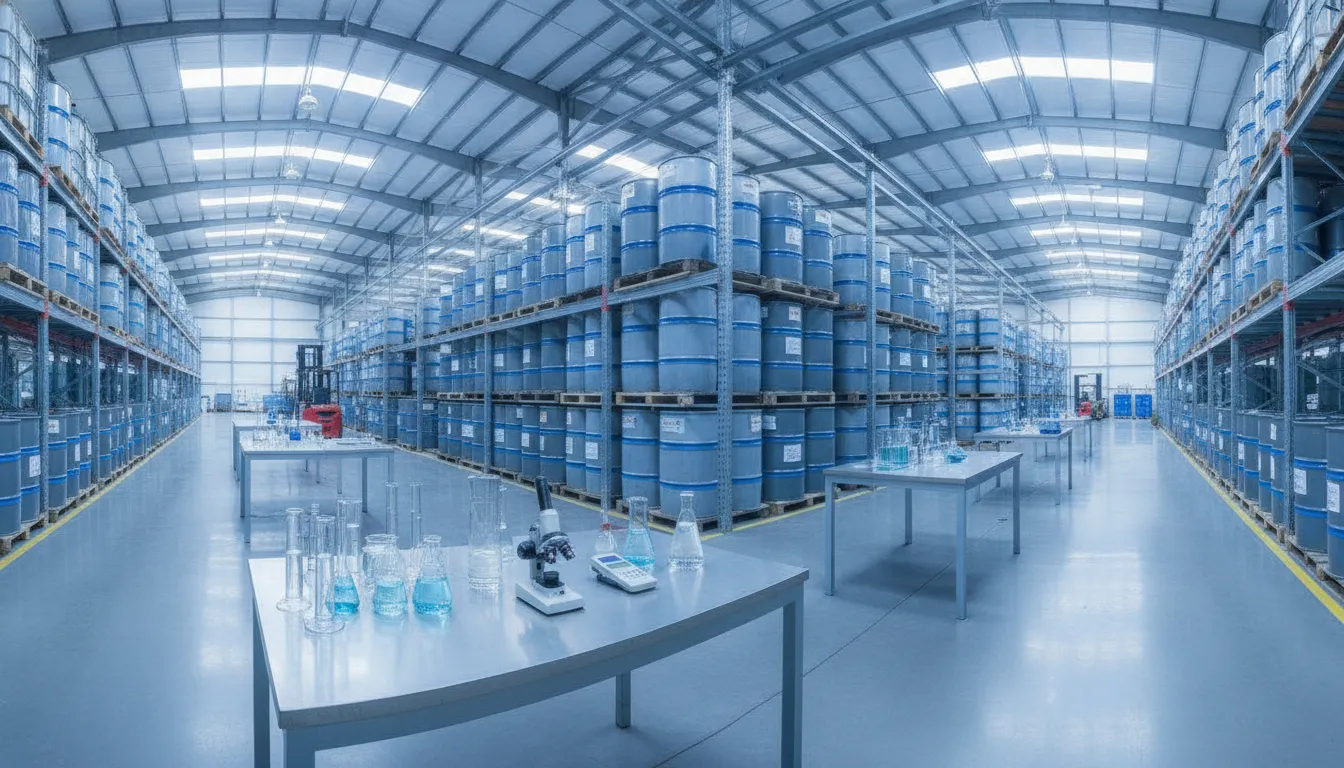
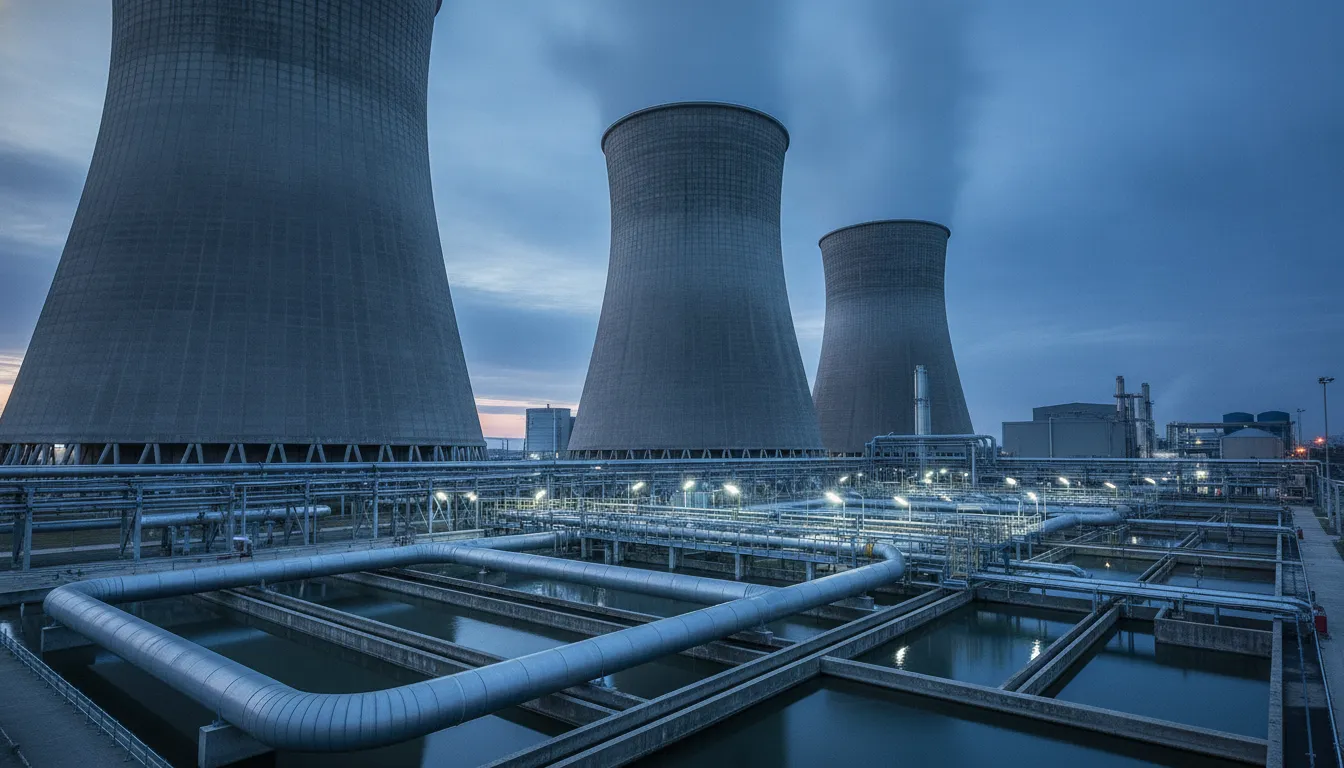
Power generation and industrial energy facilities depend on precisely conditioned water to protect boilers, turbines, and cooling circuits from scale formation, corrosion, and biological fouling. We supply and commission complete boiler feed treatment systems, cooling tower chemical programs, and condensate polishing solutions that protect capital equipment and reduce the risk of unplanned shutdowns. Treatment design accounts for local source water characteristics, energy efficiency targets, and long-term chemical cost management.
In power and heating, water means heat transfer
On an energy site water is almost never the product. It carries heat, and anything that stops it doing so converts immediately into fuel. A layer of deposit on a heat-transfer surface acts as insulation: to move the same heat, the metal has to run hotter and more fuel has to burn.
That is why water treatment pays back faster here than anywhere else. Not because reagents are cheaper, but because the alternative is a permanent fuel overspend that nobody connects to water until someone looks inside the equipment.
Two circuits with opposite logic
The boiler circuit
Here there is a phase change: steam leaves clean, everything dissolved stays behind and accumulates. The main threats are scale on the hottest surfaces, oxygen corrosion in the feedwater train, and carryover of boiler water with the steam. The problem is settled before the boiler, in water treatment: the fewer salts arrive, the less has to be held under control inside. More in the article on boiler water.
The recirculating cooling circuit
No phase change here, but evaporation — and it concentrates salts with every cycle. Three processes run at once: scaling, corrosion and biofouling, and measures against one frequently worsen another. More in the article on cooling tower regime.
These circuits must not be conflated: their reagent programmes, target values and blowdown logic differ fundamentally, even though both are about water and heat.
What determines the scheme
- Equipment parameters. The higher the boiler's operating parameters, the stricter the feedwater requirement — there is no "margin just in case" here.
- Raw water composition. Hardness and alkalinity set the extent of water treatment and the cycles limit in the cooling circuit.
- Condensate return. The most valuable water on site: hot and essentially salt-free. The return share directly affects make-up volume and fuel consumption.
- Circuit materials. Carbon steel, copper alloys and stainless steel need different inhibition approaches; mixed metallurgy complicates the task.
- Seasonal load. Heating season and shoulder season are different regimes. A setting made in summer behaves differently in winter.
How the solution is usually built
Water treatment
Mechanical filtration, iron removal where needed, softening and, where required, demineralisation. This is the foundation: most boiler circuit problems are solved here rather than inside the boiler. More in water treatment.
Deaeration and oxygen scavenging
Thermal removal of dissolved gases, then chemical scavenging of the residual. Oxygen corrosion is localised and therefore dangerous: it produces pitting while the metal looks broadly sound.
In-boiler conditioning
Holding alkalinity in its working window, converting residual hardness into a mobile sludge, and protecting the condensate system. It works on residues, not on the main load.
Cooling circuit programme
Scale inhibitor, corrosion inhibitor, dispersant and biocide with alternating actives, plus blowdown driven by actual dissolved solids rather than a schedule.
Which reagents work here
Residual oxygen is scavenged with sodium metabisulfite and sodium bisulfite. Alkalinity is corrected with caustic soda and other pH regulators. Deposit control in both circuits uses antiscalants, metal protection uses anti-corrosion reagents, and cooling tower microbiological control uses the disinfectant group. The full range is in products.
What is most often missed
- Falling efficiency blamed on equipment wear. Most often it is deposit or biofilm, not the machine.
- Saving on water treatment expecting chemistry to compensate. The in-boiler programme is sized for residues; holding the full load with reagents costs more.
- Blowdown set once. In both boiler and tower it has to follow actual readings, otherwise either heat or equipment is lost.
- Condensate returned without monitoring. One leak and process fluid enters the circuit.
- The programme unchanged between seasons. Summer and winter tower regimes differ substantially.
- Idle equipment left unpreserved. A shutdown with air and moisture inside destroys faster than operation.
Frequently asked questions
How do we know losses are water-related rather than equipment-related?
From indirect signs: fuel consumption rising at the same load, higher flue gas temperature, falling heat transfer, rising differential pressure. The direct method is inspecting heat-transfer surfaces during a planned shutdown.
How important is condensate return?
It is one of the highest-return items in this sector: hot, nearly salt-free water comes back, saving water, fuel and reagents at once. But the return must be paired with quality monitoring.
Can cooling tower cycles be raised to save water?
Yes, within the limit set by make-up water composition. Exceeding it means water savings are paid for in deposits and lost heat transfer.
Does cooling tower make-up need its own treatment?
On hard water it usually pays back: treated make-up allows operation at higher cycles of concentration, which saves both water and in-circuit reagent.
Getting started
Start by analysing raw, feed and circulating water at the same time, and check what regime the deaerator is actually running in. Those data explain most energy circuit problems. Write through the contact form.