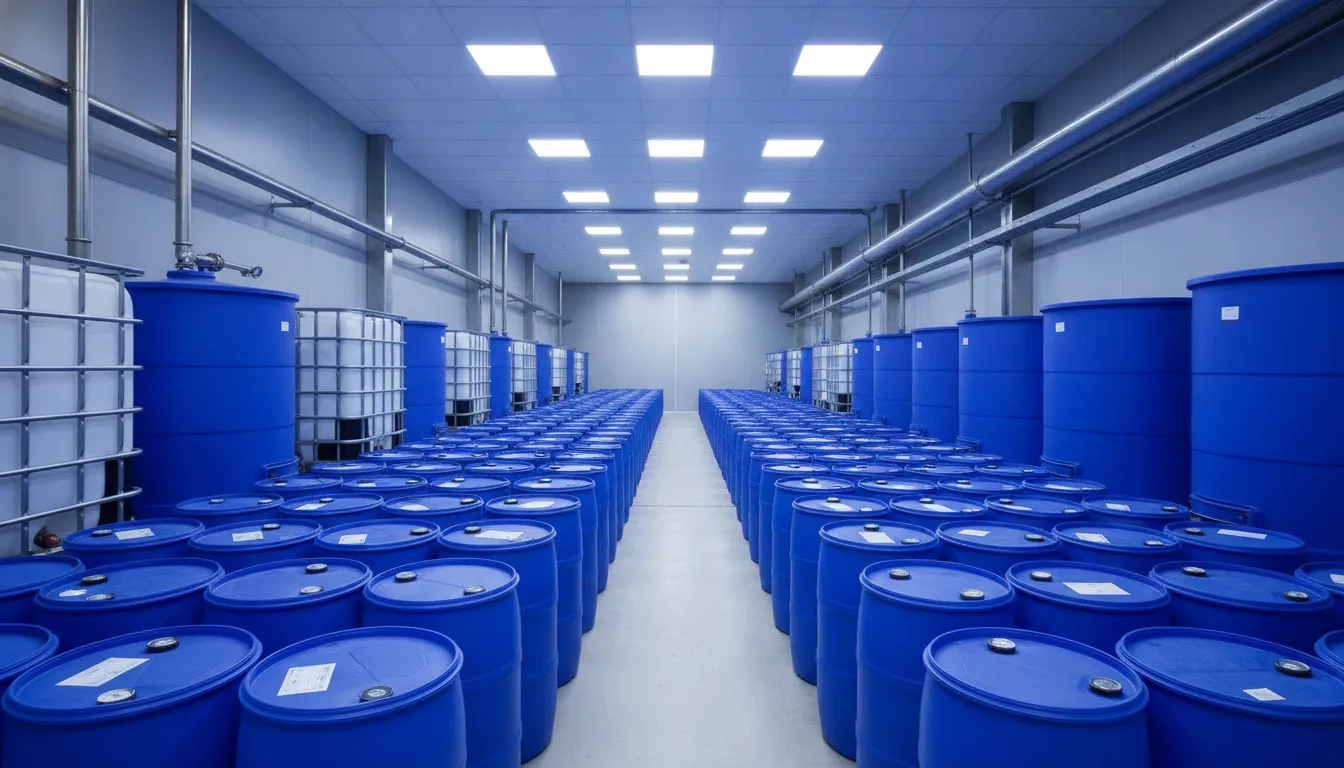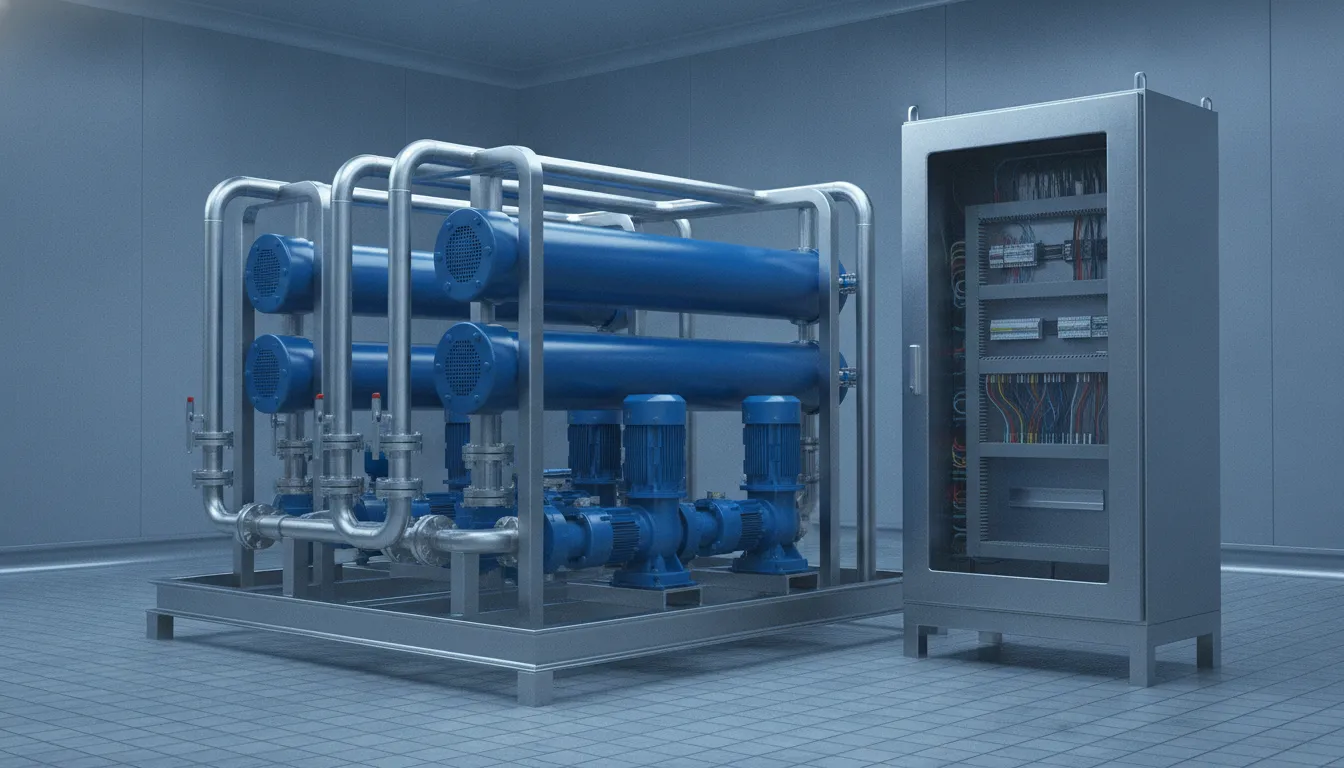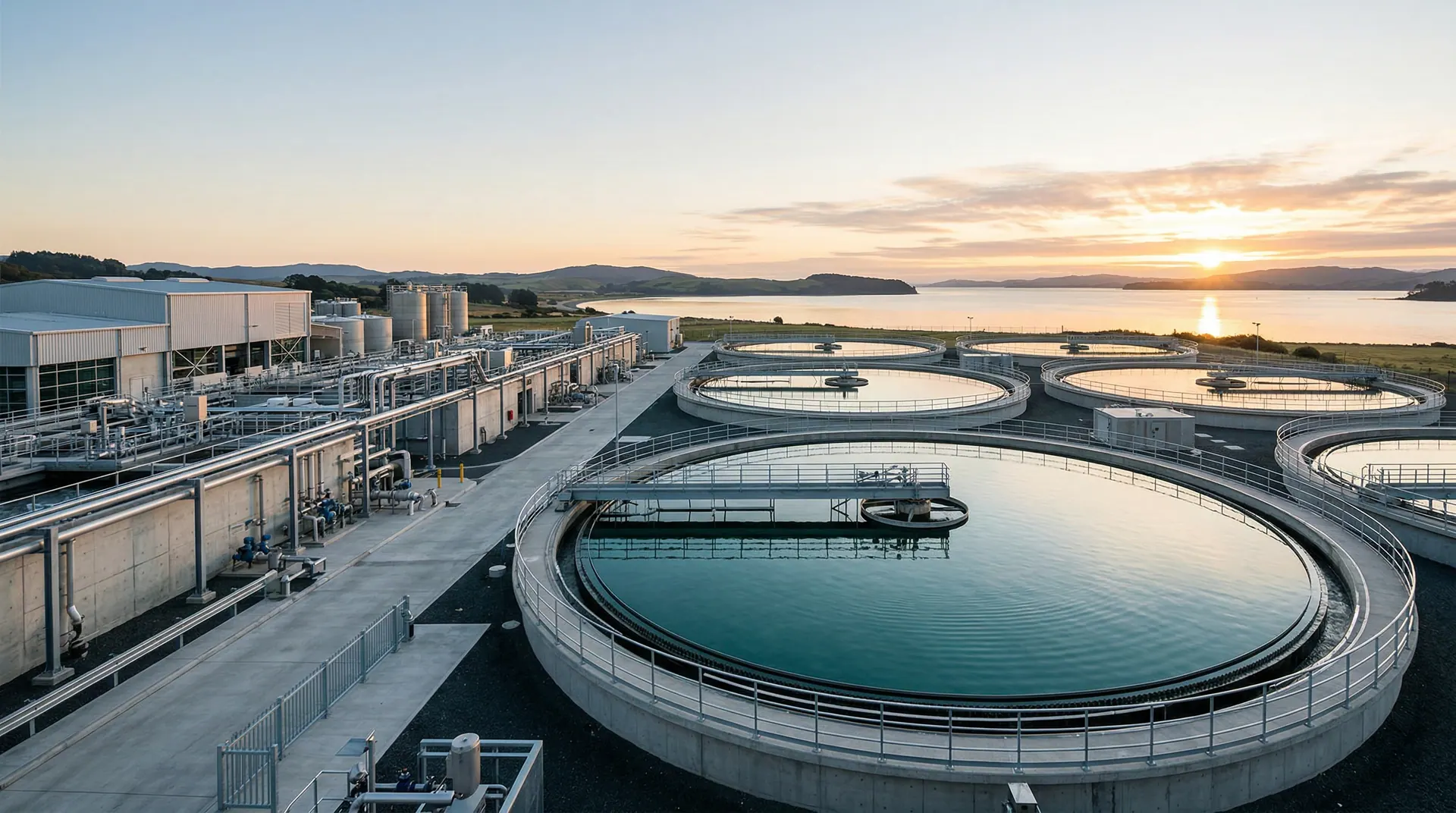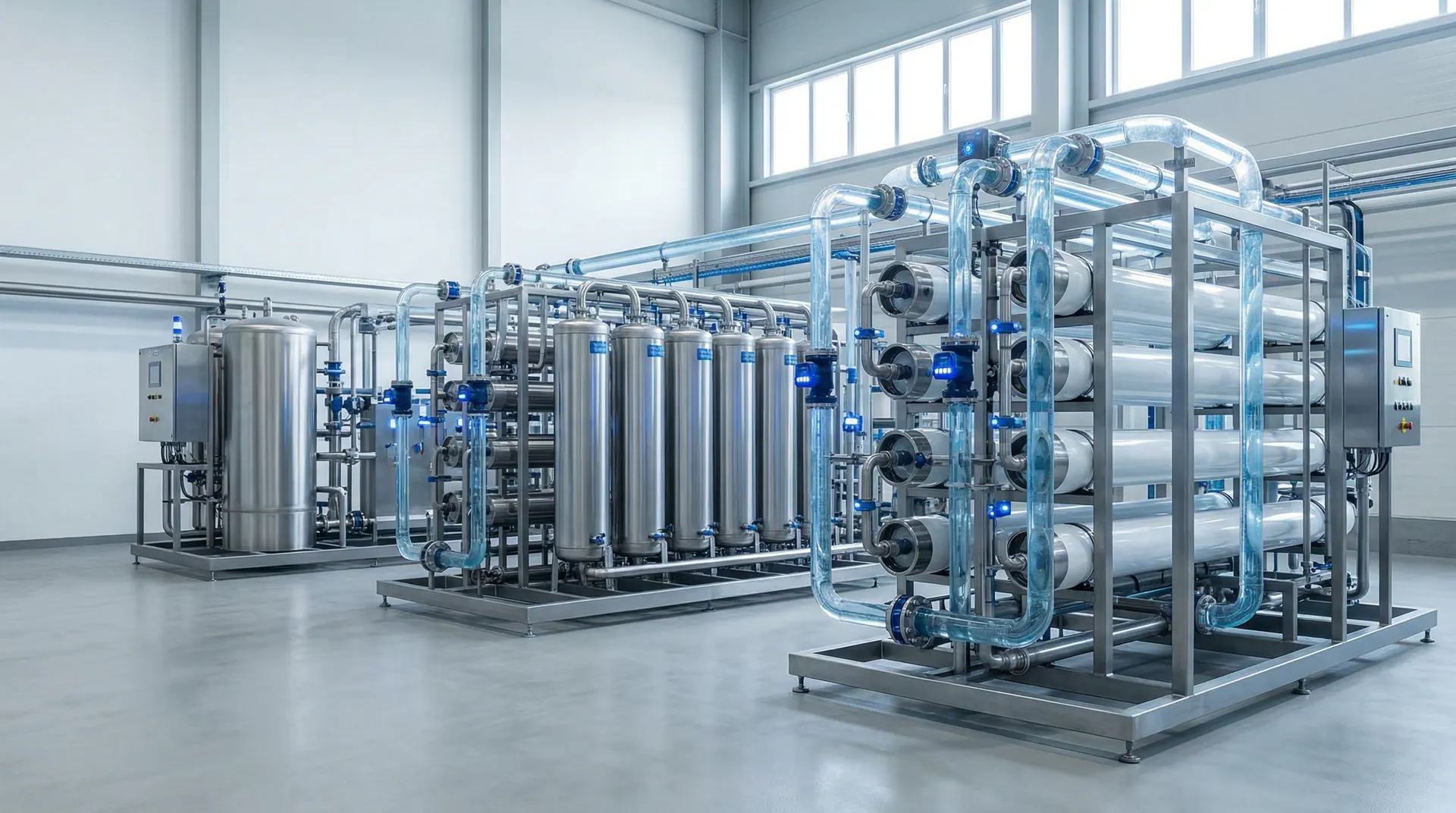
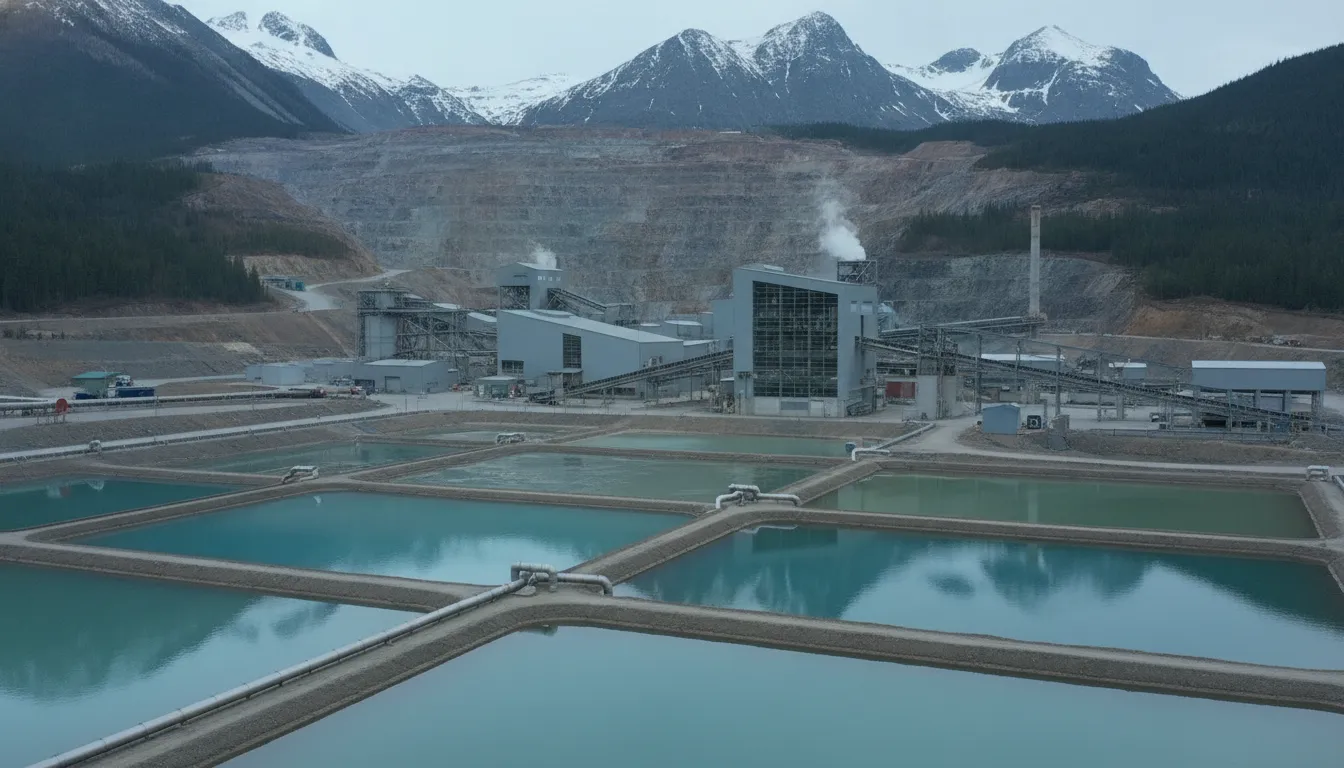
Mining operations generate wastewater with elevated suspended solids, heavy metals, acidic pH ranges, and load variability that demands robust, well-engineered treatment systems. We design and implement staged solutions — sedimentation, neutralization, heavy metal precipitation, and filtration — to meet discharge limits and protect surrounding water resources. Our approach also evaluates process water reuse opportunities to reduce freshwater consumption in water-sensitive operating environments.
Water in mining: three different problems under one word
At a mine or processing plant, "water" means at least three separate systems, and they get conflated more often than they should. There is process water for the concentrator, there is pit and mine dewatering, and there is reclaim water from the tailings facility. Each has its own composition, its own problems and its own economics.
What they share is scale. Volumes here are larger than in any other sector, so any imprecision in dosing is multiplied by a very large number of cubic metres. A reagent scheme that differs by a few percent in effectiveness produces, on a mining site, a difference visible in the annual budget.
What makes it difficult
- Fine suspended solids. Ground ore produces particles that will not settle on their own in any useful time. Clarification without reagents is effectively impossible, and settling rate governs the throughput of the whole reclaim circuit.
- High salinity. Reclaim water concentrates with every cycle. Dissolved solids rise, reagents start behaving differently, and scale begins forming on equipment.
- Heavy metals. The core discharge problem. Their precipitation depends on pH, and the windows for different metals do not always overlap — the scheme has to be built around whichever metal is limiting.
- Acidic drainage. Oxidation of sulphide minerals produces acidic water carrying dissolved metals. It is a persistent problem: it does not end with the shift.
- Seasonality. Snowmelt and rainfall change both volume and composition. A scheme sized on the annual average analysis will not survive the spring peak.
- Distance. Sites are remote, and a break in reagent supply stops not a pump but the concentrator. Supply planning here is part of the technical solution, not a separate procurement task.
How the solution is usually built
Clarifying process and reclaim water
Coagulation with flocculation in thickeners and clarifiers. The targets are settling rate and underflow density: the denser the thickened product, the more water returns to the circuit and the less goes to tailings. Here the flocculant sets the throughput of the whole unit.
Metal precipitation
pH correction into the precipitation window of the limiting metal, coagulation, then solids separation. The subtlety is that outside the optimal window some metals begin to redissolve — so pH here is a controlled parameter, not something set once and forgotten.
Acidic drainage treatment
Neutralisation followed by precipitation. Alkali consumption is a significant cost item on such sites, and the injection point together with mixing regime affects it as much as the reagent itself.
Water recirculation
Returning clarified water to the process while controlling salt accumulation. Blowdown and dissolved-solids monitoring set the maximum achievable recirculation rate. More in water reuse.
Which reagents work here
Clarification uses coagulants — ferric chloride, PAC or aluminium sulfate — paired with a flocculant. For the mineral suspensions typical of mining, anionic polyacrylamide is usually effective: the negatively charged polymer works well with clay, silt and ore particles. Thickening and tailings dewatering are supported by cationic polyacrylamide.
pH correction uses caustic soda or lime depending on site economics; the full set is in pH regulators. Protecting equipment from scale in the reclaim circuit uses antiscalants and anti-corrosion reagents.
What is most often missed
- Flocculant is chosen on price rather than settling rate. On a high-volume site, thickener throughput is worth more than the difference in polymer price.
- Salt accumulation in the circuit is not accounted for. A scheme that worked at start-up behaves differently months later, because the water itself has changed.
- pH is set once. When ore composition changes the precipitation window shifts, and some metals stop meeting the limit.
- Planning uses the annual average analysis. The flood period brings volumes and compositions that an average conceals.
- Supply is planned separately from process. On a remote site, reagent stock is part of the design decision, not a purchasing question.
Frequently asked questions
Can water recovery be increased without rebuilding?
Often yes. Underflow density depends directly on the flocculant and how it is introduced, not only on the vessel. Revisiting the polymer and the injection point frequently produces a noticeable gain in recovery with no capital spend.
What if one metal fails the limit while the others have margin?
The scheme has to be built around the limiting metal, not the average result. That usually means shifting the working pH and checking that other components do not start redissolving as a result.
How do you handle remote sites?
By planning: the delivery schedule is calculated from actual consumption, with margin for the logistics leg and seasonal road access. We work across all regions of Uzbekistan, including remote locations.
How much does season affect the scheme?
Substantially. The sensible approach is to design pretreatment and the reagent package for the worst month rather than the annual average, otherwise the system fails exactly when load peaks.
Getting started
Send an analysis for each circuit separately — process water, effluent, reclaim water — with volumes and the discharge point. Separating the circuits matters more here than anywhere else: a mixed sample hides which stream actually creates the load. Write through the contact form.