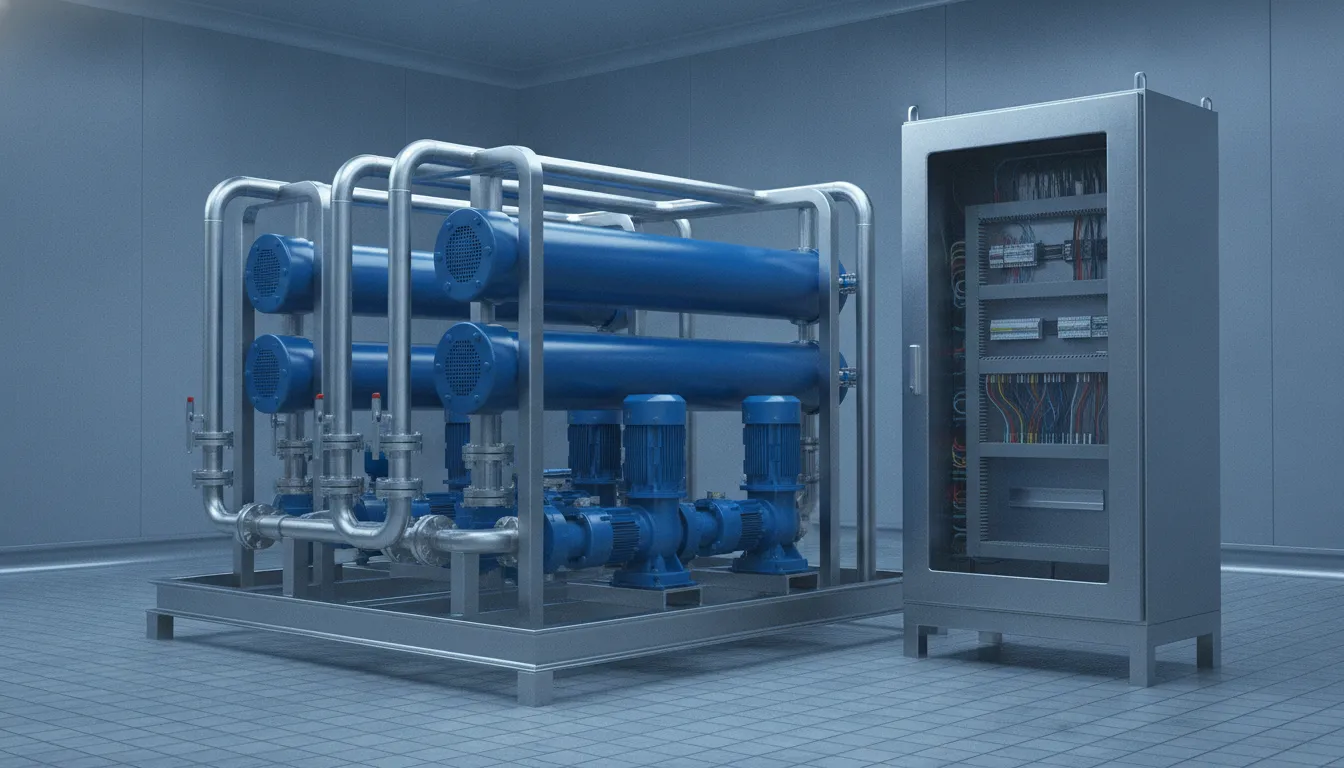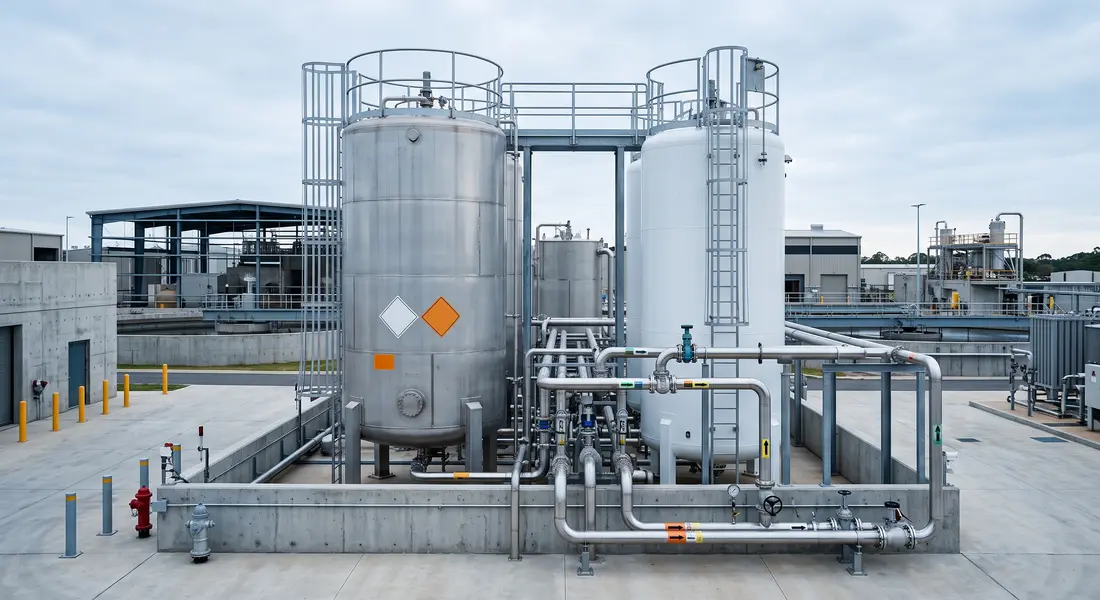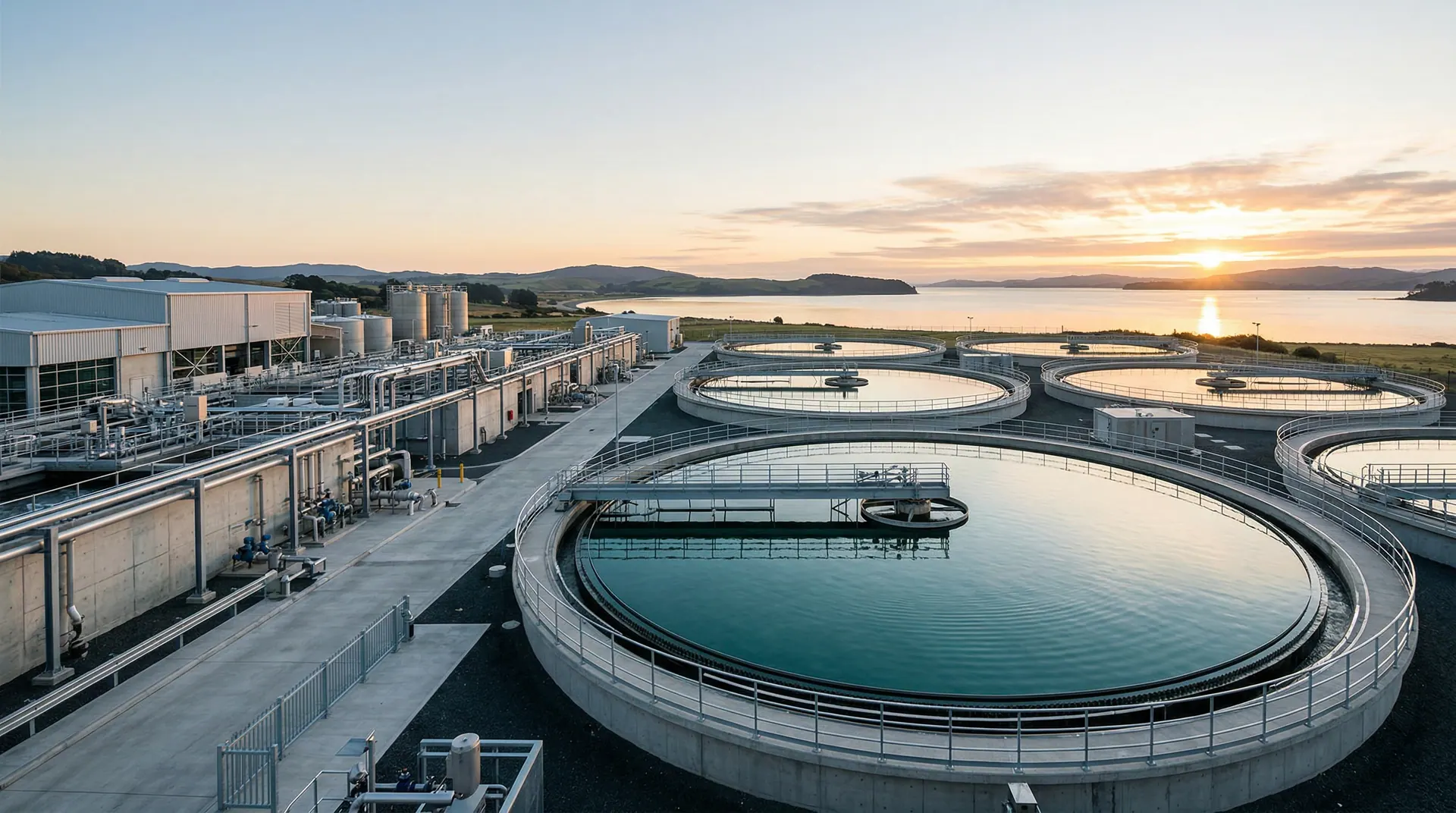
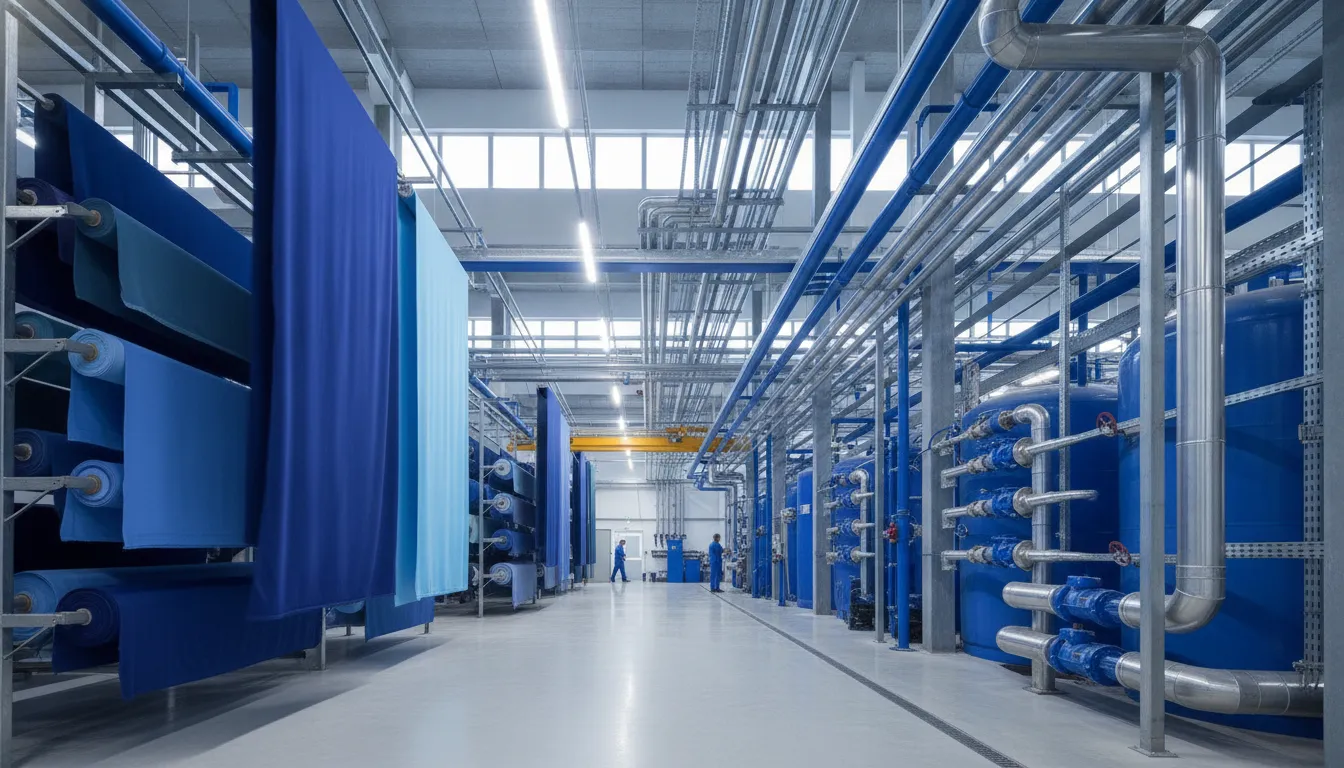
Textile dyeing and finishing processes demand precise water chemistry, large treatment volumes, and effective water reuse to manage high dye loads and COD in effluent streams. We combine multi-stage filtration, chemical treatment, and closed-loop recycling systems that reduce freshwater intake, control effluent quality, and keep production lines running reliably. Treatment design is adapted to the specific fabric type, chemical mix, and water source conditions on each site.
Why water in textile is its own engineering problem
A textile plant spends water twice: first as an input to the process, then as the medium carrying away everything that did not stay on the fabric. Both sides impose requirements, and they pull in opposite directions. Dyeing needs water of stable quality, or a batch is lost to shade variation. Discharge needs water inside the permit, and dyehouse effluent is among the most difficult in industry.
So a textile plant rarely has "a water problem". It has at least two, and they have to be solved together, because the stricter the inlet requirement, the more chemistry is used and the harder the effluent becomes.
What actually creates the problem
- Inlet hardness. Hardness salts bind dyes and surfactants, shift shade and increase dye consumption. Unstable hardness means unstable colour batch to batch — the most expensive kind of defect, because it is found late.
- Effluent colour. Reactive and disperse dyes produce intense colour even at low concentration and resist biological treatment almost entirely. Colour passes straight through the aeration tank.
- pH swings. Alkaline scouring and mercerising on one side, acid dyeing on the other. Effluent arrives in batches, and without equalisation the chemical stage is working blind.
- Temperature. Hot effluent reduces biological efficiency and accelerates equipment corrosion.
- Salinity. Reactive dyeing requires heavy salt dosing, which complicates both the biology and any attempt to return water to production.
- Product range changes. A new dyeing programme changes the effluent. A scheme tuned to last season's range starts drifting with no failure to point at.
How the solution is usually built
The problem splits into three loops, and the order matters.
Inlet water
Stabilising hardness and removing what interferes with dyeing. The goal is not "the cleanest possible water" but water with predictable parameters — repeatability matters more than absolute values. Softening, and demineralisation where the process is most sensitive. More in water treatment.
Effluent
Equalisation, neutralisation, coagulation with flocculation, a separate decolourisation stage, then biology for the residual organics. The key point: colour is removed by chemistry, not biology, and saving here reliably produces a permanent colour exceedance. More in wastewater treatment.
Water return
Rinse water is the most accessible reuse source in a textile plant, because there is a lot of it and it is relatively clean. Returning water to dyeing needs salinity control and usually a membrane stage. Starting with rinses and auxiliary duties is the logical sequence.
Which reagents work here
For coagulating textile effluent, ferric chloride and PAC are the usual candidates: iron is generally stronger on colour and gives a denser sludge, PAC tolerates pH swings better. Flocculation uses anionic polyacrylamide; sludge dewatering uses cationic.
Residual colour the coagulant did not capture is removed with a colour remover — cheaper than pushing coagulant dose indefinitely. pH correction uses pH regulators, and membranes on a reuse loop are protected with antiscalants. The full range is in products.
What is most often missed
- The scheme is designed without equalisation. In textile this is mistake number one: effluent arrives in batches, and without levelling, dosing cannot be tuned at all.
- Colour is expected from the biology. The aeration tank does not remove colour. That happens at the chemical stage.
- Rinse and dyeing effluent are mixed. A relatively clean stream is lost inside a difficult one, and the cheapest reuse option disappears with it.
- Dosing is not revisited when the range changes. A new dyeing programme means different effluent. It should be revisited before the limit is breached, not after.
- Sludge is left "for later". The chemical stage in textile produces a lot of it, and without a dewatering plan the yard fills quickly.
Frequently asked questions
Can colour be removed without a separate decolourisation stage?
Sometimes, if coagulation is precisely selected and the dyes are not the most resistant. But with reactive dyes a coagulant alone usually does not bring colour inside the limit, and increasing the dose costs more than adding a decolourant.
How much water can realistically be returned?
It depends where it goes back. Rinses and auxiliary duties accept polished water easily. Returning to dyeing runs into salt accumulation and needs a membrane stage — that is a separate project with its own economics.
Where do we start if the plant exists but cannot cope?
With a survey of the existing scheme and an effluent analysis taken per department. A significant share of textile deviations is solved by revising reagents, injection points and dosing regime, without rebuilding anything.
Does water quality affect dye consumption?
Yes, and it is an often underestimated cost. Unstable hardness means the dye behaves unpredictably, which shows up both as overconsumption and as re-dyeing.
Getting started
Send an inlet water analysis and an effluent analysis — separated by department where possible — plus the daily discharge profile. That is enough to see where the main loss sits at your site: in water preparation, in the reagent scheme, or in reuse nobody accounted for. Write through the contact form.