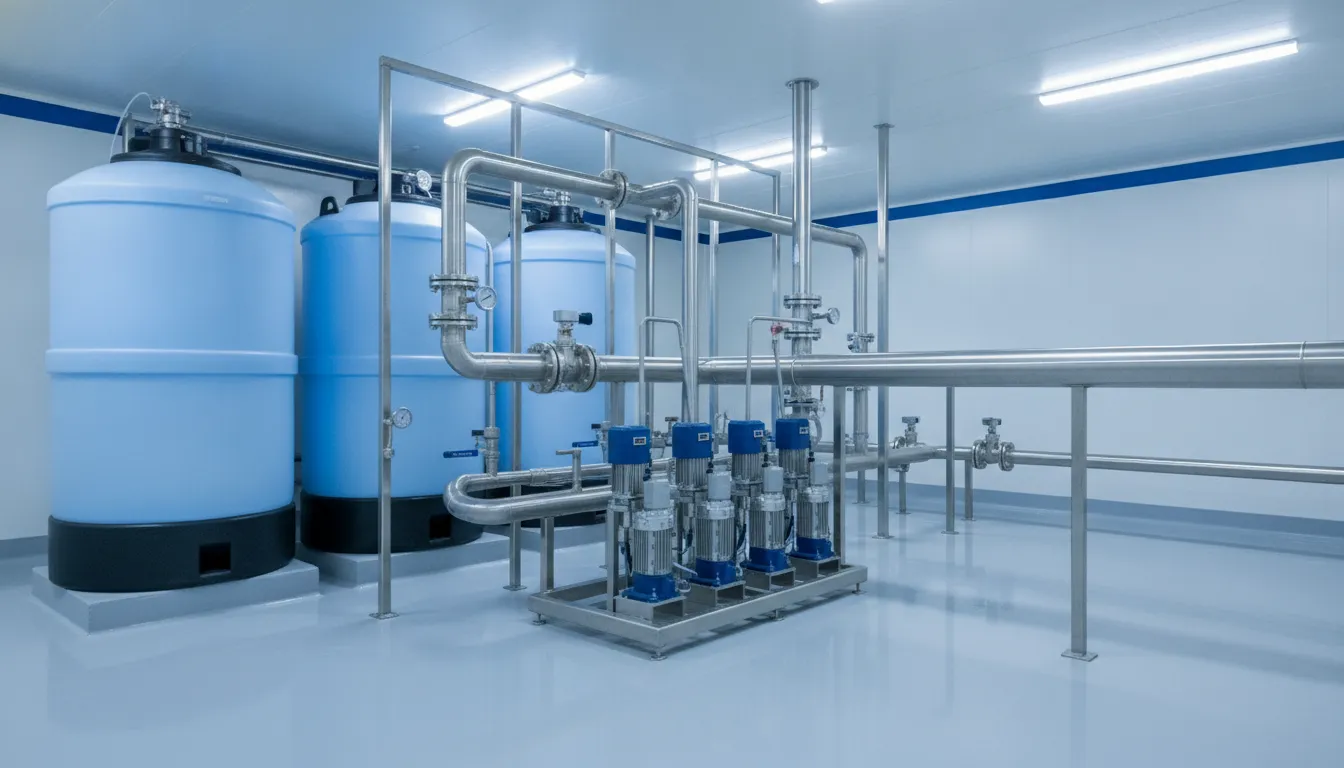
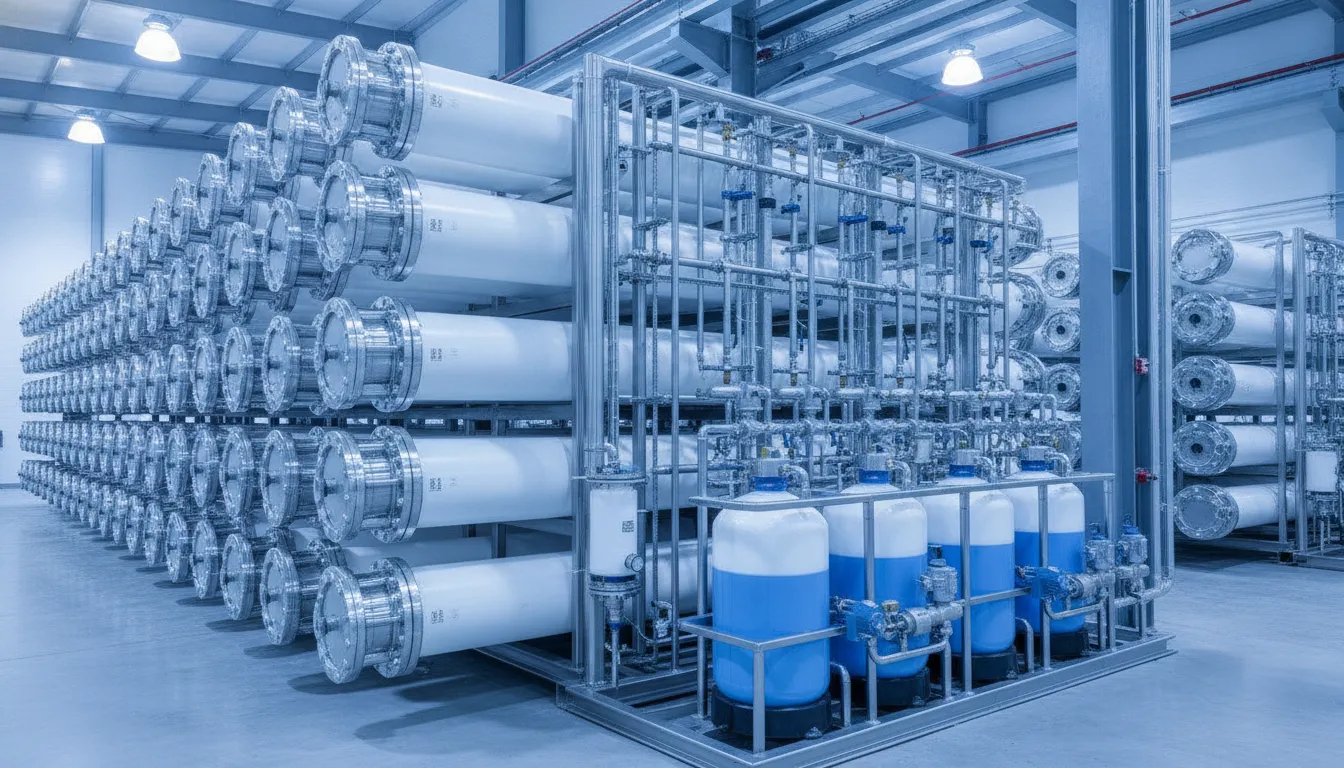
Antiscalants use phosphonate- and polymer-based active ingredients to delay crystal growth of salts that exceed their solubility limits and to prevent deposits on membrane surfaces. The right antiscalant program means higher recovery rates, fewer chemical cleanings (CIP), and longer membrane life. Product selection and dosage projection are based on raw water analysis.
Key benefits
Applications
Products / Specifications
Supply formats
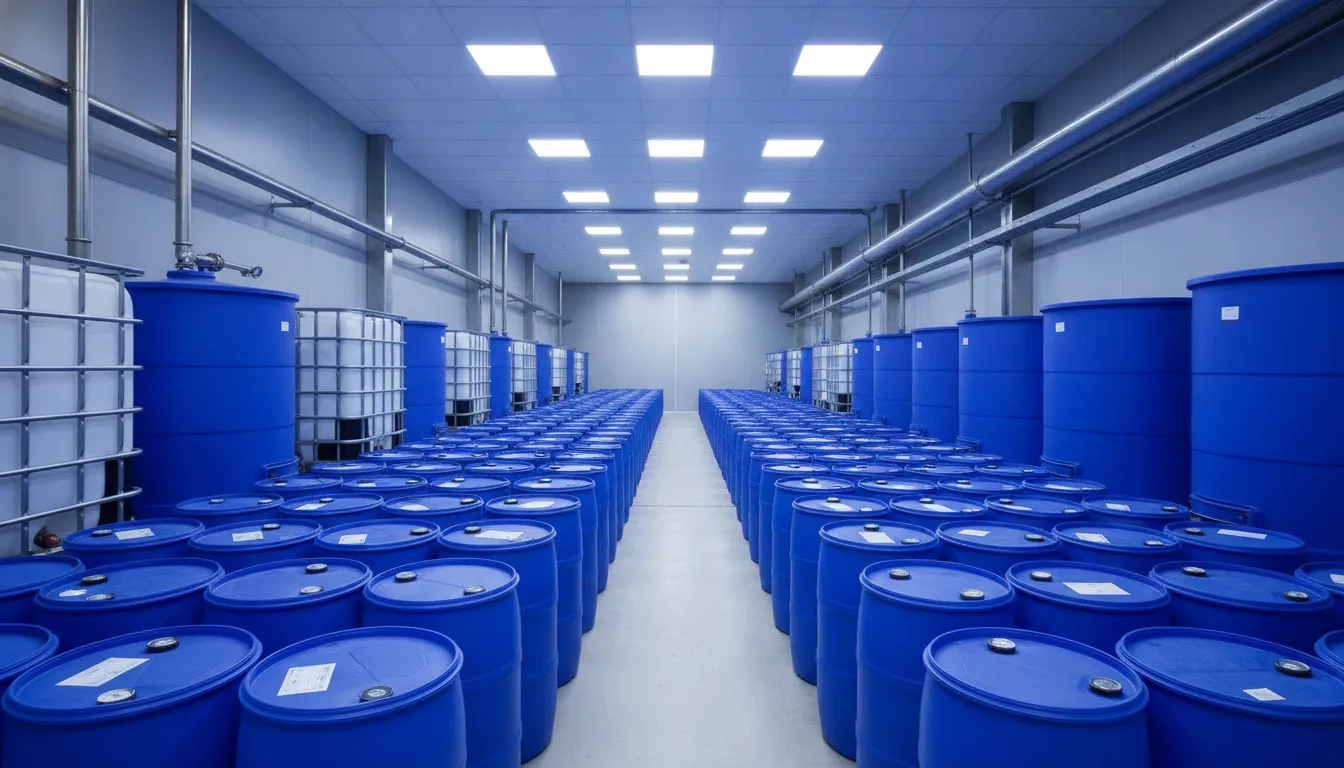
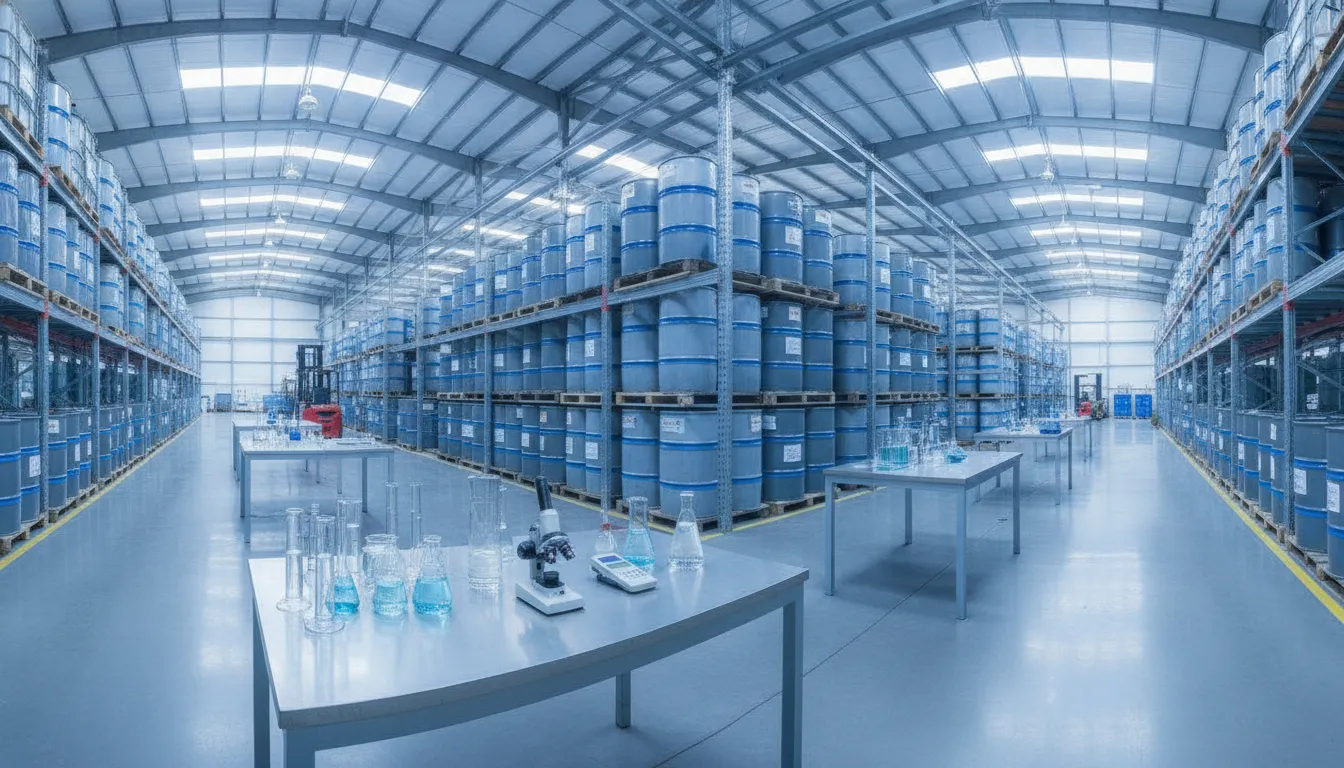
- 25 kg jerrycans and 200 kg drums.
- IBC tanks (1000 L) for industrial supply.
- Consumption planning based on dosage projections.
What is an antiscalant? How does it protect RO membranes from scaling?
An antiscalant (scale inhibitor) is a specially formulated water treatment chemical that prevents mineral salts from crystallizing and depositing on membrane surfaces in reverse osmosis and other membrane systems. As water passes through an RO membrane, salt concentrations in the reject stream rise 4-6 fold; salts such as calcium carbonate (CaCO3), calcium sulfate (CaSO4), barium sulfate (BaSO4), and silica exceed their solubility limits and cause the membrane 'scaling' that destroys performance.
Antiscalants work through three mechanisms: threshold inhibition delays crystal nucleation at sub-ppm doses, crystal modification distorts crystal growth so soft, fluid particles form instead of hard scale, and dispersion keeps particles from adhering to the membrane surface. A balanced combination of phosphonate and polymer actives provides broad-spectrum protection in a single product.
Antiscalant dosage, projection, and operational impact
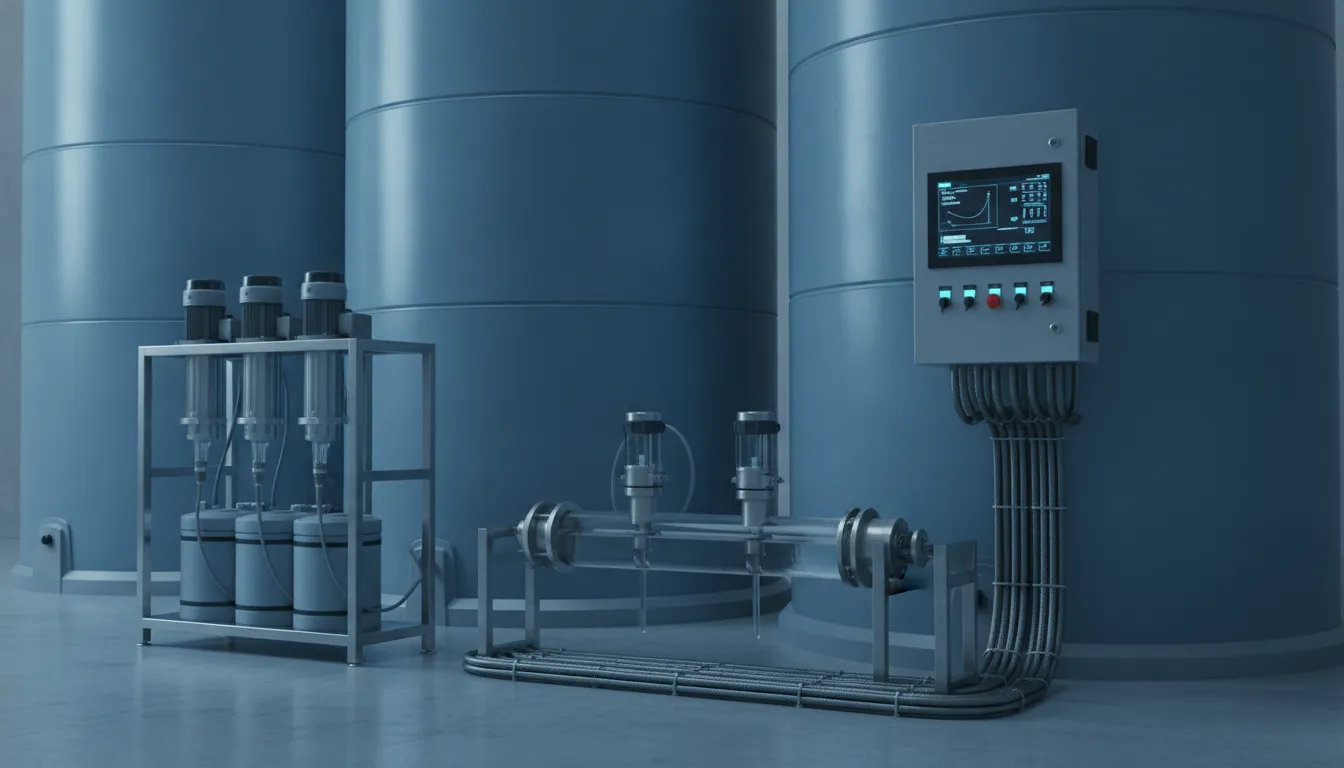
A correct antiscalant program starts with a raw water analysis: calcium, magnesium, barium, strontium, sulfate, bicarbonate, silica, and iron values plus the target recovery rate are entered into projection software to produce the 'antiscalant projection'. The projection identifies which salts pose a risk (LSI/S&DSI indices), the required product type, and the exact ppm dosage. Typical dosing is 2-6 ppm into the feed water upstream of the cartridge filters.
The concrete operational gains of a properly run antiscalant program: safe recovery rates up to 75-85%, a sharp reduction in CIP (chemical cleaning) frequency, stable permeate flow and salt rejection, membrane life extended to 5-7 years, and lower energy consumption. The wrong product or an insufficient dose, by contrast, can cause hard-to-reverse scaling damage within weeks — which is why running antiscalant without a projection is not recommended.
Antiscalant supply with free projection service
Aqua Global supplies antiscalant grades compatible with common reverse-osmosis membrane types in 25 kg jerrycans, 200 kg drums, and IBCs across Uzbekistan. Send us your water analysis and we prepare your antiscalant projection free of charge, plus technical support for dosing pump settings and CIP programs. Contact us for antiscalant pricing and samples.
Frequently Asked Questions
Which salts does an antiscalant prevent from depositing?
Standard formulations control calcium carbonate (CaCO3) and calcium sulfate (CaSO4); broad-spectrum products also prevent barium sulfate, strontium sulfate, calcium fluoride, silica, and iron deposits. The right formulation is chosen based on the raw water analysis.
What should the antiscalant dosage be?
Typical dosage is 2-6 ppm; the exact value is calculated by projection software from the water analysis and target recovery rate. Underdosing risks scaling, while overdosing adds cost and can contribute to organic fouling.
Is antiscalant compatible with every membrane?
Quality antiscalants are compatible with all polyamide thin-film composite (TFC) membranes and appear on the approval lists of major membrane manufacturers. For cellulose acetate membranes and special applications, we verify the formulation first.
What is an antiscalant projection and how do I get one?
A projection is the engineering calculation that quantifies scaling risk from your water analysis and system data, then sets the product type and dosage. Send Aqua Global your current water analysis and system details (flow, recovery, membrane model) and we prepare the projection free of charge.