Sodium bisulfite solution is a practical dechlorination chemical that rapidly neutralizes free chlorine and other oxidants. Its liquid form allows direct dosing without solution make-up; it is widely used on discharge lines after disinfection, in RO pretreatment, and as an oxygen scavenger in boiler systems.
Key benefits
Applications
Products / Specifications
Supply formats
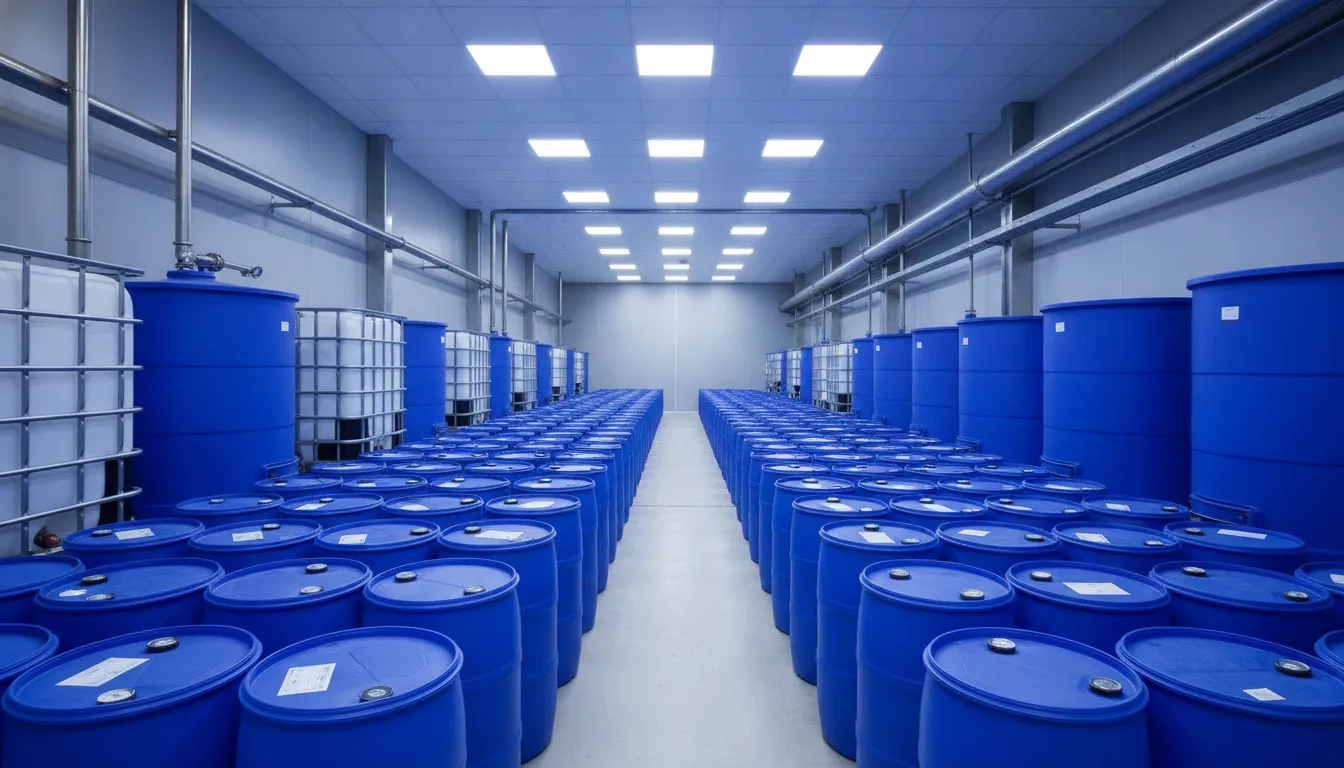
- 30-60 kg jerrycans and 200 kg drums.
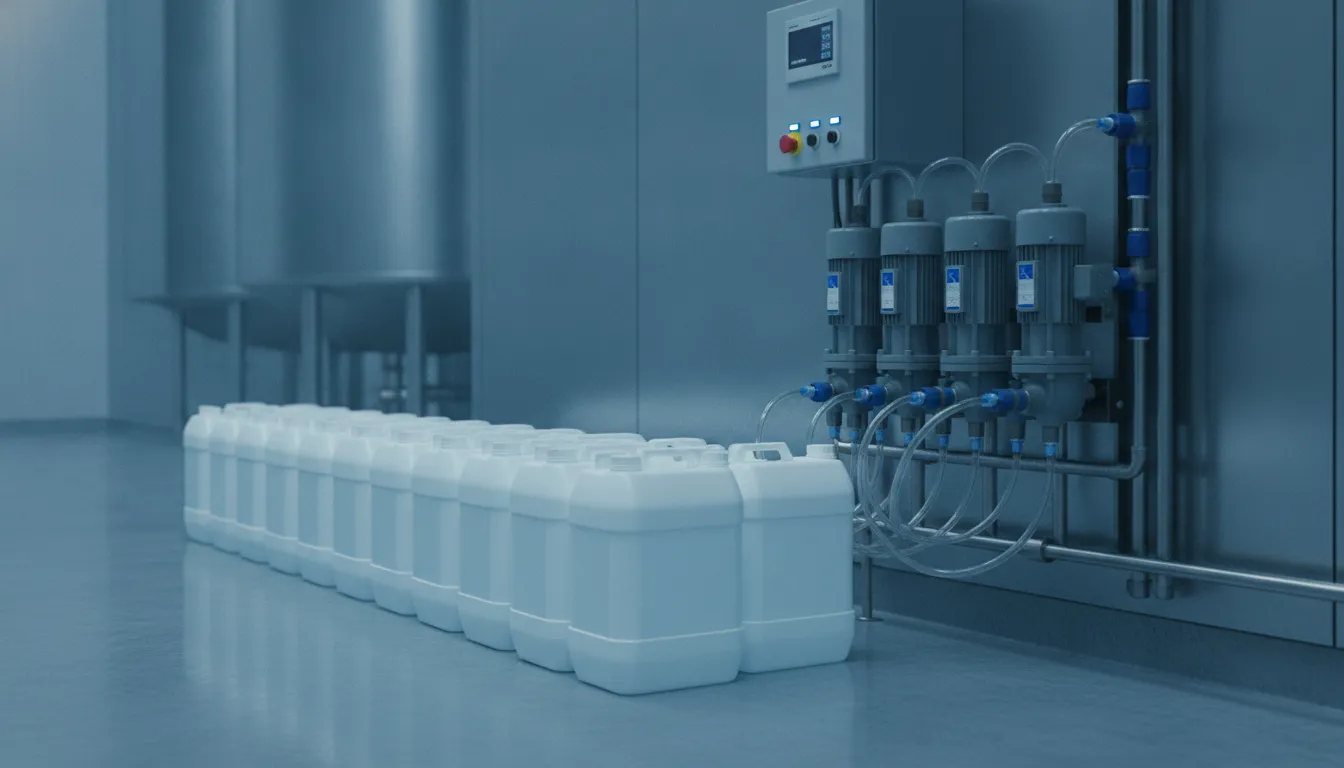
- IBC tanks (1000 L) for industrial supply.
- Contract replenishment for regular consumption.
What is sodium bisulfite (NaHSO3)? Where is it used?
Sodium bisulfite (NaHSO3) is a liquid reducing chemical supplied as a ready-made solution at 20-40% concentration. It relies on the same active chemistry as sodium metabisulfite — the bisulfite ion — but with one key difference: it can be dosed directly without any powder dissolution step. That practicality makes sodium bisulfite the first choice on lines with continuous, automated dosing.
It has three main applications: first, dechlorination before discharge — neutralizing the chlorine of disinfected water before it reaches rivers or channels; second, free chlorine removal in RO membrane pretreatment; and third, oxygen scavenging in boiler feedwater to prevent corrosion. It is also applied for oxidant control in process waters and in textile reduction baths.
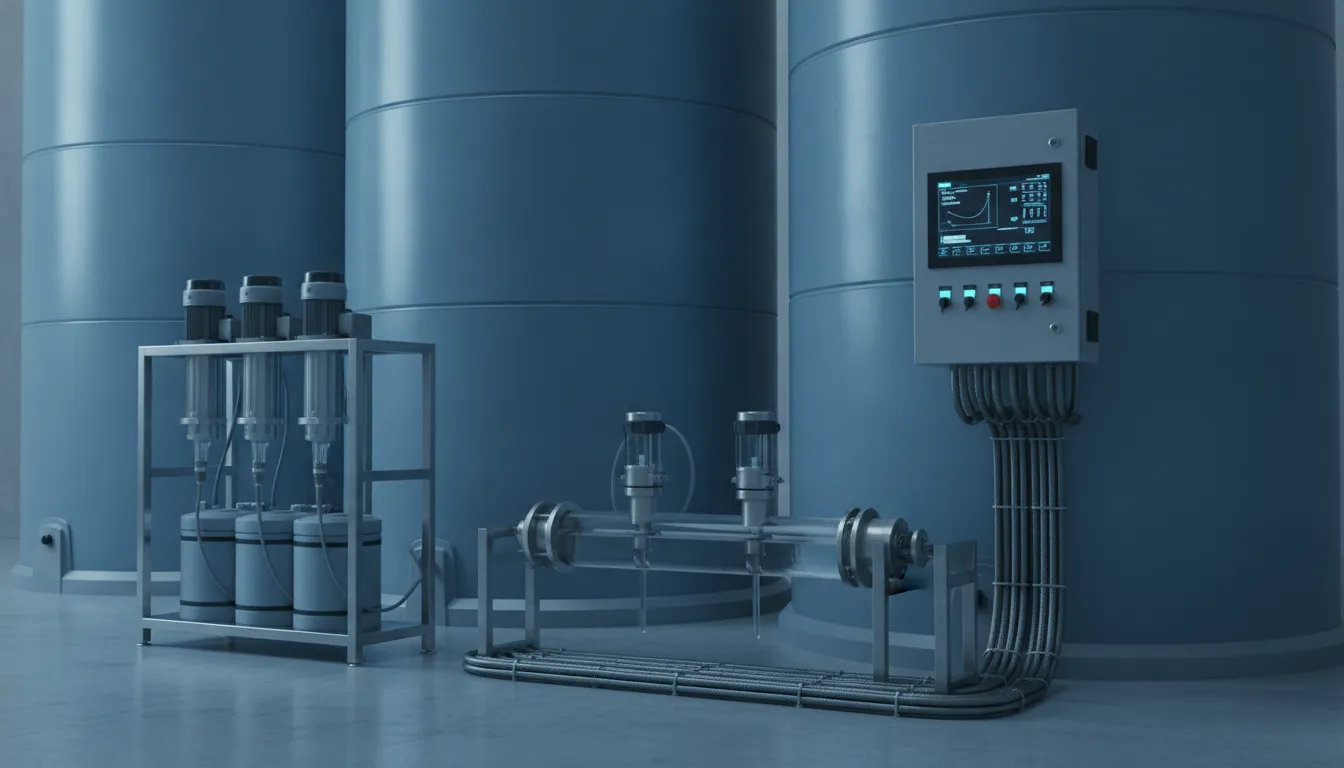
Sodium bisulfite dosing and automatic dosing systems
For dechlorination, dosing is tied to residual chlorine measurement or ORP control; about 1.5-2 ppm NaHSO3 (active) per 1 ppm free chlorine is sufficient. In boiler applications, roughly 8-10 ppm bisulfite is dosed per ppm of dissolved oxygen, targeting a 20-50 ppm sulfite residual in the boiler water; for high-pressure boilers, check the boiler maker's limits before use.
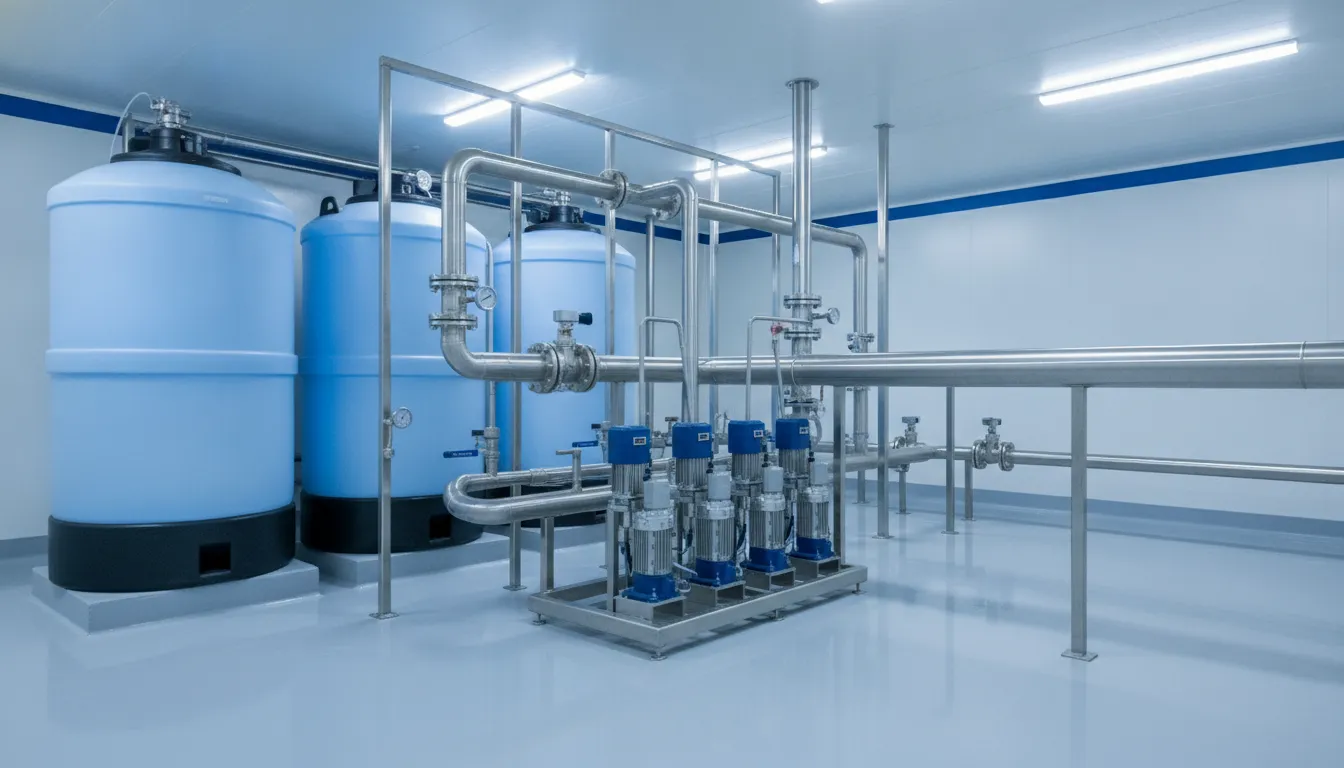
The liquid form connects directly to dosing pumps driven by an ORP or chlorine analyzer signal, guaranteeing zero residual chlorine at the outlet even under variable chlorine loads. In storage, keep the product cool and limit air contact, otherwise the concentration slowly drops. Aqua Global provides technical support for dosing system selection, calibration, and residual monitoring.
Sodium bisulfite supply — Aqua Global
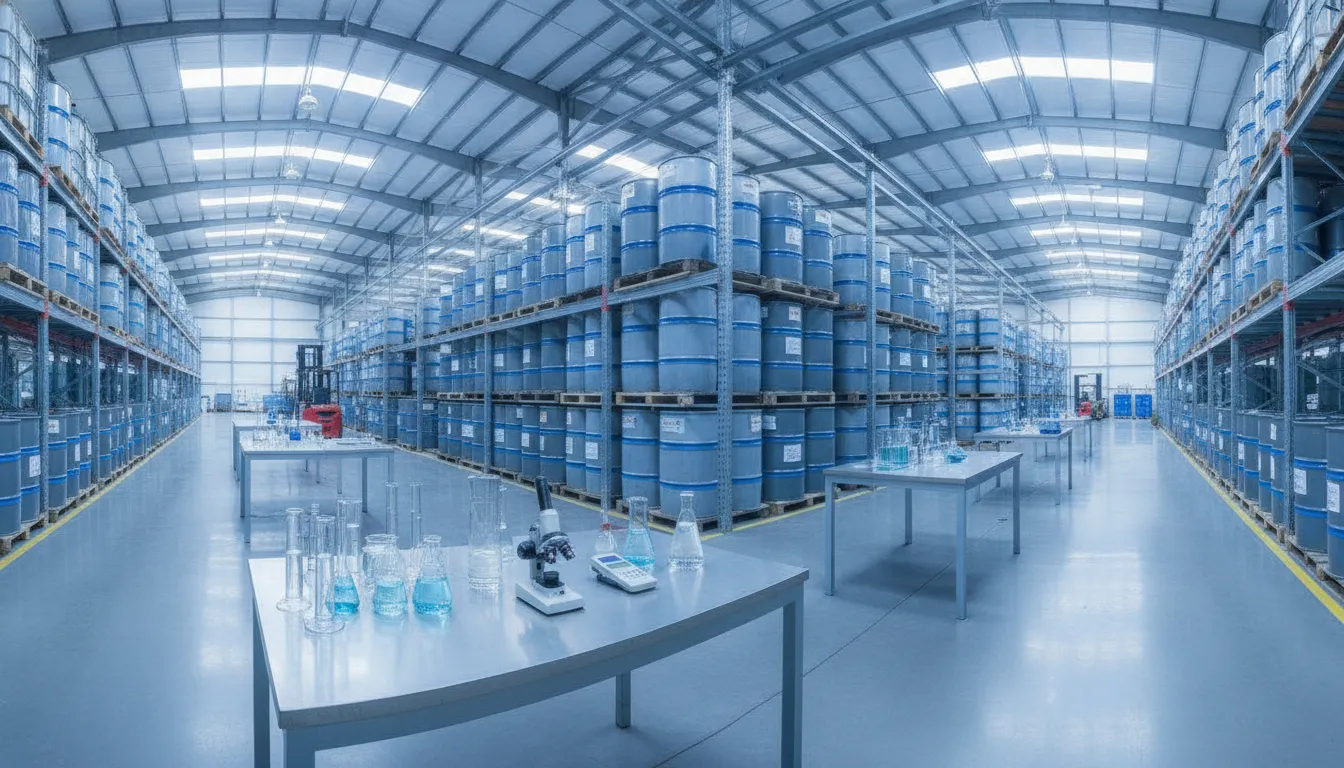
Aqua Global supplies sodium bisulfite solution in 30-60 kg jerrycans, 200 kg drums, and 1000 L IBCs across Uzbekistan. We set up regular shipment programs for treatment plants, power stations, and industrial boiler operators. Request a sodium bisulfite price and supply terms via our contact form.
Frequently Asked Questions
What is the difference between sodium bisulfite and sodium metabisulfite?
Chemically they deliver the same active ion (bisulfite). Metabisulfite is a powder with higher active content and economical storage; bisulfite is a ready liquid that needs no dissolving unit and connects directly to automatic dosing. The choice depends on your plant's equipment and consumption profile.
Why must chlorine be neutralized before discharge?
Residual chlorine is toxic to fish and aquatic life even at very low concentrations, and most discharge regulations require near-zero residual chlorine. Sodium bisulfite dosing lets chlorinated water be discharged without harming the receiving environment.
How is it used as an oxygen scavenger in boilers?
It is dosed continuously into the feedwater to bind the dissolved oxygen remaining after the deaerator — 8-10 ppm bisulfite per ppm oxygen — while the sulfite residual in the boiler water is monitored. This prevents oxygen corrosion and tube failures.
In which packaging is it available?
30-60 kg jerrycans, 200 kg drums, and 1000 L IBC tanks. Aqua Global offers contract replenishment plans and fast delivery from stock for regular consumers.