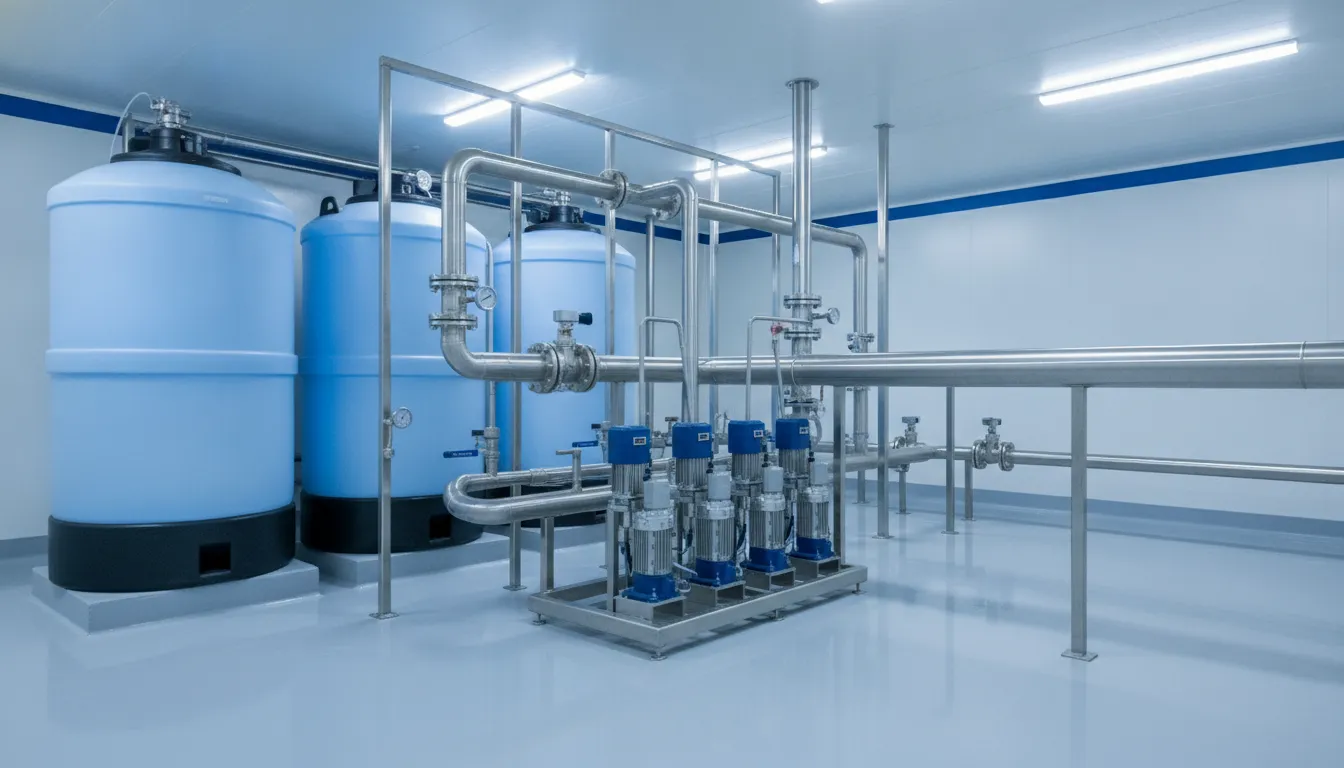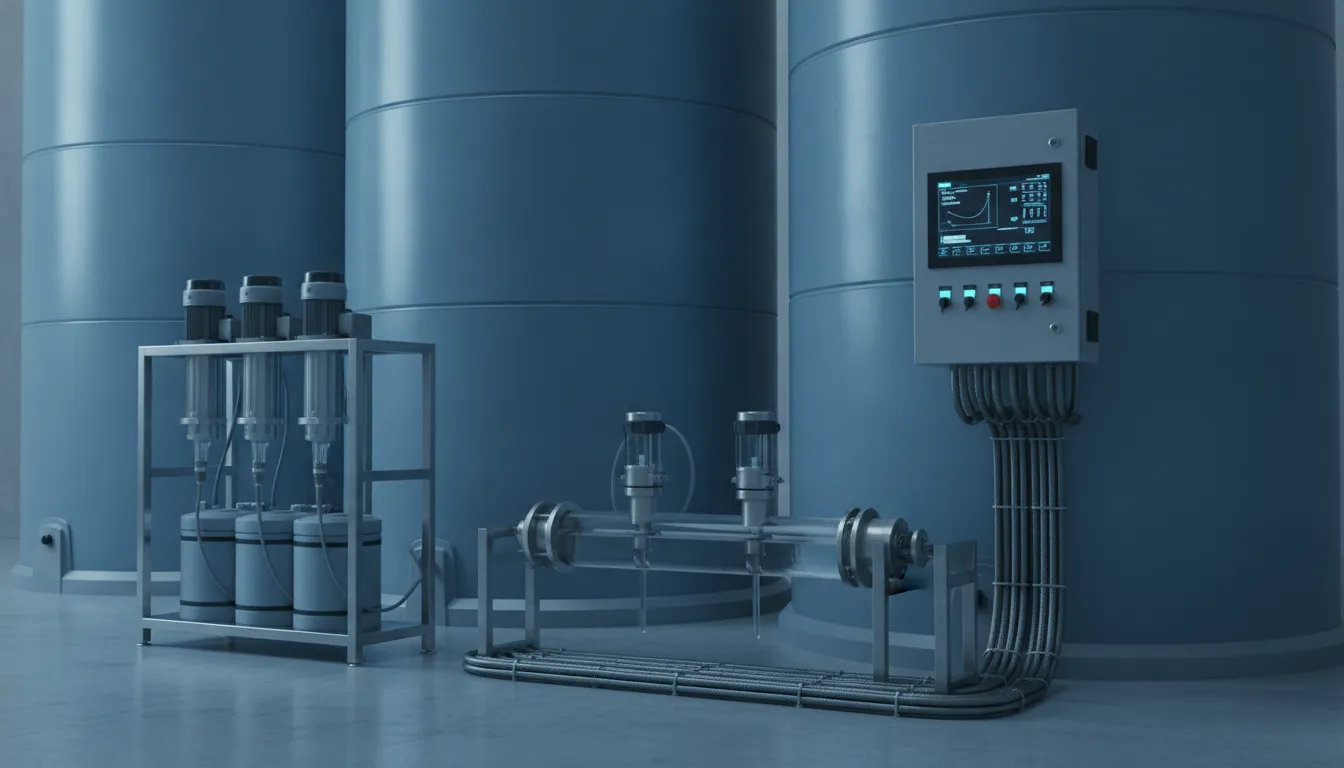
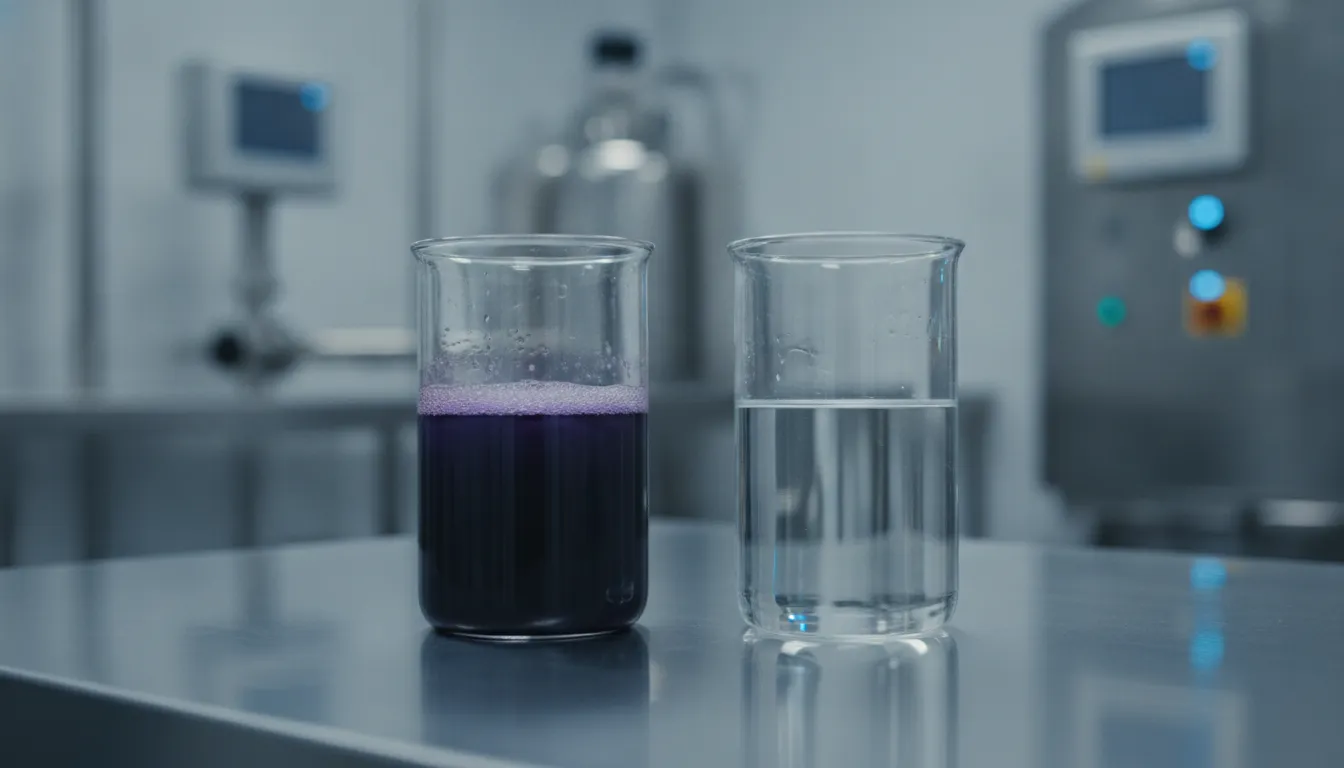
The color remover (water decolorant) is a dicyandiamide-formaldehyde based cationic polymer that reacts quickly with dissolved dyes to form settleable flocs. Used alone or combined with ferric chloride, PAC, and polyacrylamide, it achieves high removal of color, COD, and turbidity. It is designed especially for textile dyehouses and printing plants that must meet discharge color limits.
Key benefits
Applications
Products / Specifications
Supply formats
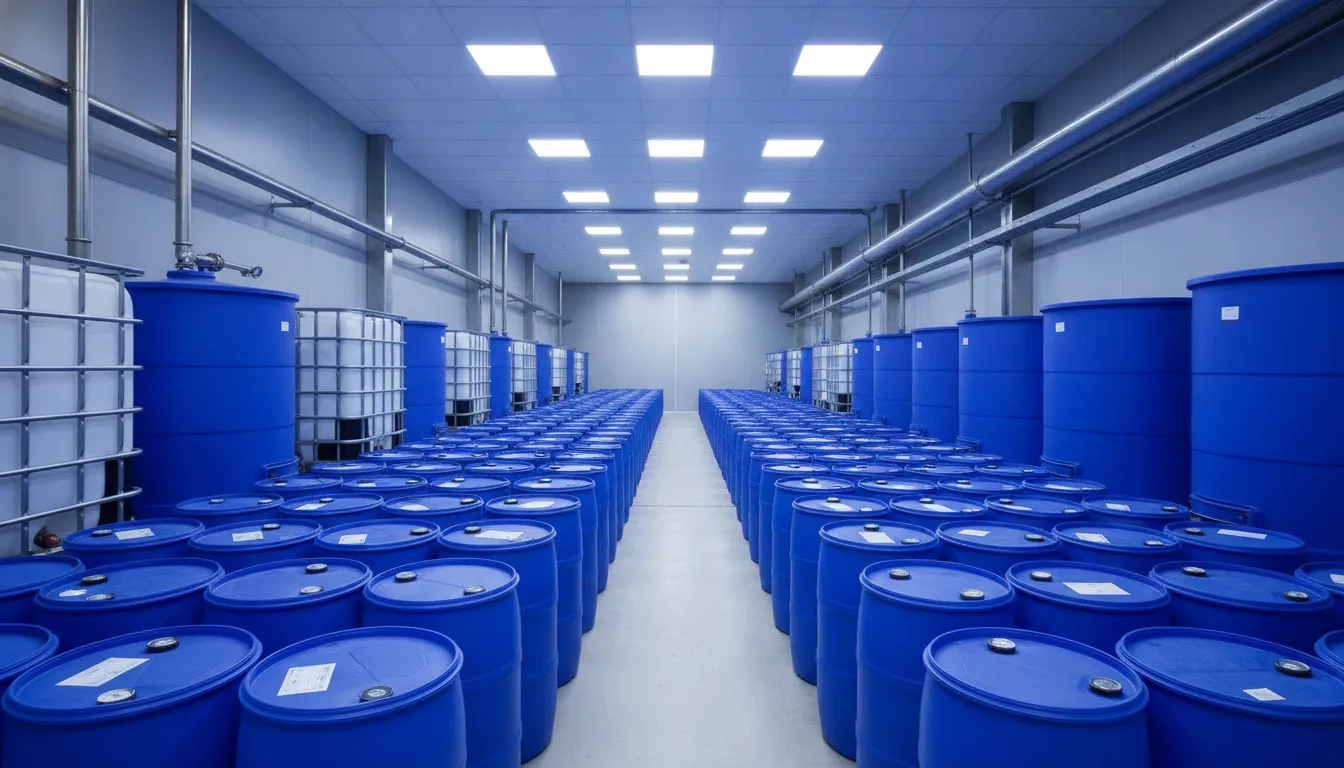
- 25-30 kg jerrycans and 200 kg drums.
- IBC tanks (1000 L) for industrial supply.
- Contract replenishment programs for regular consumption.
What is a color remover? How does wastewater decolorization work?
A color remover (water decoloring agent, decolorant) is a cationic polymer-based water treatment chemical developed to rapidly precipitate dissolved dyes from textile and dyehouse wastewater. The most common formulation is a highly cationic dicyandiamide-formaldehyde resin polymer. Reactive, acid, and disperse dye molecules carry negative charges in water; the color remover binds them electrostatically and converts them into settleable flocs.
Color removal efficiencies that are difficult to reach with classic coagulants alone (aluminium sulfate, ferric chloride) can climb to 90-99% with a dedicated decolorant. Because the product also reduces COD (chemical oxygen demand) and turbidity, it has become the first choice of textile plants struggling to meet discharge standards. The most economical results come from combined programs with PAC, ferric chloride, and polyacrylamide.
Which industries use color removers? How is the dosage set?
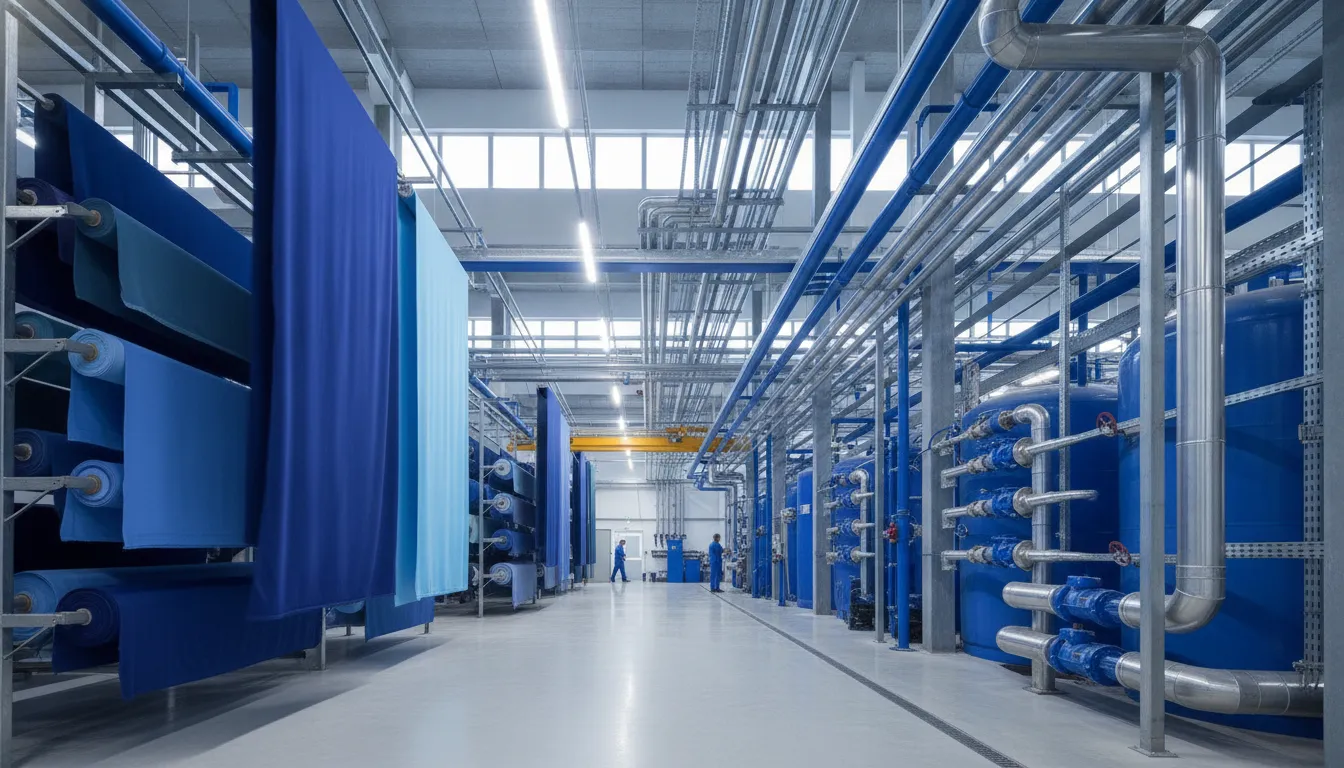
The primary application is the textile sector: dyehouse wastewater, fabric printing effluent, yarn dyeing, and denim washing plants use it to bring the color parameter under the discharge limit. It also performs well in pulp and paper mills, dye and pigment manufacturing, ink wastewater, and leather processing plants.
The dosage depends on the wastewater's color load and dye type and is determined by jar testing on a sample; the typical range is 100-1000 g/m3. The most common dosing sequence is: color remover first, then coagulant, then flocculant. Best performance is achieved between pH 6 and 9. Aqua Global runs free jar tests on your wastewater sample and builds the lowest-cost decolorization program together with you.
Buy color remover: supply across Uzbekistan and Central Asia
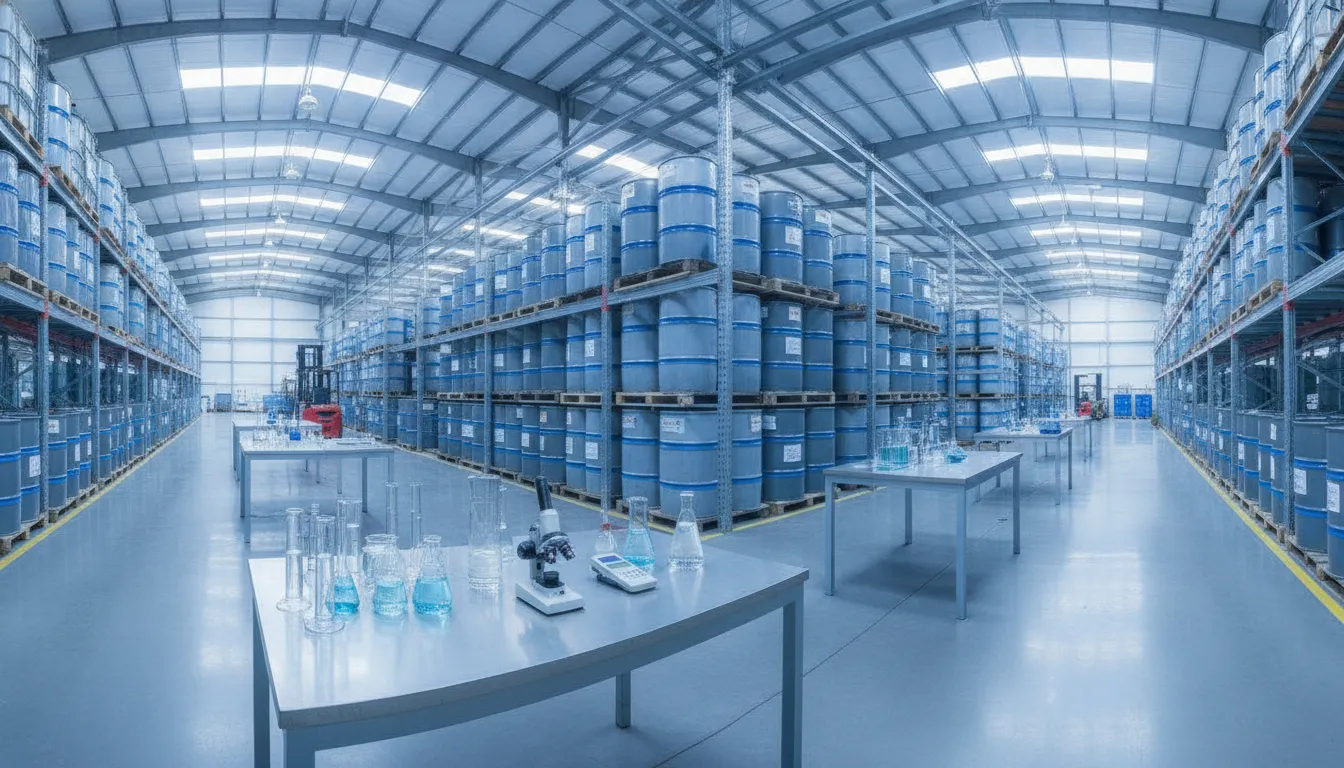
In Uzbekistan's rapidly growing textile sector, Aqua Global supplies color remover chemicals from stock in 25-30 kg jerrycans, 200 kg drums, and 1000 L IBC tanks. We deliver quickly to textile and dyehouse operations in Tashkent, Namangan, Andijan, Fergana, Bukhara, and Samarkand. Request a color remover price quote, sample, or trial batch through our contact page.
Frequently Asked Questions
Which dyes does the color remover eliminate?
The color remover achieves high efficiency on most dissolved dyes, including reactive, acid, disperse, and direct dyes. It performs strongest on reactive and acid dyes; the exact efficiency for your wastewater is measured in advance by jar testing.
Is the color remover enough on its own, or should it be combined with a coagulant?
At low color loads it can be sufficient alone, but for most textile wastewater the most economical result comes from combining the decolorant with a coagulant such as PAC or ferric chloride plus a polyacrylamide flocculant. This program reduces color, COD, and turbidity together.
What is the typical color remover dosage?
The typical dosage is 100-1000 g/m3, varying with the color intensity of the wastewater. The exact dose is determined by jar testing on a sample — a test Aqua Global performs free of charge before supply.
Where can I buy color remover in Uzbekistan?
Aqua Global ships color remover chemicals from its Tashkent warehouse across Uzbekistan. Jerrycan, drum, and IBC packaging options are available; simply reach out via our contact form for a price quote and sample.