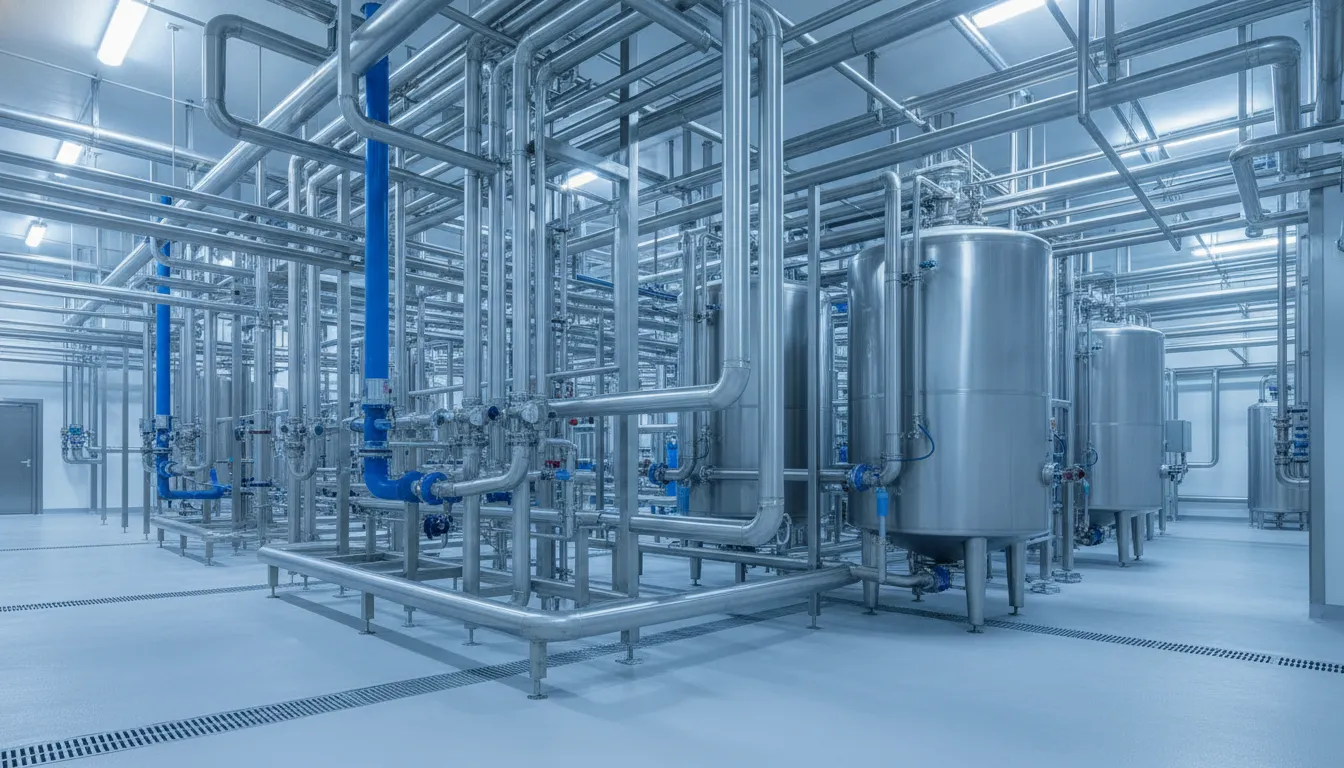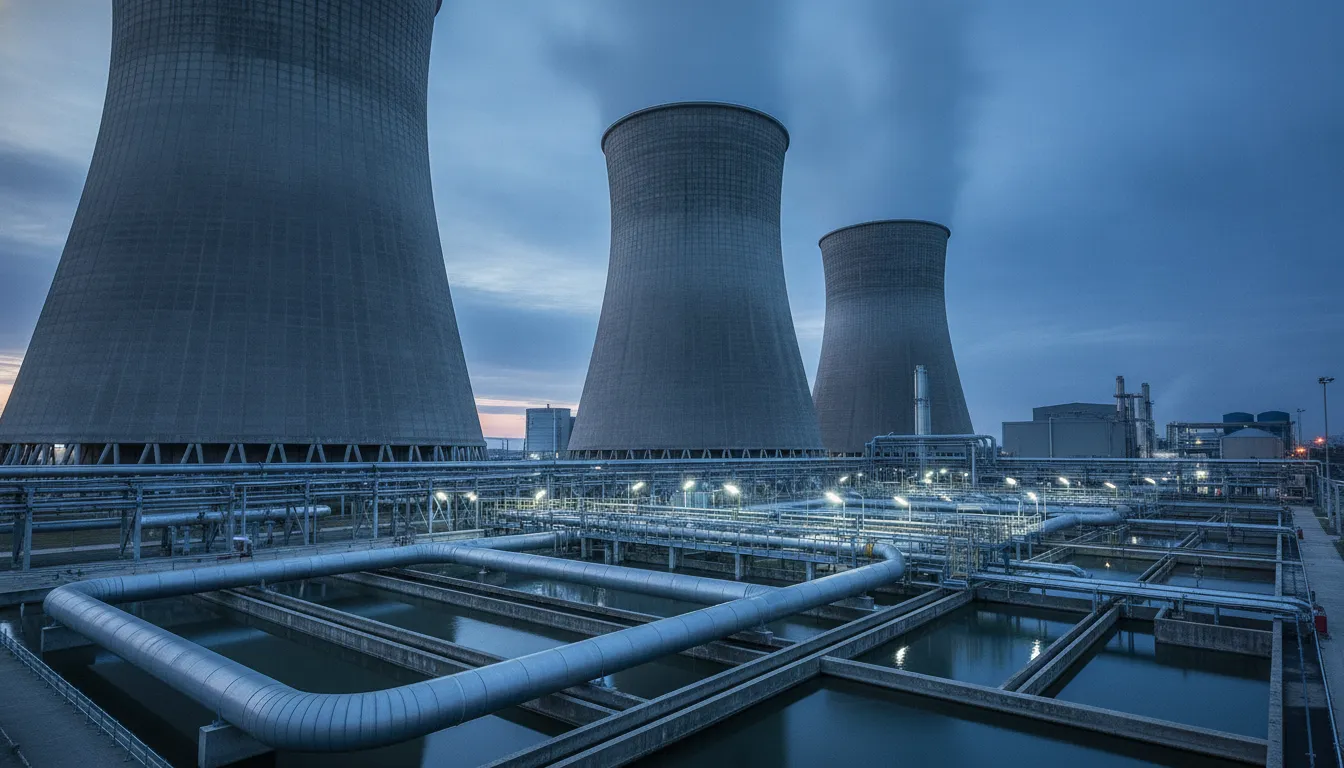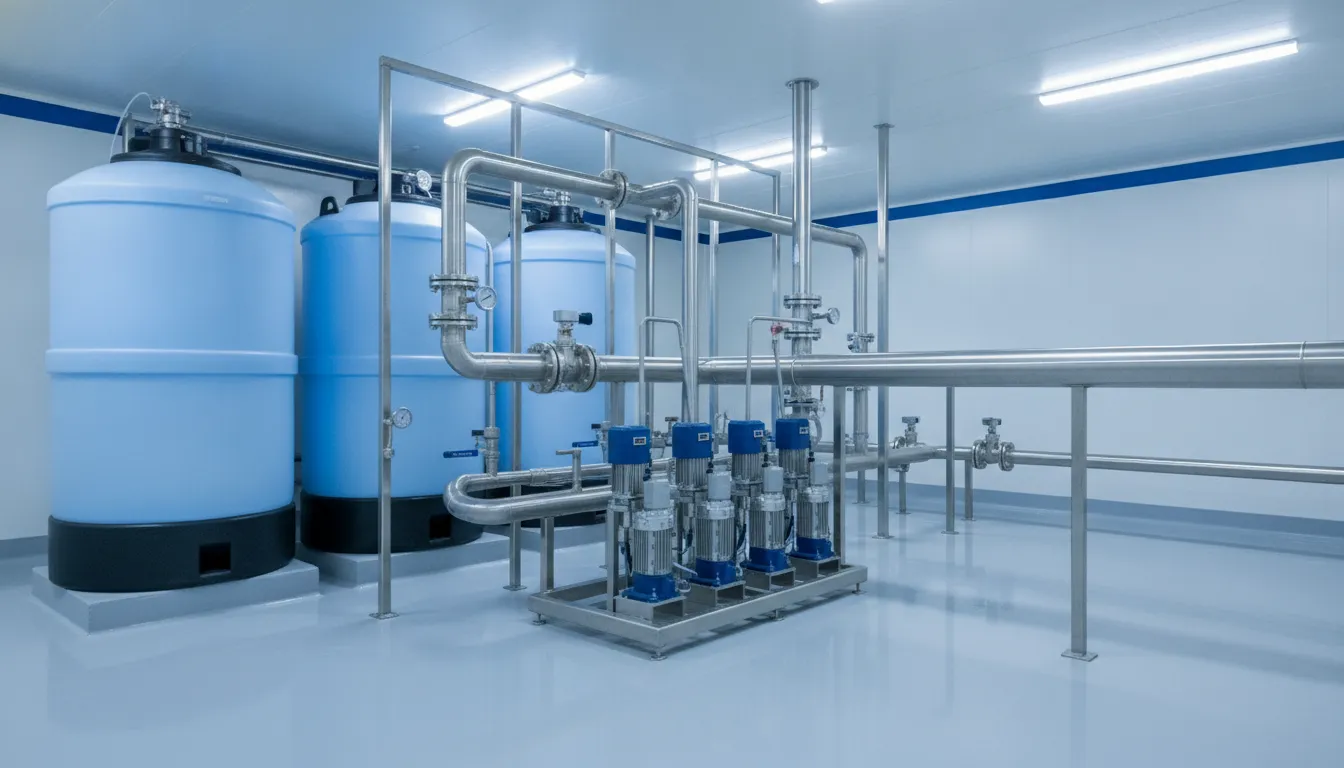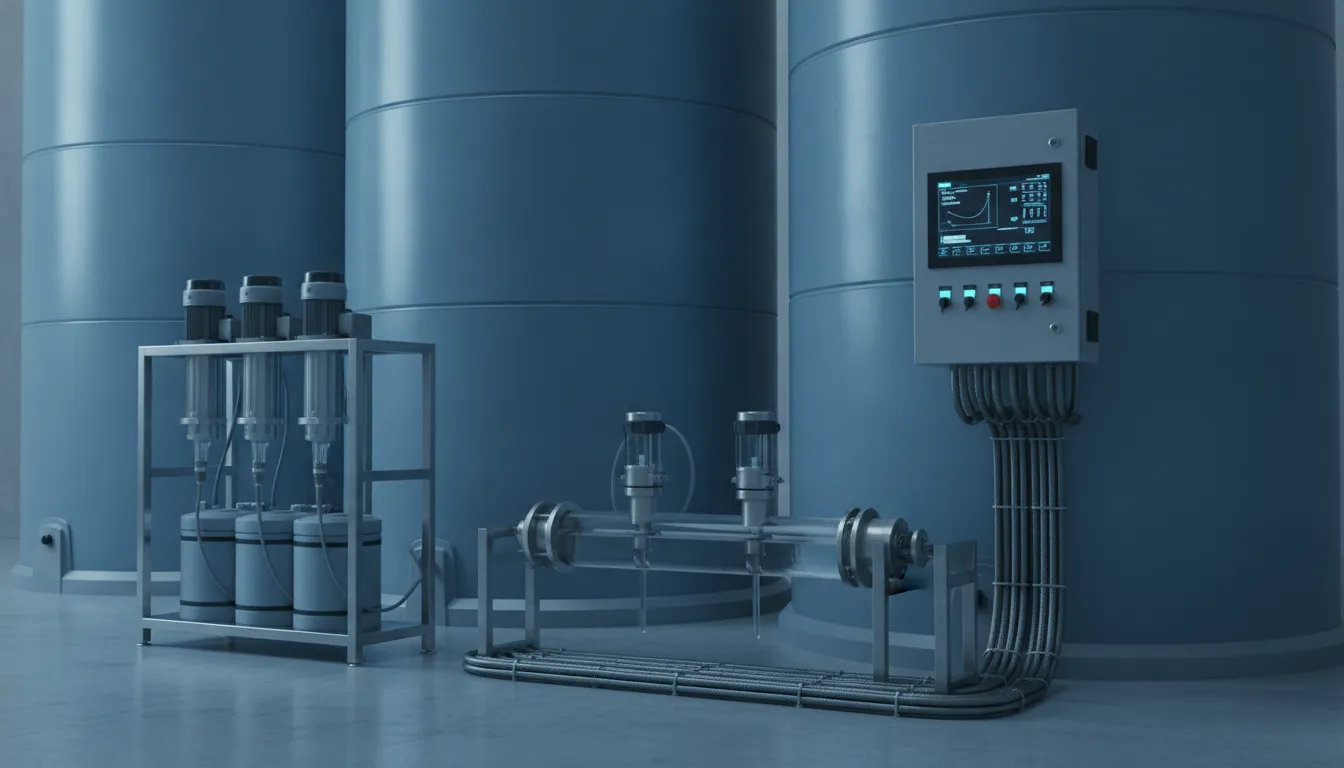
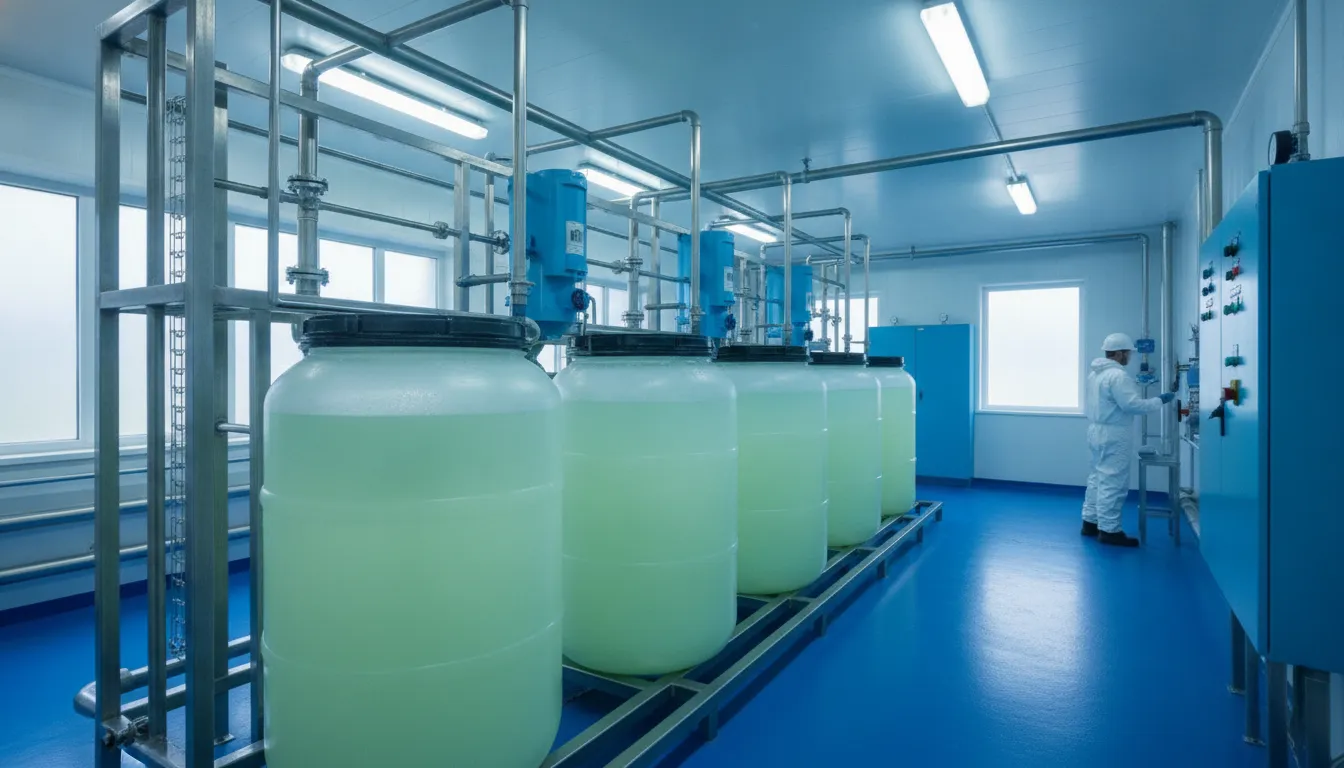
Sodium hypochlorite is a chlorine-based disinfectant with broad-spectrum, fast action against microorganisms. It is easily applied with dosing pumps, and its chlorine residual provides lasting protection in networks and storage tanks. Applications range from drinking water chlorination and CIP hygiene to well, reservoir, and wastewater discharge disinfection.
Key benefits
Applications
Products / Specifications
Supply formats
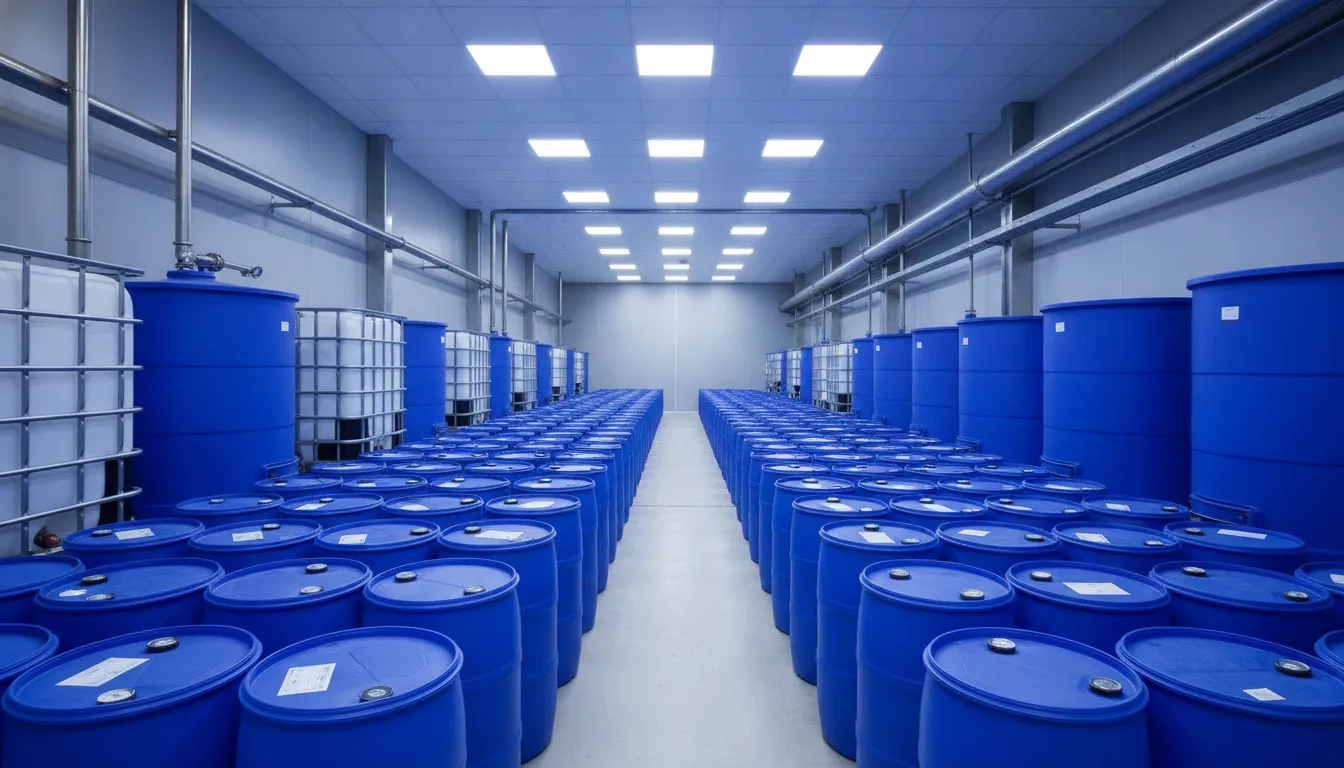
- 30-60 kg jerrycans and 200 kg drums.
- IBC tank (1000 L) and tanker options.
- Fresh shipment planning to prevent active chlorine loss.
What is sodium hypochlorite? The core chemical of water disinfection
Sodium hypochlorite (NaOCl, liquid chlorine, the active ingredient of bleach) forms hypochlorous acid when dosed into water, inactivating bacteria, viruses, and other microorganisms within minutes. It is the most widely used water disinfectant in the world, supplied as an industrial solution containing 12-15% active chlorine, easily applied with dosing pumps, and cheaper than most alternative disinfection methods.
Sodium hypochlorite's greatest advantage is its chlorine residual: disinfection continues not just at the dosing point but throughout storage tanks and the distribution network. This property keeps hypochlorite the standard for drinking water safety compared with residual-free methods such as UV or ozone. The product loses active chlorine over time, which makes sourcing fresh production and storing it cool and dark critically important.
Sodium hypochlorite applications and dosing
Applications are broad: drinking water and network chlorination (targeting 0.5-1 ppm residual), shock disinfection of reservoirs and wells, swimming pool disinfection (1-3 ppm free chlorine), CIP and surface hygiene in food and beverage plants, wastewater discharge disinfection, biological control in cooling towers, and textile bleaching processes.
Dosage is calculated from the target residual: after the water's chlorine demand (organic load) is met, enough is dosed to leave the desired residual. For example, at 10 m3/h and a 1 ppm target, a 13% product requires roughly 77-150 mL per hour, depending on water quality. For shock disinfection, tanks and lines receive 50-100 ppm, are held, and are then flushed. Excess chlorine at discharge points must be neutralized with sodium bisulfite — we supply both products as one program.
Sodium hypochlorite supply — fresh stock, fast delivery
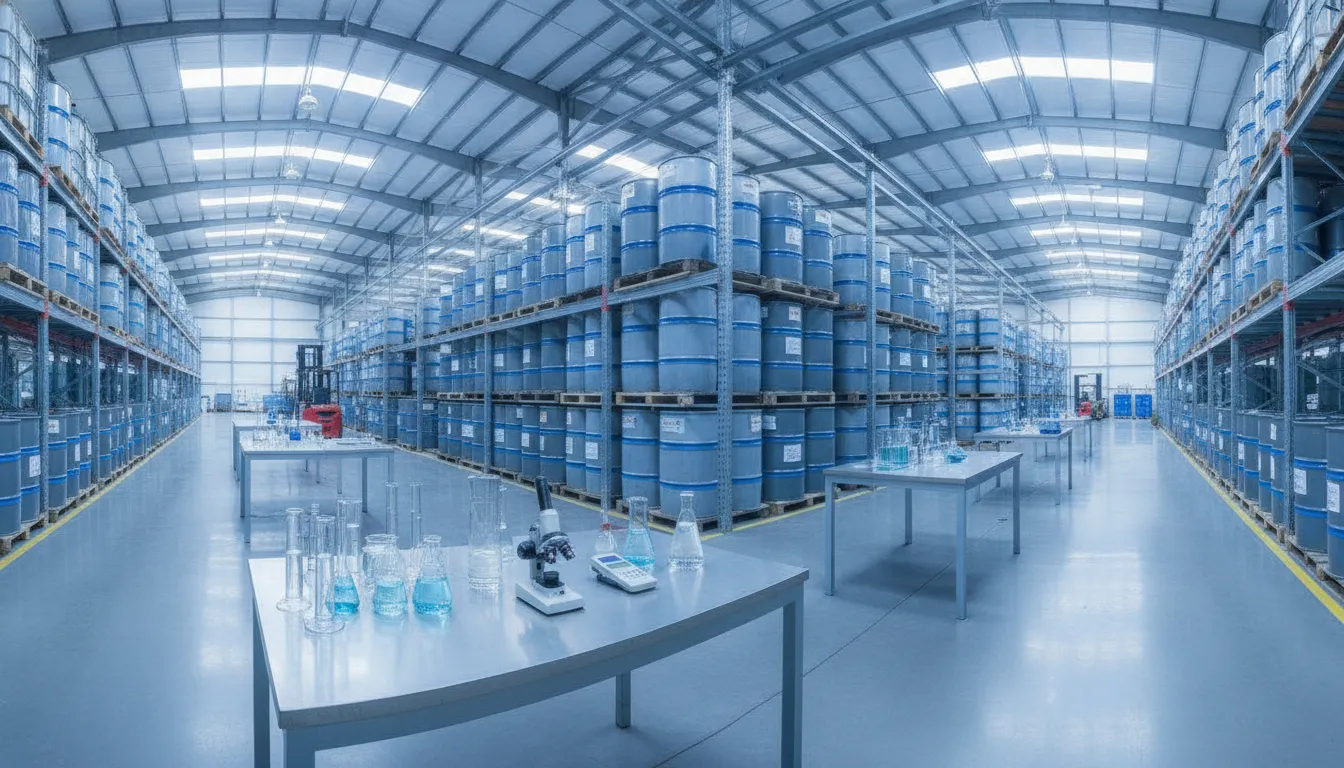
Because active chlorine decays, freshness decides hypochlorite quality. Aqua Global rapidly delivers freshly produced sodium hypochlorite in 30-60 kg jerrycans, 200 kg drums, IBCs, and tankers to water utilities, pool operators, food plants, and treatment facilities across Uzbekistan. Request a sodium hypochlorite price and a regular shipment program via our contact page.
Frequently Asked Questions
How much sodium hypochlorite is dosed for drinking water?
The target is 0.2-0.5 ppm free residual chlorine at the network end and 0.5-1 ppm at the reservoir outlet. The required dose depends on the water's organic load and is tuned by residual chlorine measurement. Aqua Global supports dosage calculation and pump selection.
What is the shelf life of sodium hypochlorite?
Sodium hypochlorite loses active chlorine steadily even in cool, dark storage; heat and sunlight accelerate decay sharply. We recommend fresh supply sized for 1-3 months' consumption. Aqua Global ships from fresh production.
How is it used for pool disinfection?
Pool water targets 1-3 ppm free chlorine, controlled together with pH at 7.2-7.6 through an automatic dosing system. Weekly shock chlorination raises the level to about 10 ppm. Since hypochlorite dosing raises pH, it should be balanced with acid dosing.
Which materials are compatible with sodium hypochlorite?
PE, PVC, PVDF, and PTFE are suitable for storage and dosing lines; metals (including stainless steel) corrode quickly. Dosing pump diaphragms and seals should be Viton/EPDM. We provide a material compatibility list before installation.