When dissolved in water, sodium metabisulfite (SMBS) forms strongly reducing bisulfite ions that rapidly neutralize free chlorine. This makes it the standard dechlorination chemical for protecting RO membrane trains from chlorine damage; it is also used in membrane preservation solutions and for chromium(VI) reduction in wastewater. Industrial and food grades are available.
Key benefits
Applications
Products / Specifications
Supply formats
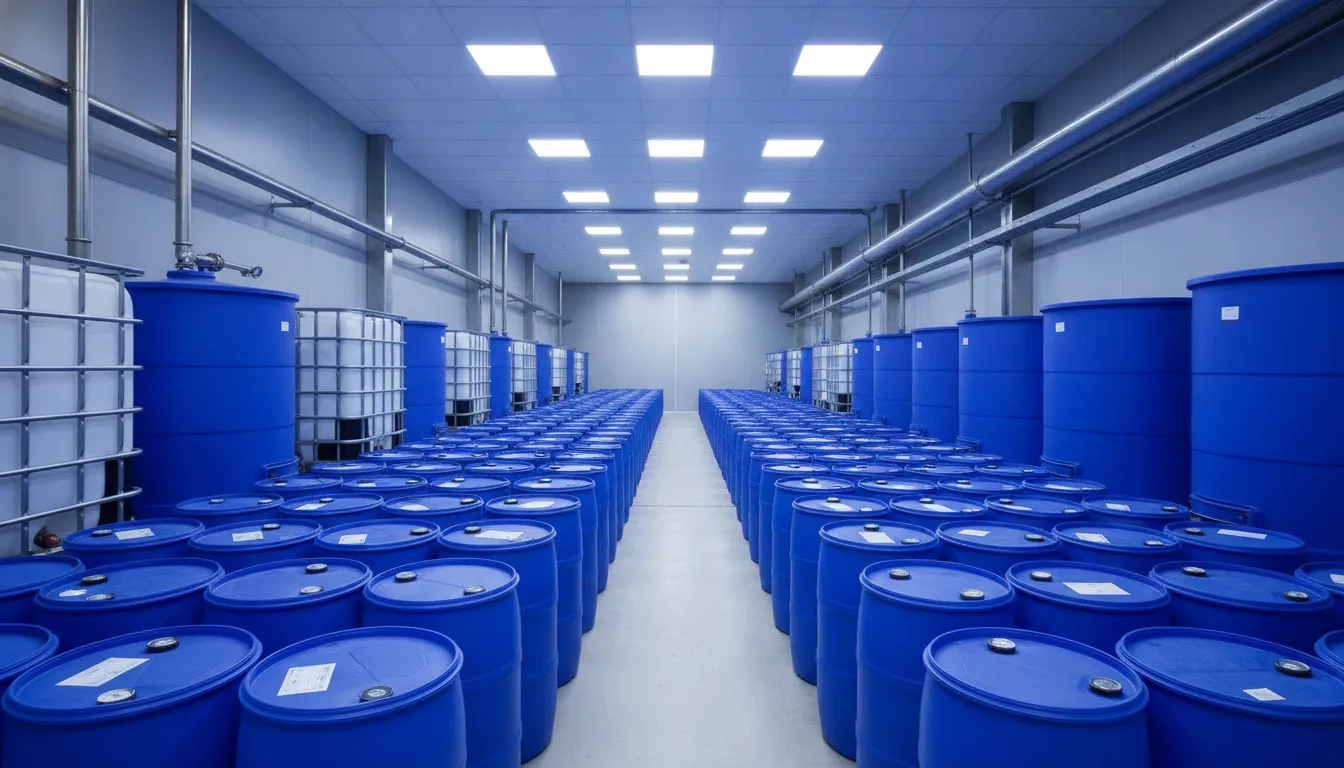
- 25 kg bags with palletized shipment.
- Big bag options for high tonnage.
- Stock planning with dry, cool storage recommendations.
What is sodium metabisulfite (SMBS)? How does dechlorination work?
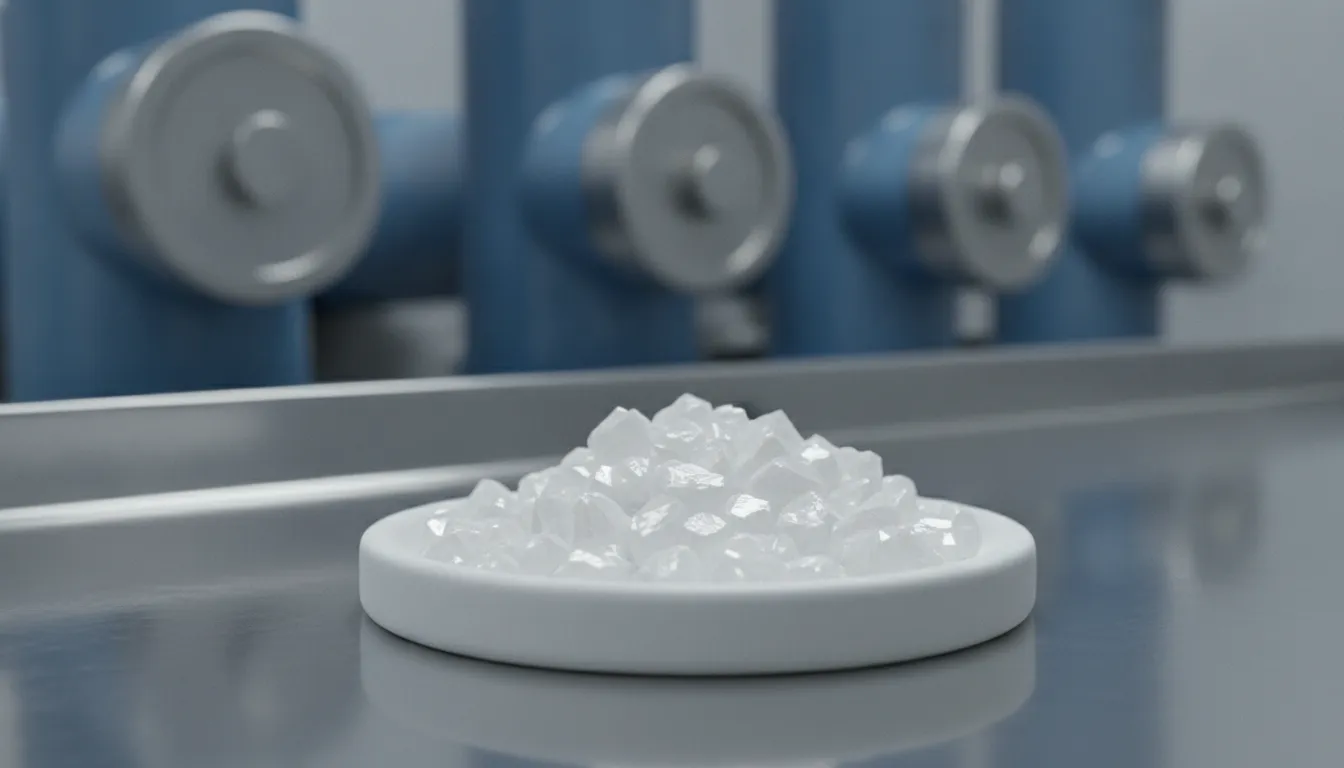
Sodium metabisulfite (SMBS, Na2S2O5, sodium pyrosulfite) is a white crystalline powder that forms strongly reducing bisulfite ions when dissolved in water. Its most critical duty in water treatment is dechlorination: free chlorine irreversibly oxidizes the polyamide surface of reverse osmosis (RO) membranes and can destroy a membrane within hours. SMBS reduces chlorine to harmless chloride within seconds, protecting the membranes from that damage.
Beyond dechlorination, SMBS is used as a preservation solution (1-1.5%) for RO membranes during extended shutdowns, for reducing toxic chromium(VI) to chromium(III) in wastewater, in reduction steps after sulfur dyeing in the textile industry, and as an antioxidant/preservative in the food industry. Industrial and food grades are supplied to separate specifications.
SMBS dosing and application in RO pretreatment
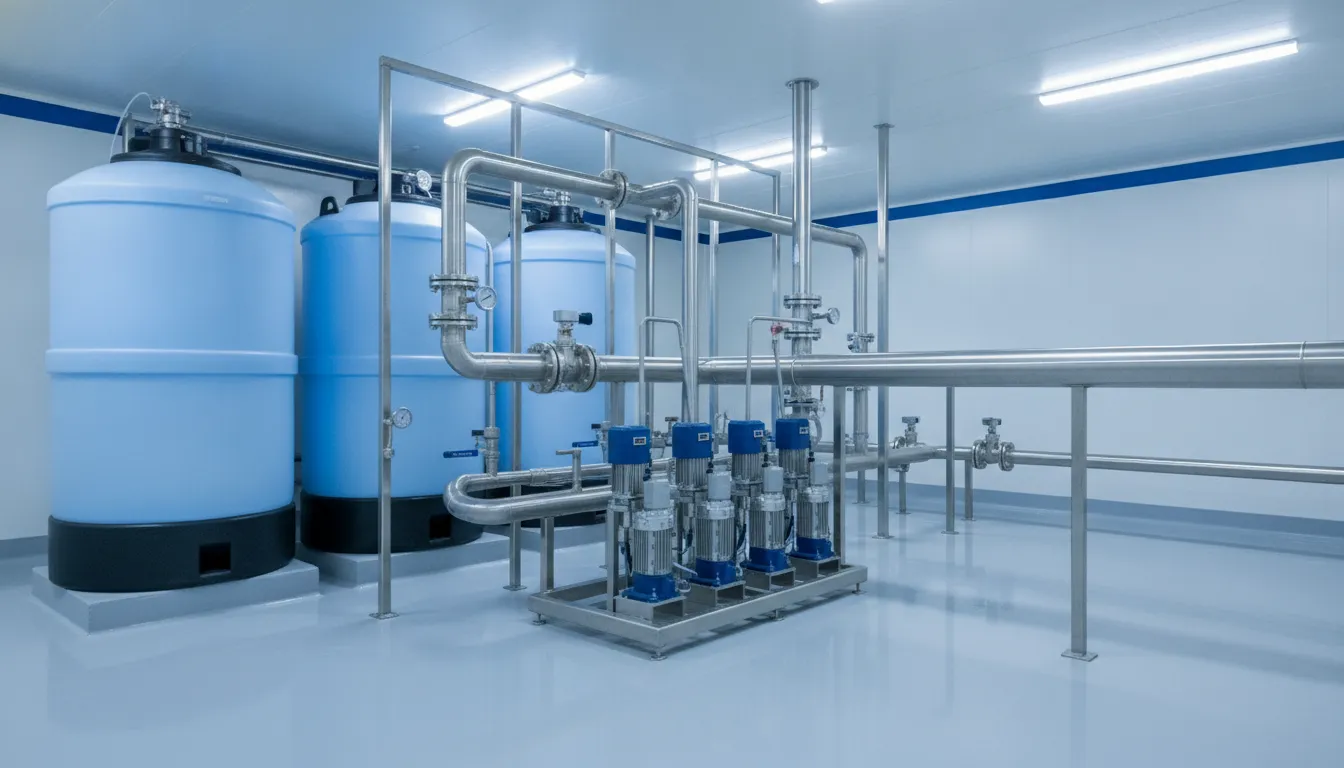
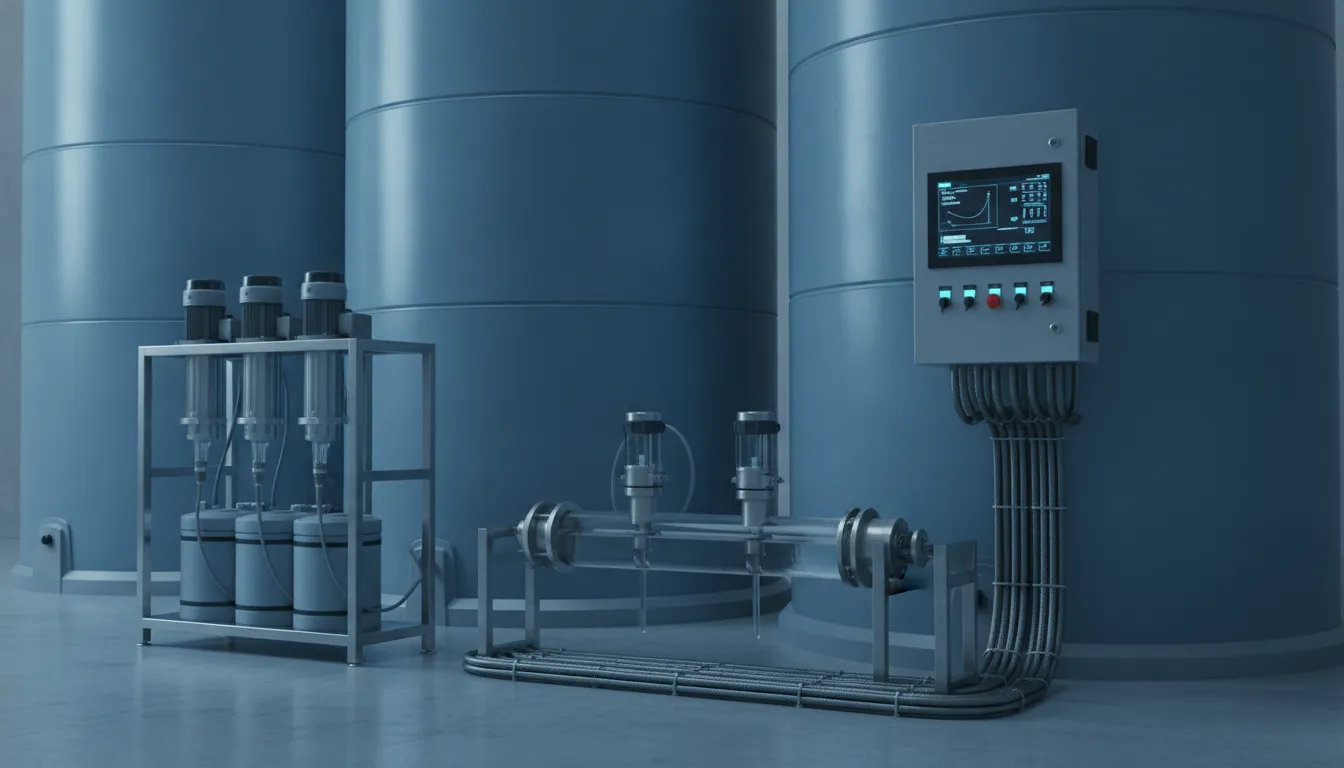
In RO pretreatment the rule is simple: 1.34 ppm SMBS per 1 ppm free chlorine in theory — around 3 ppm in practice with a safety margin. The dosing point should be upstream of the cartridge filters with enough contact time before the membranes. Control relies on ORP (oxidation-reduction potential) measurement; the target at the membrane inlet is typically below 200-250 mV.
SMBS solution is usually made up daily at 10-20%, because prepared solution gradually loses strength to atmospheric oxygen. Avoid overdosing: excess bisulfite can create oxygen-free conditions that accelerate biofouling. Aqua Global helps you structure the whole RO pretreatment program, from ORP-controlled dosing system setup to the solution make-up routine.
Sodium metabisulfite supply — one address for membrane chemicals
Aqua Global supplies sodium metabisulfite in 25 kg bags and big bags to RO plant operators, textile factories, and food producers across Uzbekistan. By sourcing antiscalant, membrane cleaning chemicals, and SMBS from a single supplier, you simplify the entire chemical scope of your membrane line. Request an SMBS price and delivery terms via our contact page.
Frequently Asked Questions
Why must chlorine be removed in an RO system?
Polyamide RO membranes are extremely sensitive to free chlorine; a cumulative exposure of 200-1000 ppm·hours permanently damages the membrane. Every RO system fed by municipal or chlorinated well water therefore requires dechlorination (SMBS dosing or activated carbon) upstream of the membranes.
How is the SMBS dosage calculated?
Practical rule: about 3 ppm SMBS per 1 ppm free chlorine. For example, a 50 m3/h feed containing 0.5 ppm chlorine needs roughly 75 grams of SMBS per hour. Precise control is achieved with ORP measurement at the membrane inlet.
SMBS versus activated carbon dechlorination — what's the difference?
Activated carbon requires a filter investment and carries a biological growth risk over time; SMBS dosing needs little capital and is precisely controlled via ORP. For larger flows and variable chlorine loads, SMBS is usually more economical and more reliable.
How should SMBS be stored?
In a cool, dry, well-ventilated area in closed packaging; product that absorbs moisture releases SO2 and loses strength. Shelf life is 12 months under proper conditions. Prepared solutions should be consumed daily.