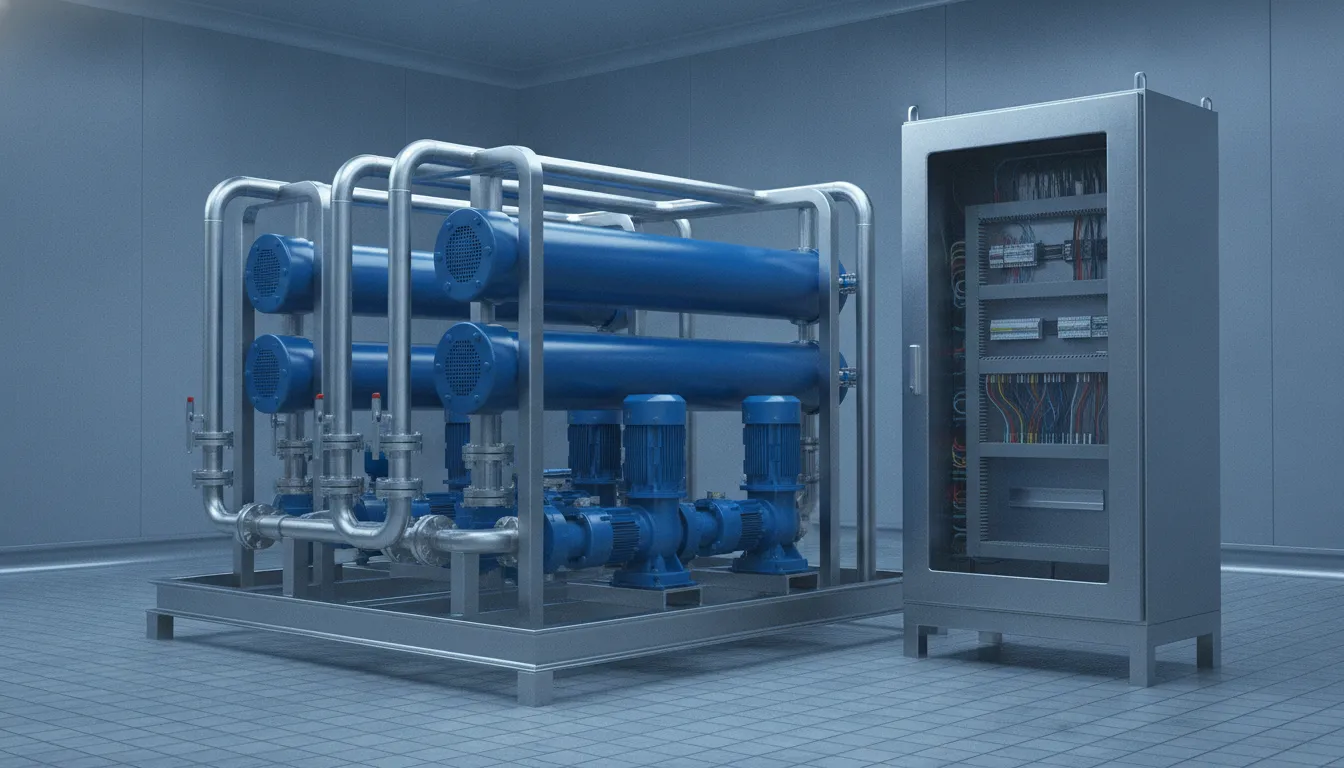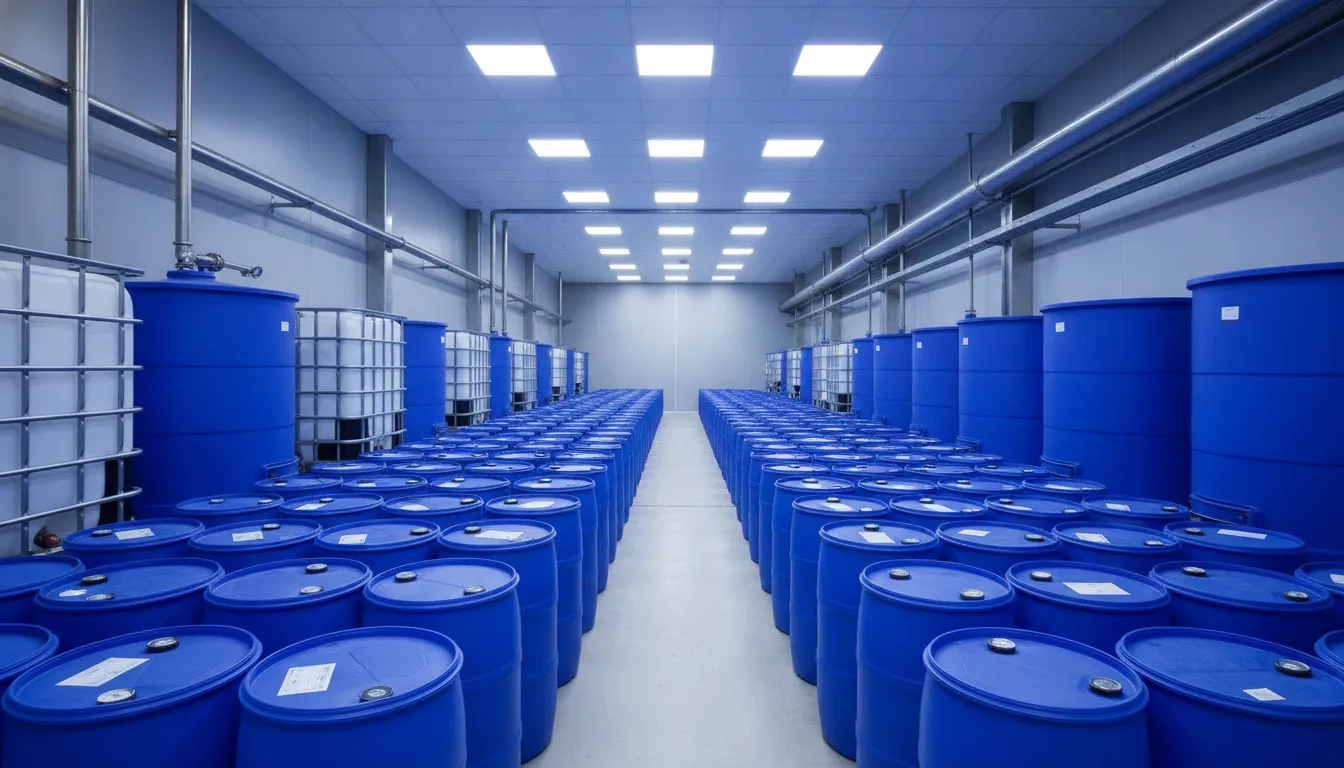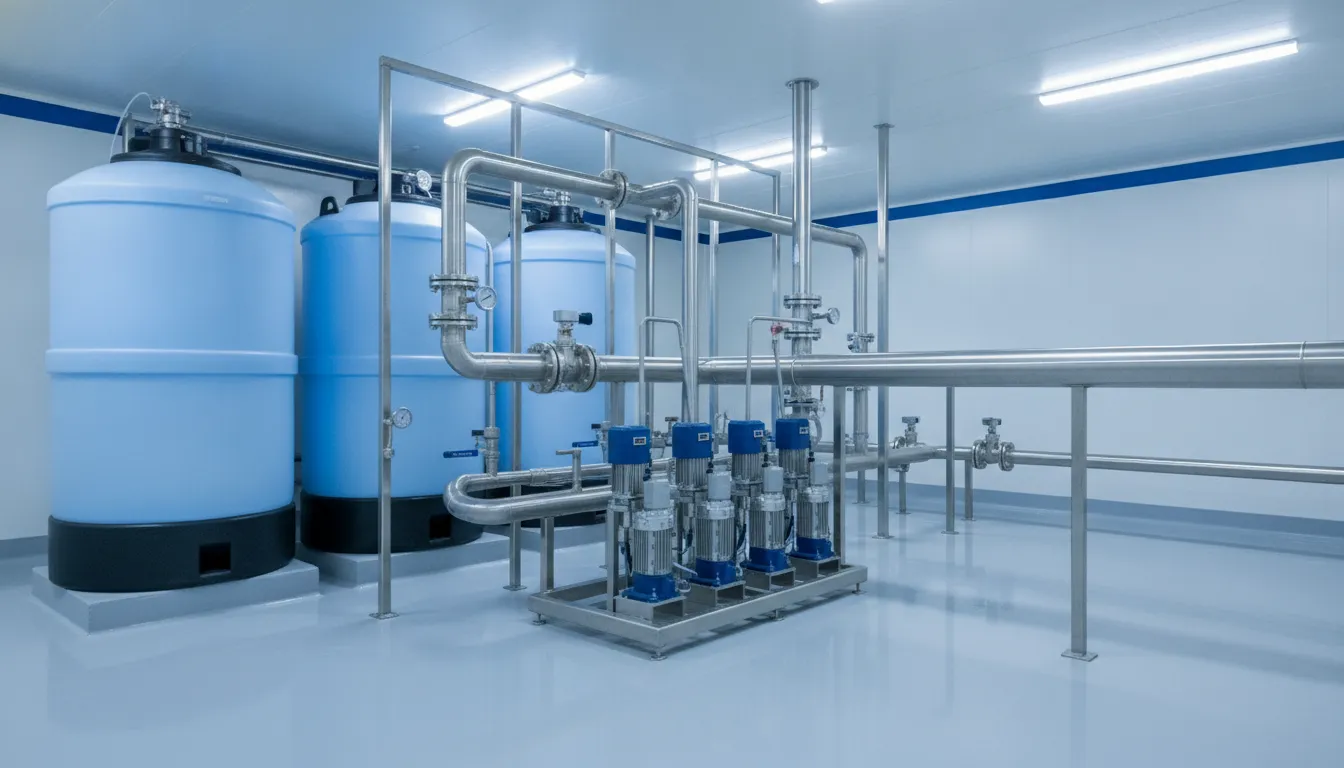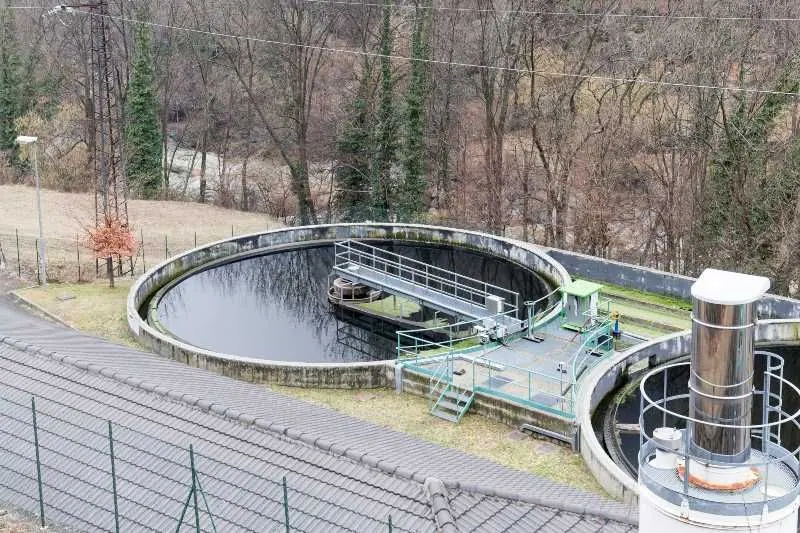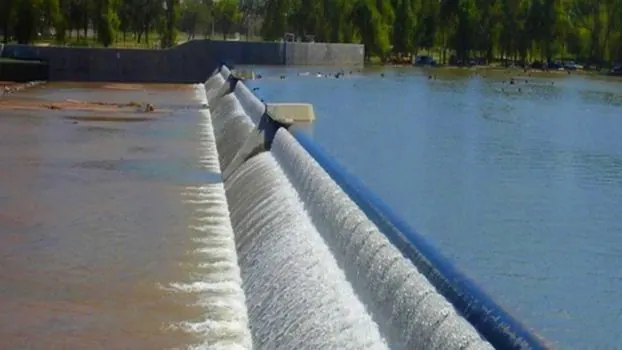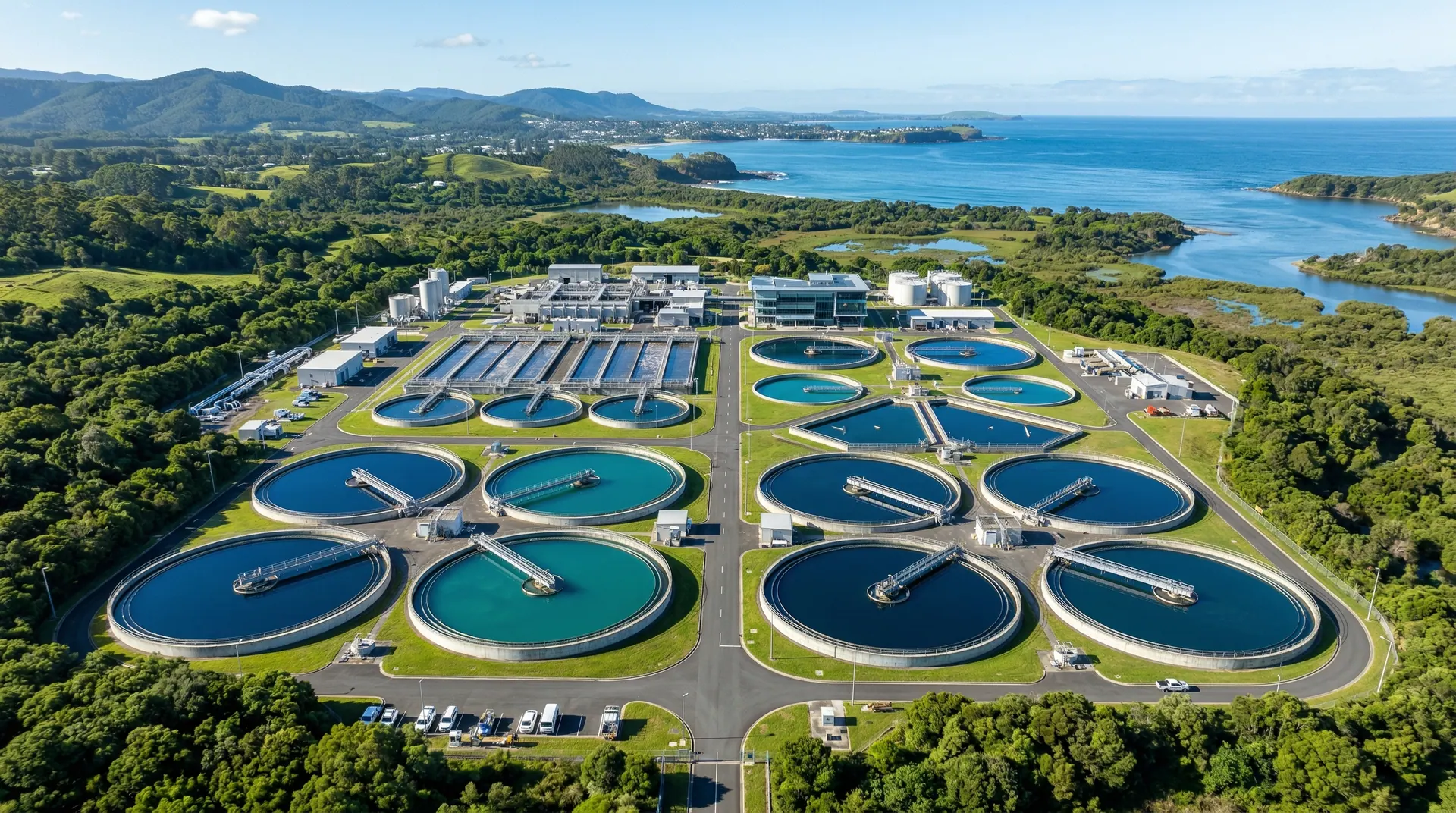
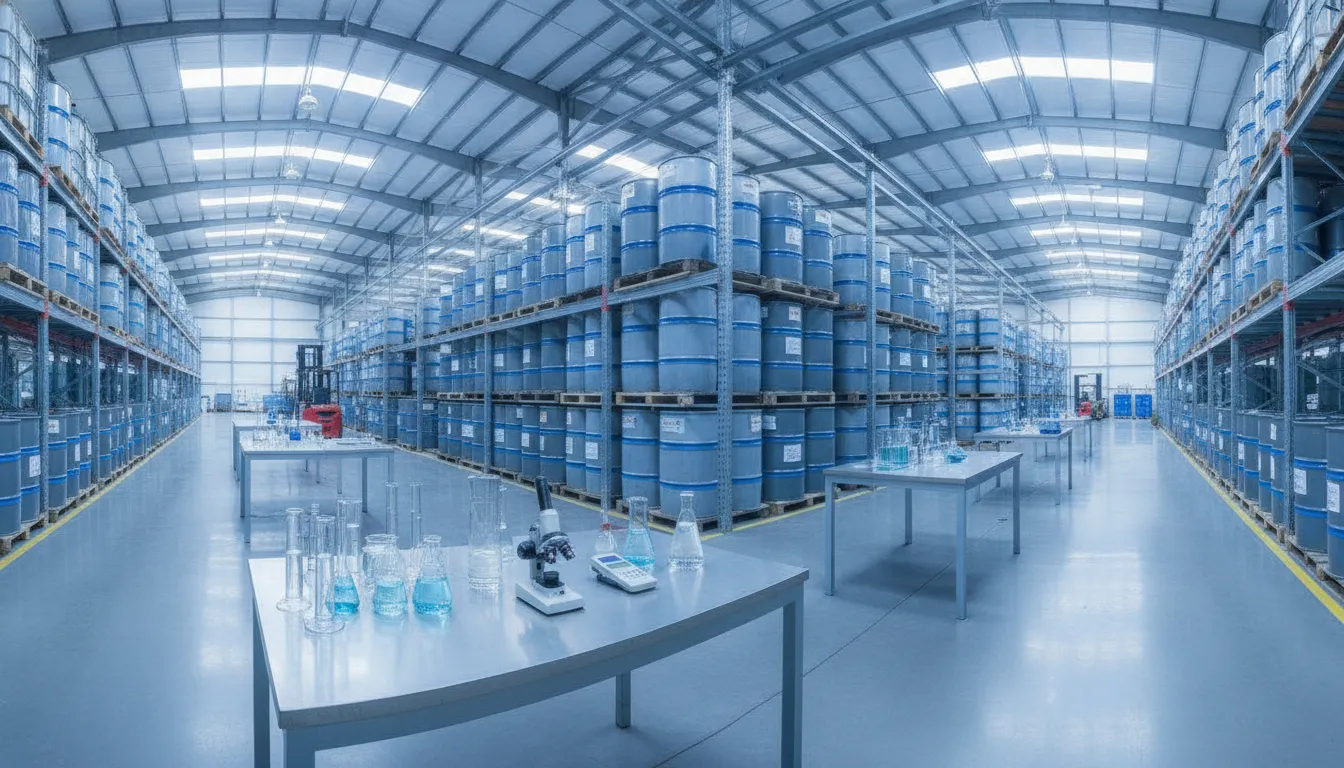
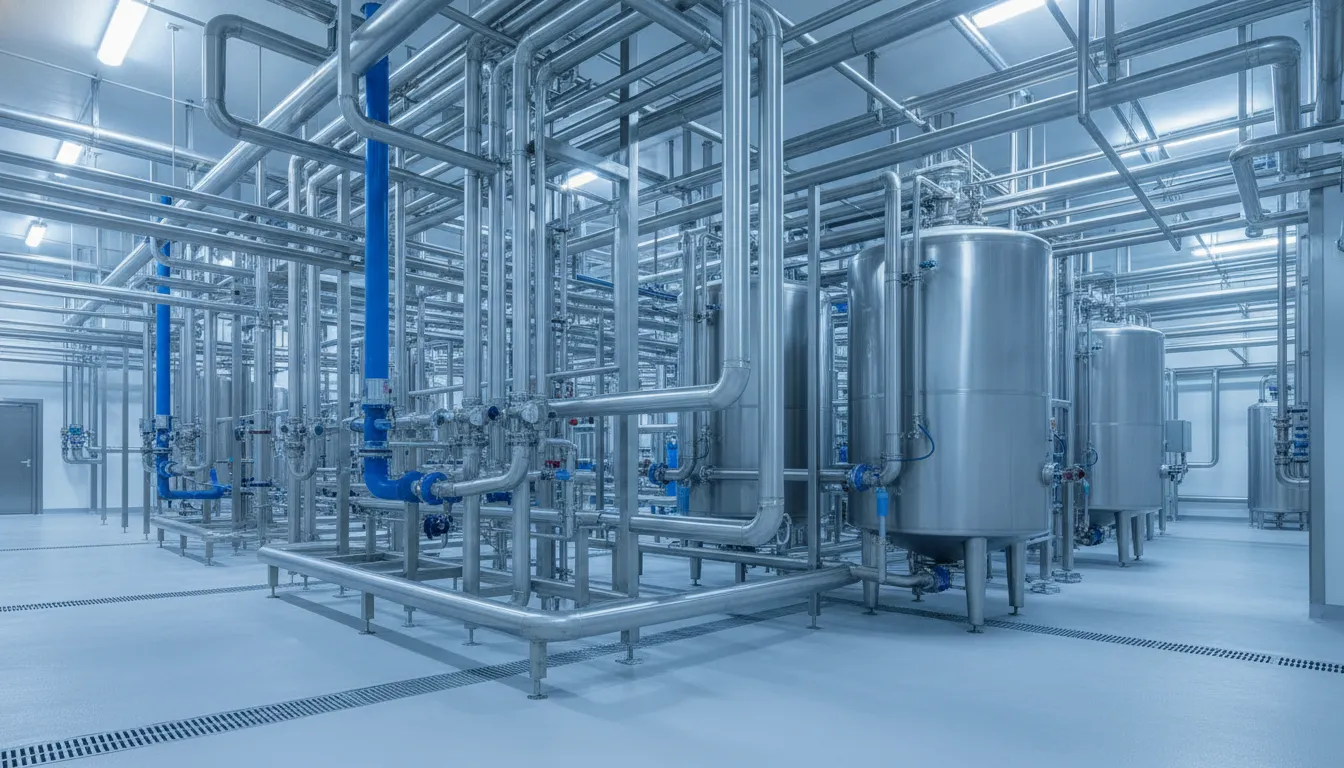
Food and beverage production requires consistent, verifiable water quality at every process stage — from ingredient water and process wash supply to CIP lines and final product contact points. We deliver systems built around reverse osmosis, UV disinfection, and automated quality monitoring that align with HACCP principles and applicable food safety regulations. Designs are documented and testable, supporting both daily operations and formal compliance audits.
In food production, water is an ingredient rather than a utility
That is the defining difference. In a steel plant water serves the process. In food production it often enters the product or contacts it directly — in washing, rinsing, cooling, or as part of the recipe. So its requirements are framed not only technically but from a product safety standpoint.
From which follows a second difference: it is not enough for the water to be of suitable quality. You have to be able to prove it — through regular measurement, reagent documentation and a traceable history. The documentation requirement on a food site is usually stricter than the water treatment itself.
Three circuits that must not be conflated
Process water
The water that enters or touches the product. Here microbiology matters, but so does stability: variation in water composition changes taste, colour and recipe behaviour batch to batch. Requirements for reagents used on this line are separate and stricter.
Washing and CIP water
The largest volume on many plants. Hardness here interferes with detergent performance and leaves residue on equipment, which becomes a sanitation question. Softening frequently pays for itself through reduced detergent consumption alone.
Auxiliary circuits
Boiler house, cooling, steam. Formally they do not contact the product, but steam in food production is often used where contact is possible — and then the requirements for boiler circuit reagents change fundamentally.
Conflating these circuits during design is a common mistake. Treating all water to the strictest requirement is expensive and usually unnecessary; treating to the loosest is not acceptable.
What creates the effluent problem
- Fats and oils. The sector's defining feature. Without a dedicated stage they disrupt everything downstream and coat equipment.
- High organic load. Raw material and product residues produce organics that sour quickly and generate odour if held in the system.
- Slug discharges. Washing and CIP run in cycles: a concentrated discharge in a short time. Without equalisation, downstream stages work in jerks.
- pH swings. Alkaline and acid washing stages alternate, so effluent arrives alternately alkaline and acidic.
- Seasonality. In agricultural processing, effluent volume and composition move with the harvest season — sometimes by a wide margin.
How the solution is usually built
Inlet water preparation
Mechanical filtration, iron removal and softening where needed, disinfection. The goal is predictability: stable water gives a stable product. More in water treatment.
Grease removal
The first effluent stage and the one most often underestimated. Fat that passes further settles in pipework and inhibits biological treatment.
Equalisation and neutralisation
Smooths the slug discharges from washing and levels pH. On a food plant this unit matters particularly because the processes are cyclical.
Chemical and biological treatment
Coagulation and flocculation remove solids and part of the organic load; the biological stage handles dissolved organics. Food effluent organics generally respond well to biological treatment — one of the few advantages the sector has. More in wastewater treatment.
Which reagents work here
Clarification uses coagulants paired with a flocculant; dewatering the resulting sludge is supported by cationic polyacrylamide. pH correction after washing stages uses pH regulators. Disinfection uses the disinfectant group, or ultraviolet where the water composition must not change. Foaming, typical of detergent-bearing effluent, is controlled with defoamer. The full range is in products.
What is most often missed
- Grease removal treated as a formality. An undersized stage shows up not immediately but months later, as blocked pipework and inhibited biology.
- The scheme sized on average flow. On a plant with cyclical washing there is no average; the system has to survive the peak.
- Circuits not separated. Process water and washing water prepared identically, which means either overspend or risk.
- Documentation left for later. On a food site, demonstrating compliance is part of the process, not reporting after the fact.
- Seasonality not designed in. A scheme sized for the off-season will not survive the processing peak.
Frequently asked questions
Does washing water need its own preparation?
Usually yes, at least softening. Hard water increases detergent consumption, leaves residue on equipment and complicates sanitation control. This stage often pays back faster than expected.
Can water be reused in food production?
With limits. Return to auxiliary duties and first rinses is generally possible; return into product contact requires separate justification and deeper polishing.
How do we handle seasonal volume swings?
By designing for them. An equalisation tank and margin on the reagent package cost less than a production stop at the height of the processing season.
What documentation comes with the reagents?
Every batch ships with a quality certificate and technical documentation. If your control system requires additional paperwork, state it in the enquiry — better agreed before the first delivery.
Getting started
Send an inlet water analysis and an effluent analysis, plus the daily schedule: when washing runs and when main production runs. On a food site it is the schedule that explains most of the stability problems. Write through the contact form.