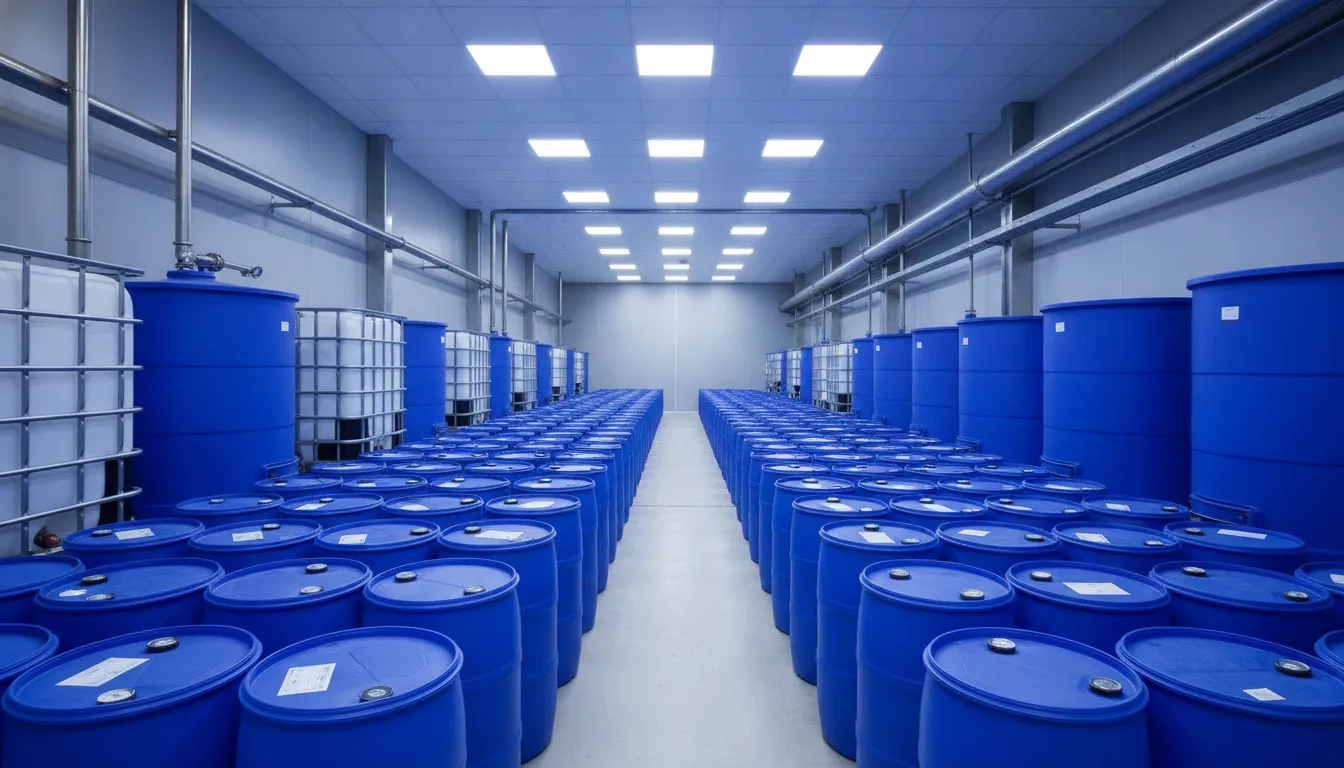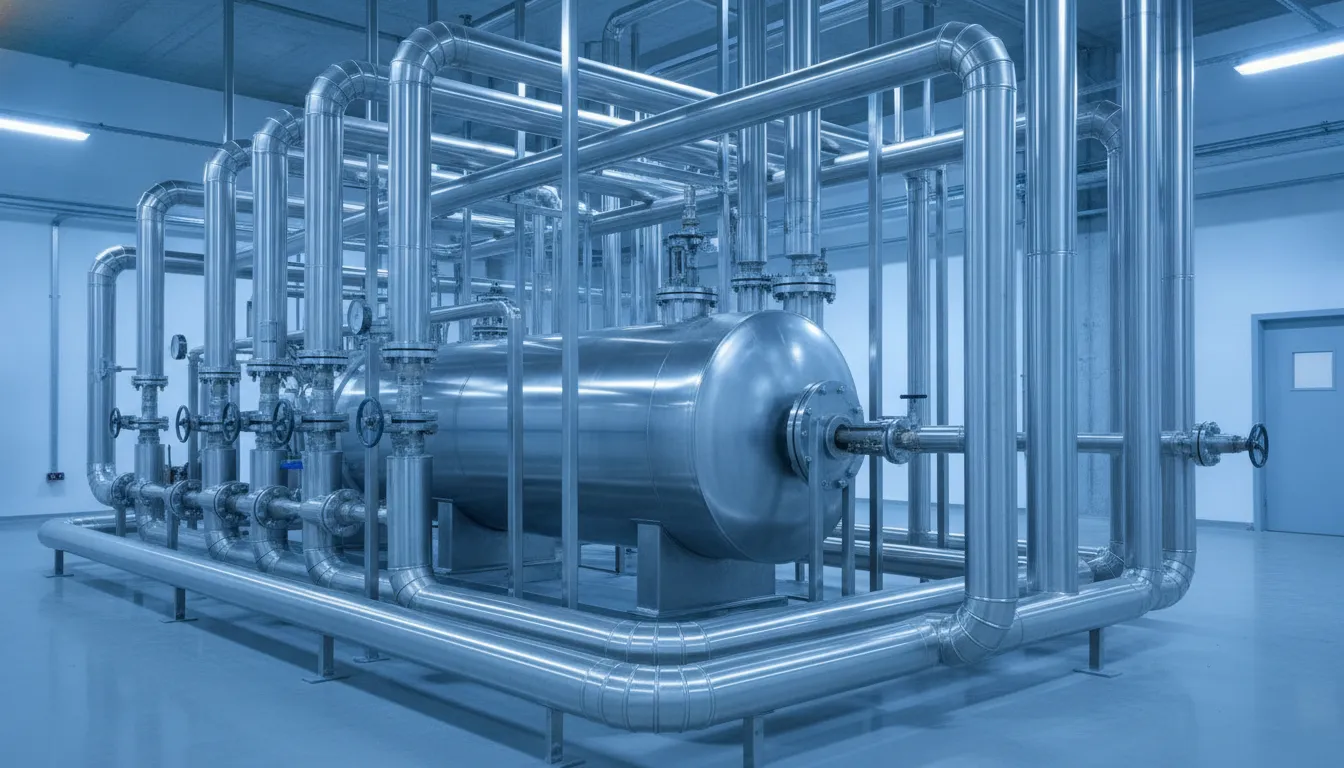
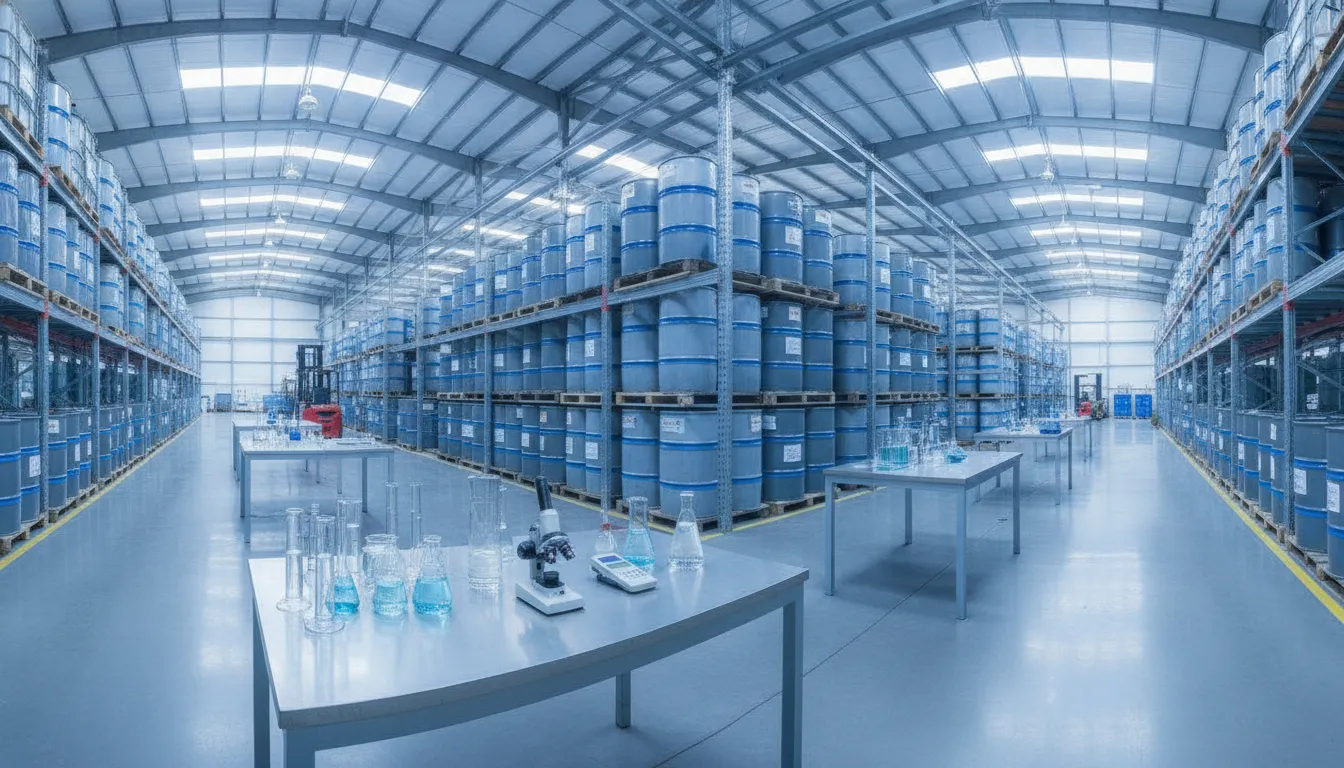
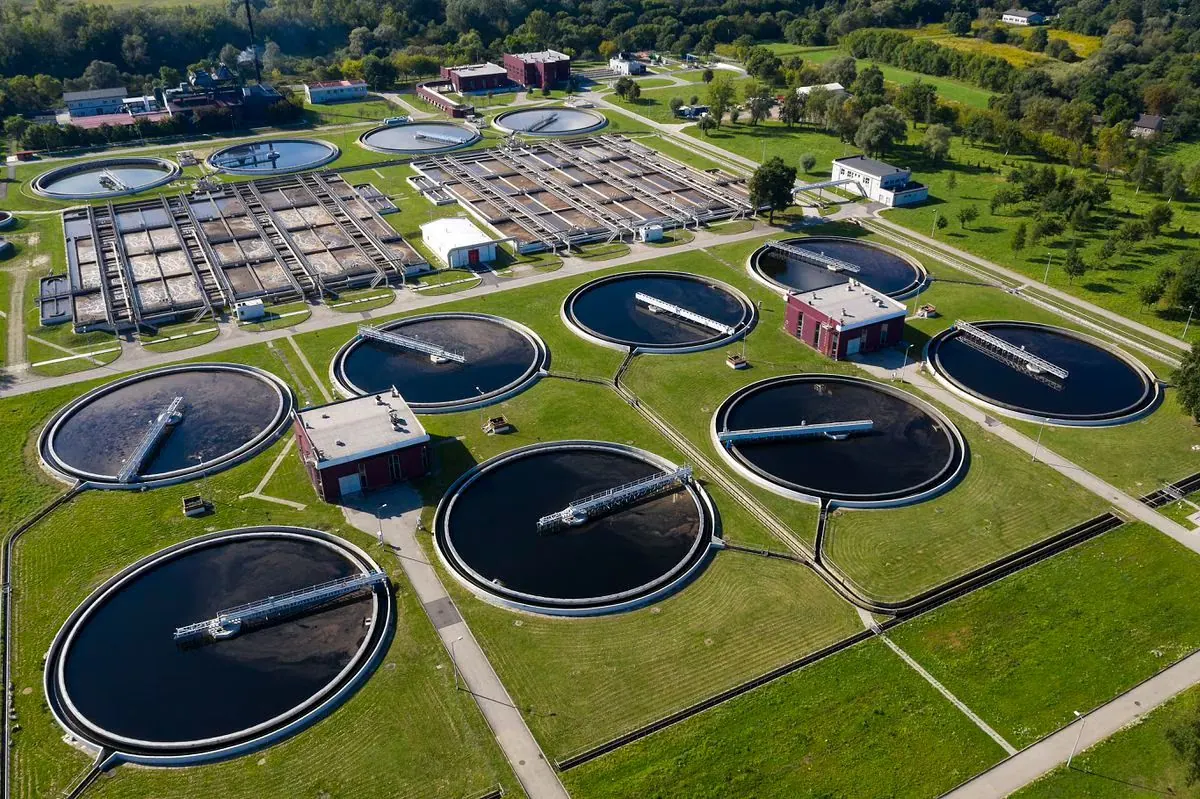
Six shifts already affecting how industrial water systems are designed and run: abstraction limits, reuse, online monitoring and reagent optimisation.
Trend round-ups usually consist of forecasts you cannot act on. This one takes a different angle: below are the shifts already affecting how industrial water systems are designed and operated, and what each one means for planning at a specific site.
1. Water is becoming a constraint, not a cost line
For a long time industrial water was treated as a cheap resource and the main question was "what does it cost". In water-stressed regions, Central Asia among them, the question has moved to "how much will we be permitted to abstract". That is a fundamentally different planning logic: the abstraction limit starts to cap how far production can expand.
The practical consequence is that capacity expansion projects increasingly require not just a new intake but evidence that existing consumption has been optimised. A plant with a measured water balance and a reduction programme is in a materially better position during approvals.
2. Reuse is moving from optional to designed-in
Until recently recycling was an initiative taken by individual plants. It is now increasingly built in at the design stage of new facilities, because designing the loop up front is cheaper than retrofitting it into a running shop. The cost gap between "planned for" and "added five years later" is usually a multiple, not a margin.
For existing sites the implication is simple: if a treatment plant upgrade is being planned anyway, water return belongs in that same project rather than in the next cycle.
3. Online monitoring instead of a laboratory logbook
Sensors for pH, ORP, conductivity and turbidity have fallen in price to the point where continuous monitoring costs less than the consequences of not having it. The difference is fundamental: a shift-based lab analysis tells you what happened; an online sensor tied to a dosing pump stops it happening.
The biggest gain comes from the sensor → controller → dosing pump chain: reagent dose follows actual water quality rather than an averaged setpoint. On sites with variable load this cuts reagent consumption and removes limit excursions at the same time.
4. Reagent optimisation before more hardware
A noticeable shift in recent years: before building an additional treatment stage, plants revisit the reagent scheme first. The reason is economic — a properly selected coagulant at a lower working dose can close the gap the upgrade was meant to close, at incomparably lower cost.
This does not mean chemistry replaces hardware. It means the jar test belongs before the upgrade is commissioned as a design — the sequence that saves the most money.
5. Tighter discharge limits and tighter record-keeping
What changes is not only the limit values but the requirements around demonstrating compliance: measurement frequency, data traceability, the ability to produce a parameter history on request. A plant running continuous monitoring passes an inspection far more easily than one holding a logbook of spot analyses.
The practical conclusion: measurement and data retention have stopped being an auxiliary part of a treatment plant and become a mandatory element of it.
6. Energy efficiency in membrane systems
Membrane technology keeps getting cheaper on capital cost but stays energy intensive. Attention has shifted to operating regime: energy recovery on high-pressure units, running at lower pressure through better pretreatment, and extending the interval between cleans through correct antiscalant selection.
This is a case where operating discipline affects economics more than the choice of membrane supplier.
What to do with this at your site
| Shift | Practical action |
|---|---|
| Abstraction limits | Build a water balance before applying to expand |
| Reuse as standard | Include the return loop in the upgrade project, not separately |
| Online monitoring | Start with pH and conductivity at critical points |
| Reagent optimisation | Jar test before commissioning an upgrade design |
| Reporting requirements | Ensure measurement data is stored and traceable |
| Membrane energy use | Revisit pretreatment and the cleaning regime |
Frequently asked questions
Where do we start on a limited budget?
With measurement. Meters and a few online sensors at critical points cost far less than any upgrade and show whether the upgrade is needed at all. Half the projects on a plan turn out, after proper measurement, to be either unnecessary or solvable more cheaply.
Is it worth waiting for technology to get cheaper?
For capital-heavy solutions such as ZLD, possibly. For measurement, dose optimisation and loss reduction, no — these are already cheap, and every year of waiting costs overspend.
How do you know a reagent scheme has gone stale?
Signs: reagent consumption creeping up at unchanged load, dose not reviewed in over a year, and increasing the dose being the first response to any quality deviation. Each one points to a scheme running on inertia.
Reviewing your situation
Aqua Global helps assess the current scheme: water analysis, jar test, cost per cubic metre, and a prioritised set of recommendations. See services or get in touch through the contact form.