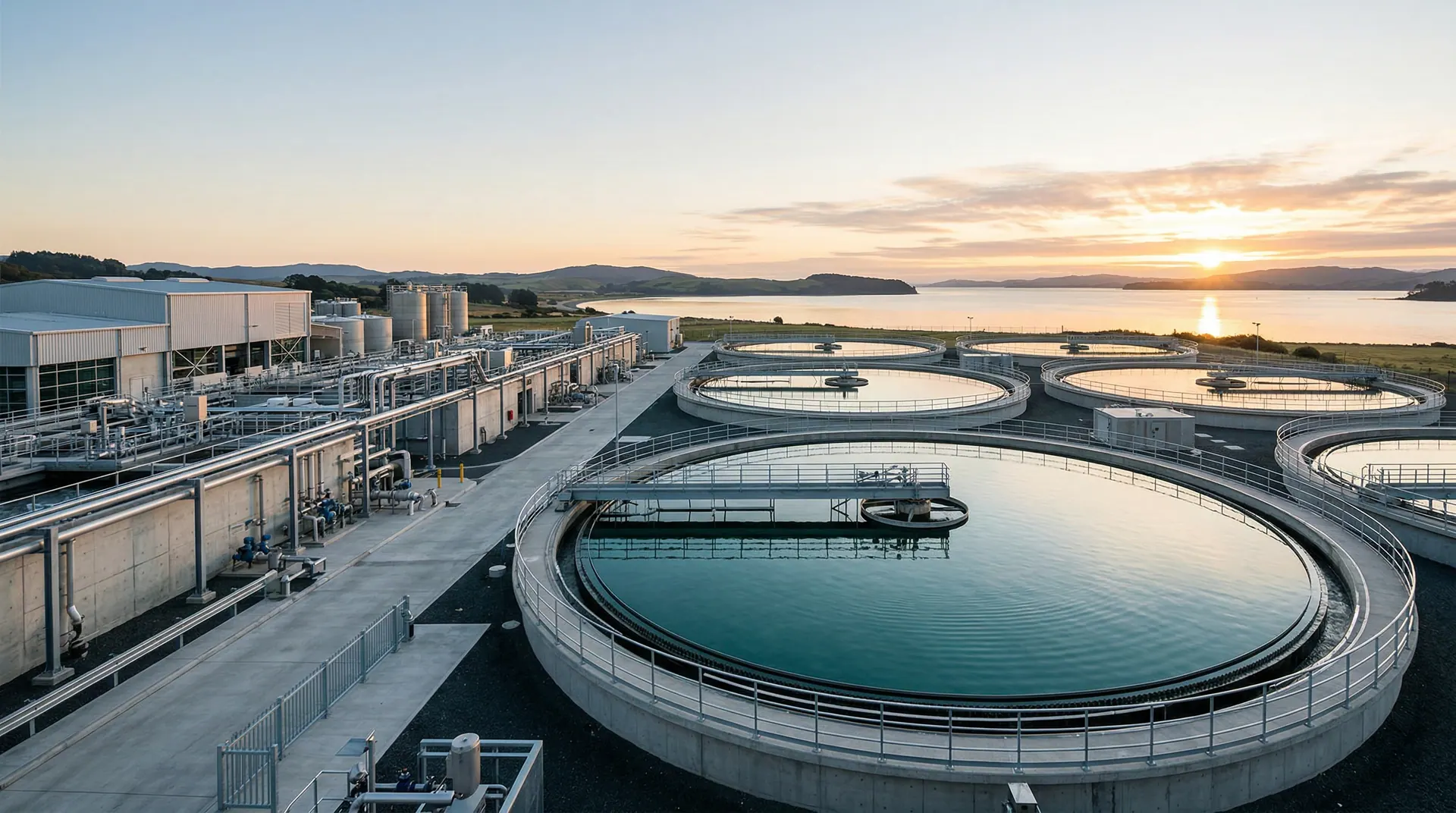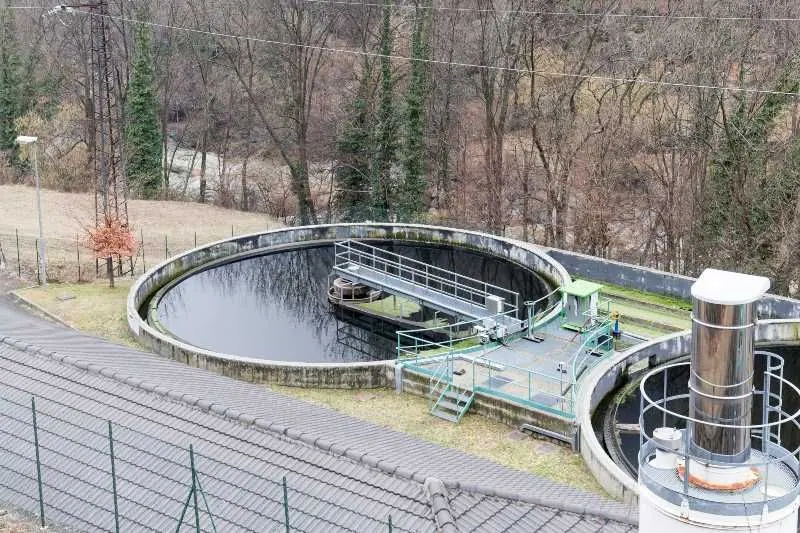
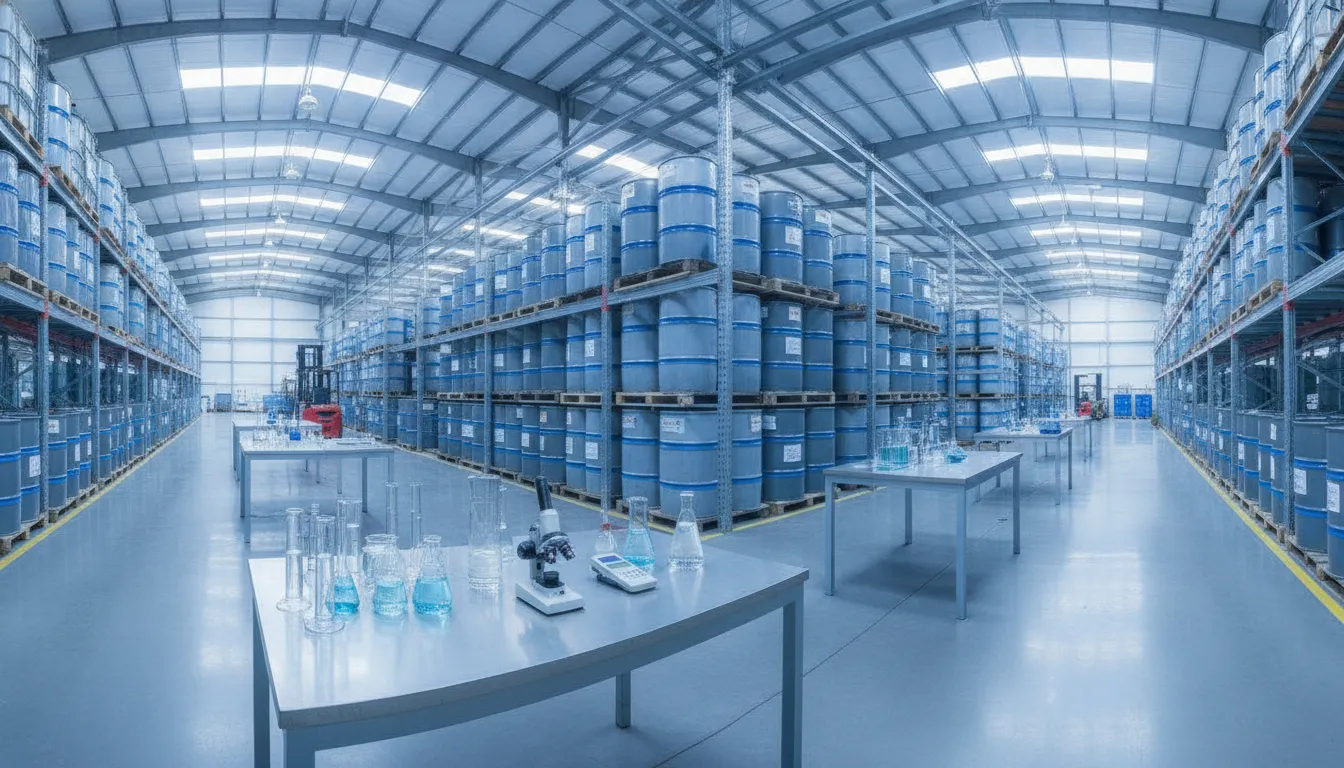
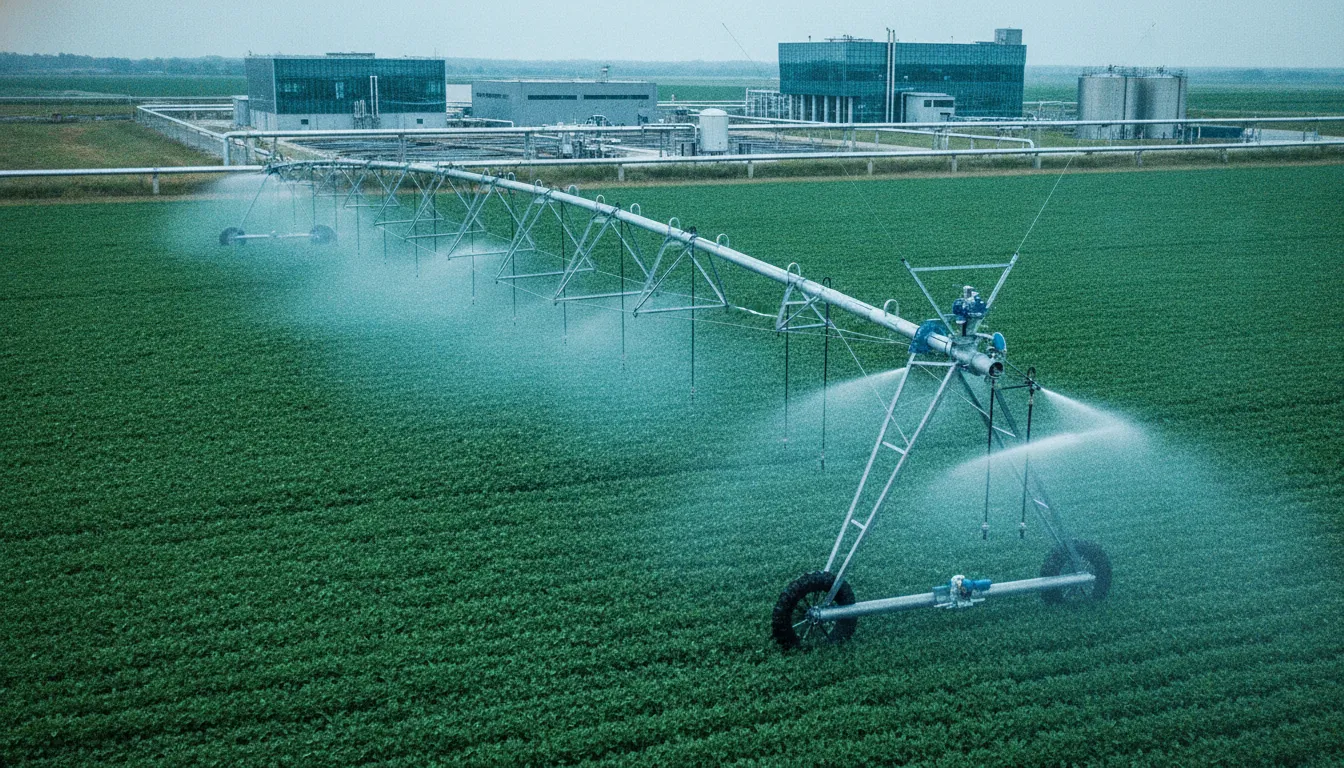
Irrigation water quality directly affects crop yield, soil health, and the service life of drip and sprinkler distribution systems. Our agricultural water solutions address mineral imbalance, biological contamination, clogging risk, and pH correction, helping operators deliver consistent and agronomically appropriate water quality across large cultivated areas. We work with greenhouse complexes, field irrigation networks, and agro-processing facilities where water reliability is central to production performance.
In agriculture, water is the scarcest input
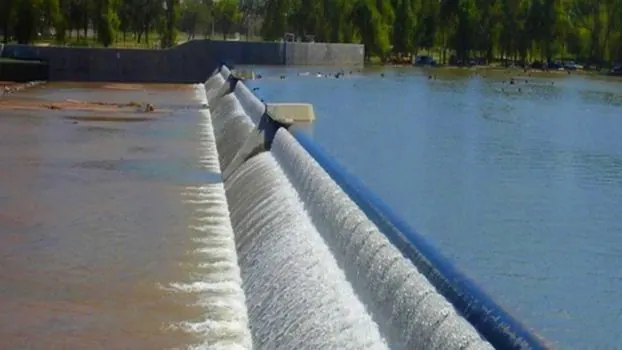
Uzbekistan is a water-stressed country, and agriculture here competes for water with industry and municipal supply. So the problem is framed differently than in other sectors: not "how do we clean the water" but "how do we get the quality we need from what is available, without losing a single unnecessary cubic metre".
The second characteristic is that water here is both transport and medium. It carries dissolved salts to the root zone while passing through equipment that is sensitive to those same salts. What the plant needs and what the irrigation system needs are not the same thing, and the scheme is built on a compromise between them.
What creates the problem
- Source salinity. Regional groundwater often carries elevated dissolved solids. Salts accumulate in the soil under irrigation, and in greenhouse substrates faster than in open field.
- Hardness. Hardness salts deposit in emitters and on pipe walls, gradually reducing the flow path. The problem develops invisibly and appears as uneven irrigation across the area.
- Suspended solids. Sand, silt and organics from open water bodies block filters and drip lines. For drip irrigation this is the principal operating problem.
- Biofouling. Warm water with organics and nutrients is an ideal medium for biofilm inside irrigation lines, particularly during standstill between waterings.
- Iron and manganese. Invisible in dissolved form, but they oxidise inside the system and deposit exactly where the flow path is narrowest.
How the solution is usually built
Mechanical filtration
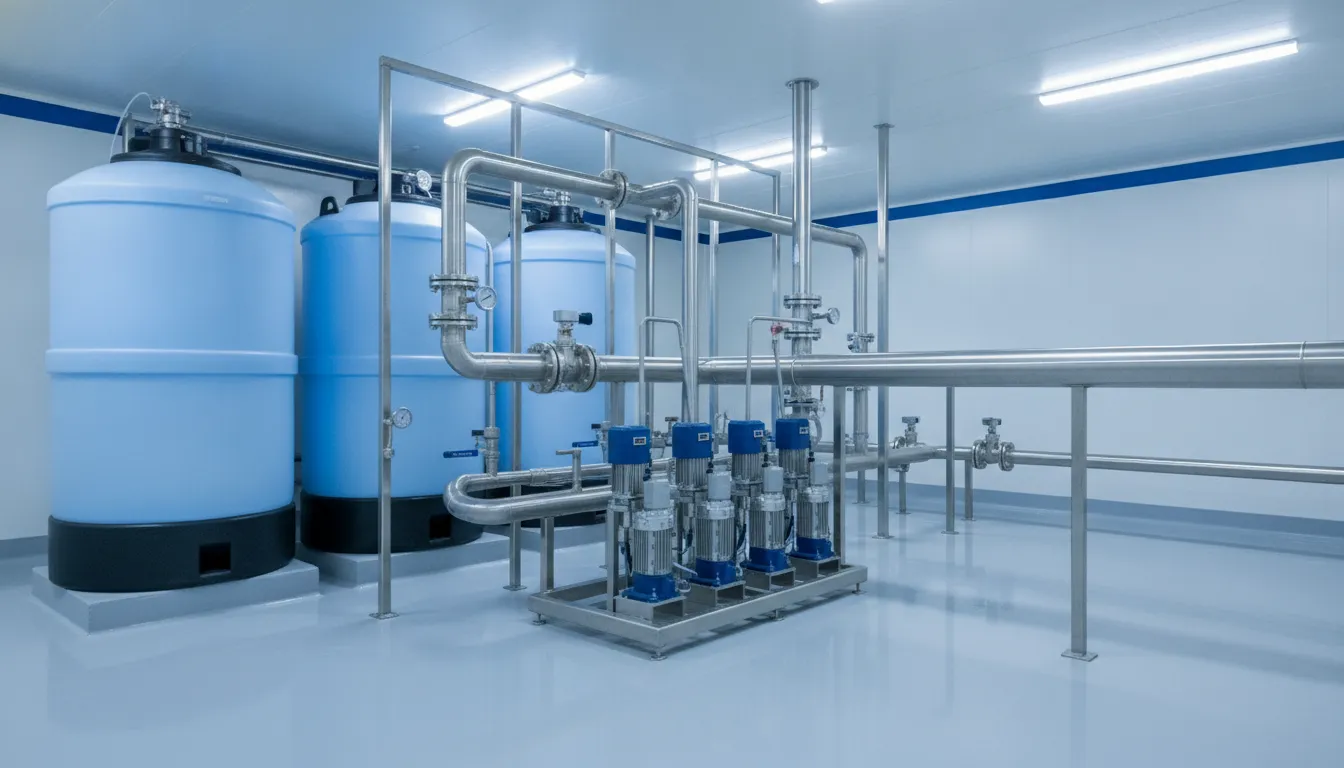
The first and mandatory stage for any irrigation system. It holds back sand, silt and organics before they reach the emitters. Selection follows the nature of the source: canal water and borehole water need different approaches. The range is in filter media.
Deposit control
Where water is hard, deposits in irrigation lines are inevitable without intervention. The problem is addressed by pH correction and scale inhibitors that hold salts in solution. More in antiscalants and pH regulators.
Microbiological control of lines
Periodic treatment of irrigation lines against biofilm. Particularly important in closed systems and where the water carries organics. Reagents are in disinfectants.
Desalination at high salinity
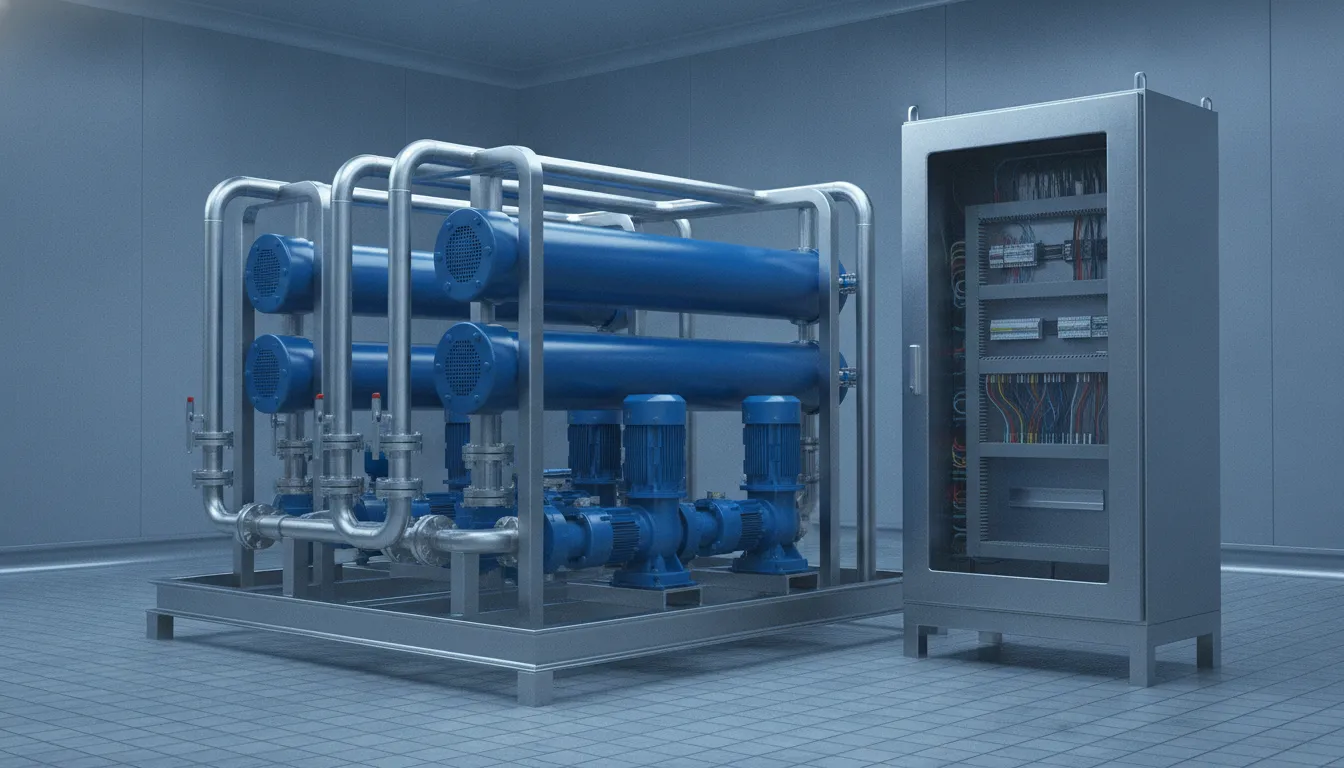
Where the source exceeds acceptable dissolved solids, a membrane stage is used. It is capital intensive, so it is applied where there is no alternative or where the crop is particularly salt-sensitive. More in water treatment.
Reuse and drainage
Under scarcity, drainage and return water become a resource rather than a waste. Returning them requires control of salt accumulation: without blowdown and monitoring, dissolved solids in a closed loop rise with every cycle, and at some point the water stops being usable for irrigation.
It is the same principle as in industrial recirculating systems: the maximum return rate is set not by the wish to save water but by the salinity at which the system stops working. More in water reuse.
What is most often missed
- Filtration treated as sufficient on its own. It removes solids but addresses neither hardness nor biofouling — and those are what block emitters.
- The system serviced only once irrigation has become uneven. By then some lines are already blocked, and flushing does not fully recover them.
- Source seasonality ignored. Open-source water at snowmelt carries an entirely different load than at low flow.
- Salt accumulation not monitored on drainage return. A closed loop without blowdown degrades on its own.
- The scheme sized on average demand. Peak irrigation in hot weather sets the requirement, not the seasonal average.
Frequently asked questions
Where do we start if emitters are blocking?
With a water analysis and an inspection of the deposit. Its character shows the cause: mineral deposits mean a hardness problem, slimy ones mean biofouling, gritty ones mean insufficient filtration. The remedy differs in each case.
Does borehole water need treating if it looks clean?
Clarity says nothing about dissolved salts. Groundwater frequently carries iron and hardness salts that are invisible in a sample but show up in the system within months.
Can drainage water be reused?
Generally yes, with salinity control and polishing where needed. The maximum return share is calculated from water composition and crop sensitivity.
Which is cheaper: treating the water or replacing lines more often?
The comparison is made on total seasonal cost including downtime and uneven irrigation. On hard water treatment usually wins, but the calculation depends on the source and the area.
Getting started
Send an analysis of your source water and describe the irrigation system — type, area, regime. That is enough to see what actually creates the problem and which stage addresses it. Write through the contact form.